
Tools
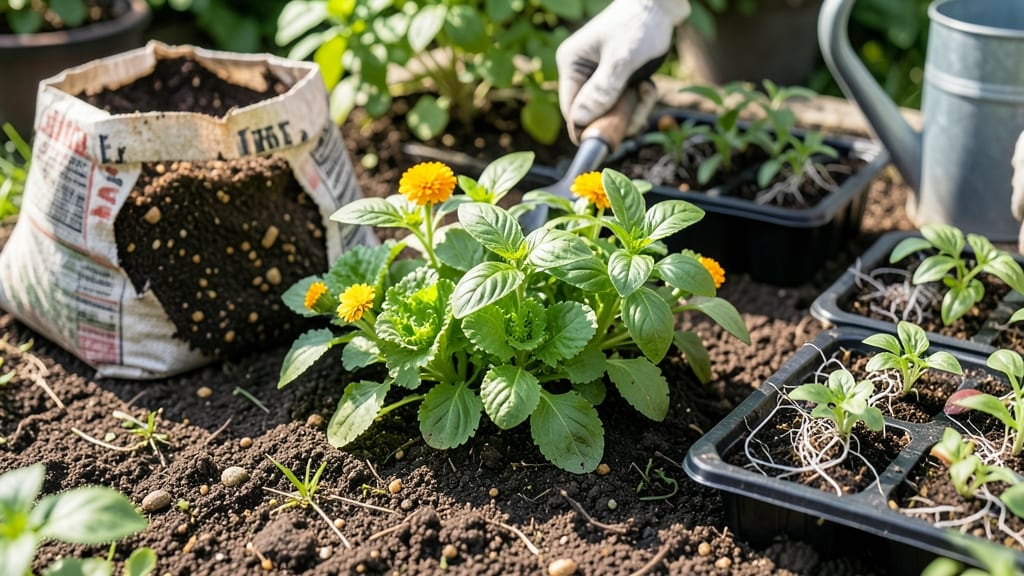
When using potting soil in garden beds, mix it with native soil in a 1:3 ratio to improve depleted areas or support young plants. This prevents compaction while avoiding nutrient imbalance, since potting mixes lack the organic matter needed for long-term garden health.
Potting soil is designed for containers, where plants grow quickly and nutrients deplete fast—but garden beds need a different approach. 🌱 The high organic matter in potting mixes breaks down too quickly in open soil, leaving plants hungry for nutrients.
Instead, use it strategically: blend it into existing soil for transplanting seedlings or revitalizing poor patches, but never as a standalone solution. For raised beds, layer it with compost to create a nutrient-rich transition zone without overloading with synthetic additives.
Think of it like a vitamin boost: effective in the short term but not a replacement for a balanced diet. I’ve seen gardeners double their tomato yields by mixing potting soil into planting holes, but only when paired with composted native soil.
The key is balance—too much potting mix creates a waterlogged mess, while too little fails to deliver the aeration young roots crave.
💡 In This Article
- Why Potting Soil Works in Gardens (And When It Doesn’t)
- Step-by-Step Guide: Mixing Potting Soil into Garden Beds
Why potting soil works in gardens (and when it doesn’t)
Potting soil excels in gardens because of its carefully balanced composition—typically 50-70% organic matter (like peat or coconut coir), 20-30% perlite or vermiculite for aeration, and 10-20% compost or fertilizer.
This structure mimics the ideal environment for young plants, offering superior moisture retention and root oxygenation compared to dense native soil. For example, a 1-gallon potting mix can hold 30-50% more water than compacted garden soil while preventing root rot through its air pockets. 🌱 The downside?
This same composition breaks down rapidly in open beds, leaving plants nutrient-starved within 3-6 months.
The science lies in microbial activity. Potting soil’s high organic content feeds beneficial microbes that decompose quickly, releasing nutrients in a burst—ideal for container plants with short lifespans.
But in garden beds, this process creates a nitrogen spike followed by depletion, often leading to yellowing leaves (a classic sign of nitrogen burnout). Native soil, by contrast, has a slower-release nutrient cycle thanks to its mineral content and established microbial communities.
For instance, clay-heavy soils retain nutrients longer but suffocate roots, while sandy soils drain too fast—potting mix bridges this gap temporarily but can’t sustain it long-term.
Where potting soil shines is in transplanting shock scenarios. When moving seedlings from pots to beds, the familiar medium reduces stress. I’ve seen tomato transplants establish 2-3 weeks faster when their planting holes are filled with a 50/50 mix of potting soil and composted native soil.
The trick is using it as a short-term amendment—like a root tonic—rather than a permanent solution. For permanent beds, focus on compost integration (aim for 10-15% compost by volume) to rebuild organic matter without the compaction risks of pure potting mix.
Texture plays a critical role too. Potting soil’s fine, crumbly structure (often 0.5-2mm particle size) contrasts with garden soil’s coarser, heterogeneous makeup. While this helps young roots penetrate easily, it can create a water-repellent layer when used in bulk, especially in clay-heavy soils.
To avoid this, always pre-moisten potting soil before mixing and work it into the top 6-8 inches of soil—never deeper, as this disrupts root systems. For raised beds, layer 2-3 inches of potting soil over existing soil and top with 1 inch of compost to create a gradual transition.
One common mistake is assuming all potting soils are equal. Seed-starting mixes (high in peat) dry out faster than all-purpose blends (with coconut coir), and miracle-gro mixes contain slow-release fertilizers that can overfeed plants if overused.
Always check the label: organic matter content should be ≥50% for garden amendments, while perlite/vermiculite should make up ≤30% to avoid structural issues.
For example, a 50-lb bag of potting soil might contain 25 lbs of peat, 15 lbs of perlite, and 10 lbs of compost—ideal for containers but too rich for bulk garden use.
For long-term health, pair potting soil with native soil amendments like biochar (for mineral retention) or worm castings (for microbial diversity).
I’ve found that adding 1 part potting soil to 3 parts native soil, then top-dressing with 1 inch of compost annually, creates a self-sustaining system that mimics the nutrient cycles of undisturbed ecosystems.
The key is thinking of potting soil as a temporary crutch, not a permanent fix—like using a walker during recovery rather than relying on it indefinitely. 💫