
Plants
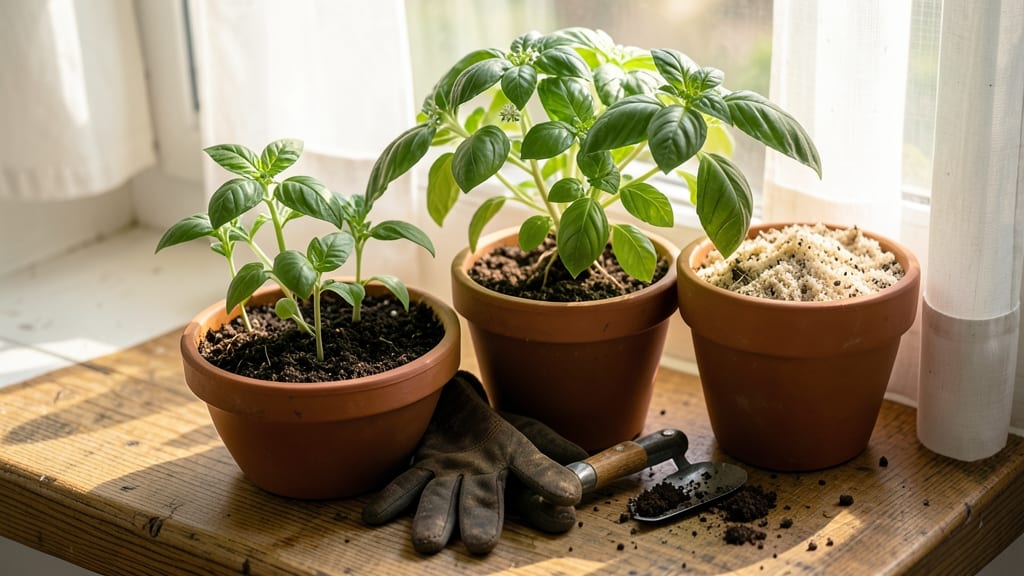
You shouldn't use garden soil for potting plants because it compacts easily, drains poorly, and may harbor pests or diseases. Instead, opt for a lightweight potting mix with perlite or vermiculite to ensure proper aeration and drainage for healthy root growth.
Garden soil's heavy texture creates suffocation for roots, trapping moisture and blocking airflow.
This environment encourages fungal growth and root rot, especially in containers where drainage is critical. 🌱 I've seen potted plants thrive when using mixes designed for containers—they're formulated to stay loose and breathable while retaining just enough moisture.
For example, a blend of 60% peat moss or coconut coir, 30% compost, and 10% perlite creates the ideal balance for most houseplants and herbs.
Even if you're tempted to save money by using garden soil, consider the long-term damage it can cause. Many garden soils contain weeds, pathogens, or excessive clay that never breaks down in pots.
The solution? Pre-mixed potting soils often include mycorrhizal fungi and slow-release nutrients that garden soil simply can't match. For succulents or cacti, add extra perlite or pumice to prevent compaction entirely.
💡 In This Article
- Why Garden Soil Fails as Potting Mix
- Best Potting Mix Alternatives for Container Gardening
Why garden soil fails as potting mix
Garden soil's natural composition makes it a poor choice for containers because its high clay content creates a dense, compacted structure that suffocates roots.
When packed into pots, garden soil can shrink up to 30% as it dries, leaving air pockets that collapse and creating an anaerobic environment where roots struggle to breathe.
This compaction also disrupts the soil's porosity, reducing water drainage by 50-70% compared to proper potting mixes, which are designed to wick away excess moisture while retaining just enough for roots.
The organic matter in garden soil—while beneficial in outdoor beds—often contains weed seeds, pathogens, and pests that thrive in the confined space of a pot. For example, fungal spores like Phytophthora can spread rapidly in stagnant garden soil, causing root rot within 2-4 weeks in poorly draining containers.
The nutrient profile also becomes unbalanced: garden soil may have excessive phosphorus or potassium from decomposed plant matter, while potting mixes are formulated with precise ratios of nitrogen, phosphorus, and potassium (NPK) tailored to container plants' rapid growth cycles.
Consider the texture difference: garden soil particles average 0.002-0.05mm in diameter, while ideal potting mixes incorporate coarse amendments like perlite (1-2mm) or vermiculite (0.25-0.5mm) to create air channels.
These larger particles prevent the soil from forming a solid mass when wet, allowing oxygen to reach roots—a critical factor since 90% of a plant's nutrient uptake occurs through its roots when they have adequate airflow.
Without this structure, even drought-tolerant plants like lavender or rosemary will show stunted growth or yellowing leaves.
Another hidden issue is the pH imbalance. Garden soil often has a pH between 6.0-7.5, which may be too alkaline for acid-loving plants like blueberries (pH 4.5-5.5) or too acidic for lime-tolerant plants like thyme (pH 6.0-8.0).
Potting mixes are typically neutral (pH 6.0-7.0) with added lime or sulfur to buffer fluctuations, while garden soil's pH can vary wildly depending on local minerals and organic amendments. This variability stresses plants and reduces their ability to absorb essential nutrients like iron or manganese.
For a real-world example, imagine planting a tomato seedling in garden soil versus a commercial potting mix. In garden soil, the roots may grow only 1-2 inches deep before hitting compacted layers, while in a proper mix, they can spread 6-12 inches wide and deep, accessing more nutrients and water.
The difference becomes visible in 3-4 weeks: garden soil plants often develop "club roots" (thickened, gnarled roots) from oxygen deprivation, while potted plants develop strong, fibrous root systems that support vigorous top growth. 🌱
Even if you sterilize garden soil by baking it, you still lose its natural structure and beneficial microbial communities.
Potting mixes are inoculated with mycorrhizal fungi and beneficial bacteria that help break down organic matter and make nutrients available to plants—something garden soil lacks in container environments where decomposition happens more slowly due to limited oxygen.