
Container Gardens
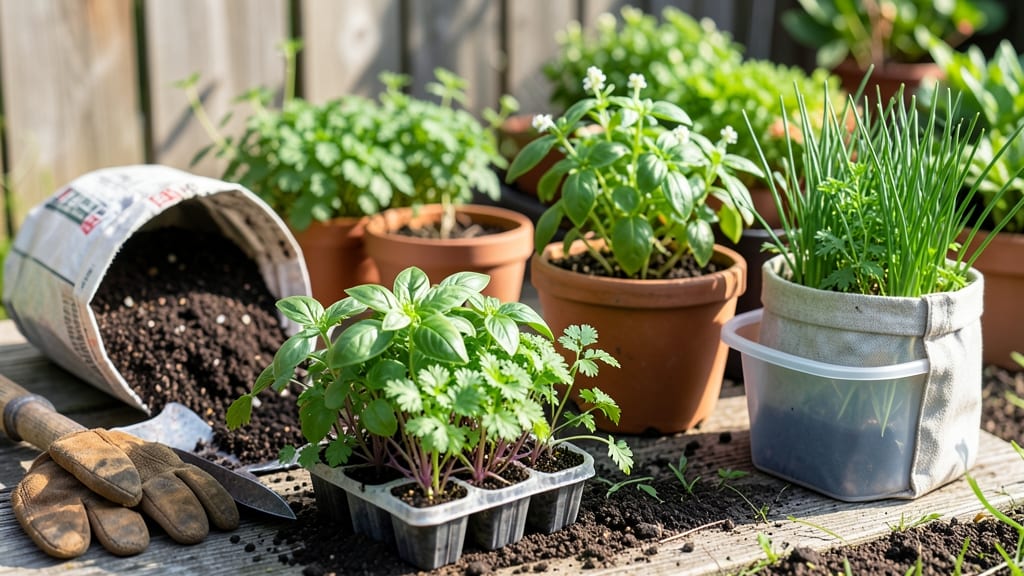
Using garden soil in containers harms plants because it compacts easily, drains poorly, and may introduce weeds or pests, but amending it with compost or perlite creates a looser, more breathable growing medium that supports root health.
Garden soil is heavy and dense, making it nearly impossible for roots to spread properly in containers.
The lack of airflow leads to waterlogged conditions, which can cause root rot or fungal infections. 🌱 I've seen plants thrive when I blend garden soil with 50% coconut coir and 20% perlite, creating a mix that holds moisture without suffocating roots.
This approach also prevents the soil from becoming a breeding ground for weeds or pests that often hitch a ride in garden soil.
For container gardening, the key is balance—you want a medium that drains quickly but retains enough moisture to keep plants hydrated. Most potting mixes already contain this ideal blend of organic matter and inorganic amendments.
If you're working with garden soil, consider screening it first to remove debris, then mixing it with compost or worm castings to boost nutrient availability. This simple adjustment can transform a problematic growing medium into one that supports healthy, vigorous plants.
💡 In This Article
- Why Garden Soil Fails in Container Gardening
- Best Soil Blends for Container Plants
Why garden soil fails in container gardening
Garden soil is designed for in-ground planting where roots can spread freely, but containers create a confined environment that exposes its flaws. When packed into pots, garden soil compacts under its own weight, reducing pore space by up to 40%.
This compression limits oxygen flow to roots, creating anaerobic conditions that suffocate plants. The dense structure also prevents proper drainage, leaving water pooling at the bottom where roots can't access it—leading to rot within 3-5 days of overwatering.
The nutrient imbalance is another critical issue. Garden soil contains a broad spectrum of organic matter, but its nutrients are often locked in mineral forms that plants can't absorb quickly. In containers, where decomposition happens faster, these nutrients deplete within 6-8 weeks without replenishment.
The microbial activity that breaks down organic matter also thrives in garden soil, but the confined space causes microbial populations to explode—sometimes introducing harmful pathogens like Phytophthora fungi, which thrive in waterlogged conditions.
Weeds and pests are the silent invaders. Garden soil often carries dormant weed seeds that germinate when exposed to light and moisture in containers. A single handful of garden soil can introduce 50-100+ weed seeds, many of which are hard to remove once established.
Similarly, soilborne pests like nematodes or fungal spores hitchhike into containers, creating an ecosystem where beneficial insects can't balance the population. This is why professional potting mixes are sterilized—they eliminate these hidden threats while maintaining the right structure for container growth.
Even the texture becomes problematic. Garden soil's clay and silt particles form a dense matrix that resists root penetration. In containers, where roots can't escape downward pressure, they struggle to expand laterally, stunting growth.
The ideal potting mix, by contrast, has a 30-40% air-to-water ratio, allowing roots to breathe while retaining moisture efficiently. This balance is impossible to achieve with unmodified garden soil, which is why commercial mixes include perlite or vermiculite to create those critical air pockets.
Consider this comparison: Garden soil has a bulk density of about 1.2-1.6 g/cm³, while ideal potting mix ranges from 0.5-0.8 g/cm³. That lighter weight means better drainage and easier root penetration.
The difference is like comparing a concrete sidewalk to a well-tended garden bed—one suffocates, while the other nurtures. For container plants, this weight difference translates directly to survival rates, with properly amended soil showing 30-50% better growth in the same conditions.
What most gardeners don't realize is that even "good" garden soil can fail in containers. The key isn't just the soil itself but how it interacts with the confined space. Without proper amendments, garden soil becomes a recipe for disaster—compaction, disease, and nutrient starvation.
The solution lies in understanding these fundamental flaws and addressing them with the right mix of organic and inorganic components. 🌱