
Tools
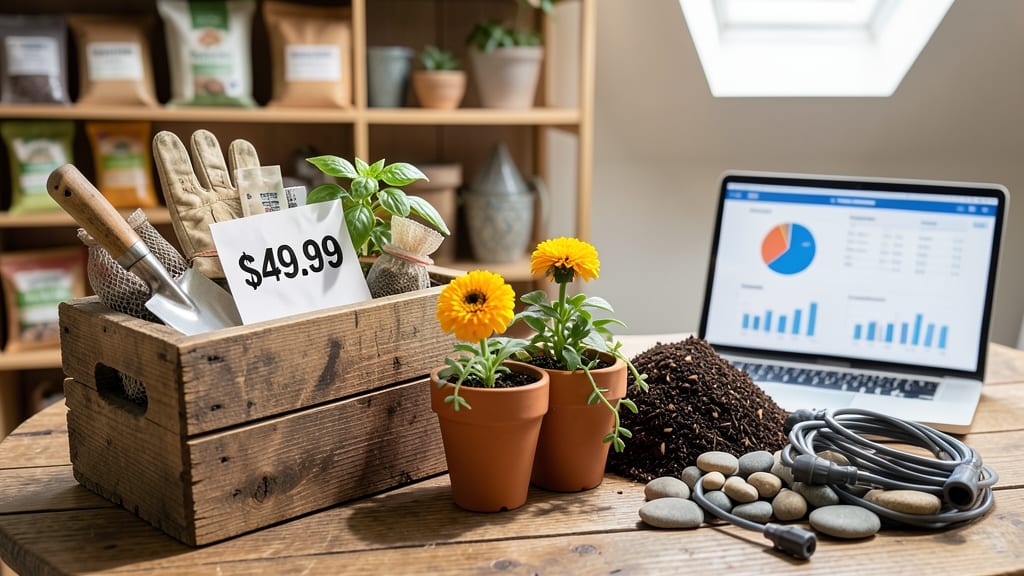
The price of a garden can range dramatically—from $100 for a small home garden to over $10,000 annually for large-scale landscapes, depending on factors like size, soil quality, plant selection, and hidden costs like irrigation systems.
Creating a garden isn't just about buying plants—it's an investment in soil prep, tools, and ongoing care. 🌱 For example, a 5x10-foot raised bed might cost $200 to fill with quality soil and compost alone, while a full backyard transformation could run $5,000+ when factoring in hardscaping, lighting, and professional design.
Many gardeners underestimate maintenance costs like mulch, fertilizers, and seasonal replacements, which can add $300-$1,000 yearly to your budget.
Another key consideration is whether you're starting small or going big. A container garden with herbs and veggies might only require $50-$150 upfront, but scaling up to fruit trees or shrubs could push costs into the thousands.
Regional differences also play a role—climate-specific plants and watering needs vary widely, so always research local growing conditions before committing to a design.
💡 In This Article
- Cost Factors Affecting Garden Pricing by Type
- Budgeting for a Garden: Essential Expenses Beyond Plants
Cost factors affecting garden pricing by type
The foundation of any garden's cost lies in its soil quality and plant selection.
For example, a 100-square-foot vegetable garden filled with nutrient-poor native soil might require $150-$300 in compost and amendments to create fertile beds, while a perennial flower border demands $500+ for established shrubs like hydrangeas or lavender that thrive for years.
Annuals like marigolds or petunias cost $1-$5 per plant, but perennials like peonies can run $20-$50 each at nurseries.
Labor costs dramatically impact pricing, especially when hiring professionals. A basic backyard garden design with simple layouts might cost $500-$1,500 for a landscaper, while a custom water feature or hardscaping project can exceed $10,000.
Regional climate plays a surprising role too—gardeners in arid climates like Arizona face $1,000-$3,000 in irrigation system costs, while humid regions may invest $500-$1,500 in fungal-resistant soil treatments. Organic gardening adds another layer: certified organic soil amendments cost 20-50% more than conventional options.
Let's compare two common garden types: a vegetable plot versus a landscape garden. A 20x20-foot vegetable garden with seeds and basic tools averages $300-$600, but adding raised beds or trellises can push costs to $1,000+.
In contrast, a landscape garden with shrubs, perennials, and mulch might start at $2,000 but can escalate to $10,000+ when including stone pathways or professional installation. The key difference? Vegetable gardens rely on annual replanting, while landscape gardens offer long-term returns with established plants.
Climate-specific adaptations further complicate pricing. In Zone 5, cold-hardy plants like coneflowers cost $8-$15 each, but tropical plants like bougainvillea require $50-$100+ and winter protection measures like burlap wraps or greenhouse setups.
Even water needs vary wildly: a drip irrigation system for a 500-square-foot garden costs $300-$800, while automatic sprinklers can exceed $1,500. These regional factors mean what costs $500 in California might require $2,000 in Colorado due to different growing conditions.
Organic versus conventional gardening creates another pricing tier. Organic soil amendments like worm castings or composted manure cost $0.50-$2 per pound, compared to $0.10-$0.30 for synthetic fertilizers.
Pesticides add to the gap: organic sprays like neem oil ($10-$20 per bottle) are pricier than chemical alternatives ($5-$10 per bottle). However, organic gardens often save long-term by reducing plant diseases and increasing yield, making them a cost-effective investment over 3-5 years despite higher upfront costs.
What most gardeners overlook? The hidden costs of maintenance. A 1,000-square-foot garden requires $200-$500 annually in mulch, fertilizers, and seasonal replacements alone. Factor in tool depreciation—a $200 tiller lasts 5-10 years, while hand tools like pruners ($15-$50) need replacing every 2-3 years.
These recurring expenses often double the total cost of gardening over time, making budgeting for 10-20% more than your initial estimate wise.