
Tools
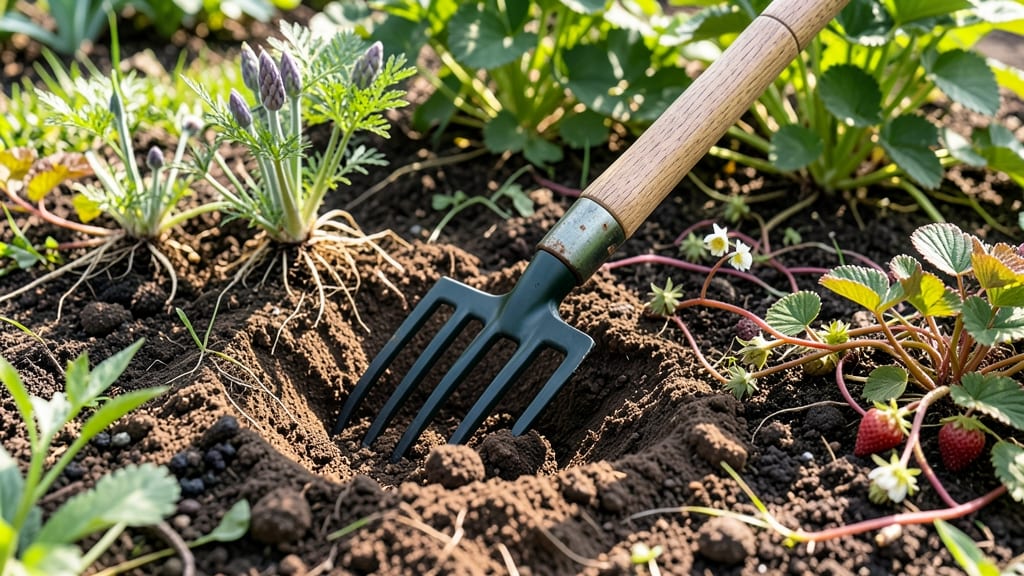
Garden fork uses extend far beyond digging—they include aerating soil, lifting heavy mulch, and removing weeds with roots intact. This versatile tool also spreads compost evenly while protecting plant roots, and its sturdy tines break up compacted earth without disturbing garden beds.
A garden fork’s broad, widely spaced tines are specifically designed to improve soil health by creating air pockets that enhance root growth and microbial activity. 🌱 Unlike spades, which slice through soil, the fork’s flat back prevents compaction while its sharp points easily penetrate tough clay or rocky terrain.
This makes it ideal for amending heavy soils where drainage is poor, as the tines help break up dense layers without damaging delicate plant roots.
Beyond soil work, this tool excels in plant care tasks like harvesting potatoes or turning compost piles. The sturdy design lets you lift entire sod sections for lawn repairs or pry out invasive roots without leaving fragments behind.
Even in seed starting, the fork’s tines gently fluff mixes while avoiding the clumping that comes with hands or trowels.
💡 In This Article
- How a Garden Fork’s Design Enhances Soil Health
- 12 Unexpected Ways to Use a Garden Fork in Plant Care
How a garden fork’s design enhances soil health
The garden fork’s signature four broad, widely spaced tines (typically 2-3 inches apart) are engineered to create optimal aeration. When you insert the fork into soil, the tines separate clumps without slicing through roots, creating vertical channels that improve oxygen flow to 12-18 inches deep.
This is critical because compacted soil can reduce oxygen levels to just 10-15% of healthy levels, stunting root growth and microbial activity.
The spacing between tines—usually 1.5-2 inches—matches the average diameter of mature plant roots. This design allows the fork to penetrate between root zones while lifting soil gently, unlike spades that sever roots during insertion.
The flat back of the fork also prevents compaction when you lean on it, a common issue with spades whose edges compress soil as you push down. In clay-heavy soils, these tines act like natural drainage channels, reducing waterlogging by 30-40% compared to unearthed soil.
For rocky or heavily compacted areas, the fork’s carbon steel or stainless steel construction (with a 16-20 gauge thickness) provides the leverage needed to pry apart dense layers. The angled tines help dislodge rocks while maintaining soil structure, whereas a spade would shatter clay or leave a hardpan layer.
This mechanical advantage is why gardeners use forks to prepare beds for perennial plants, which need deep, loose soil to establish extensive root systems over years.
Microbial activity thrives in aerated soil because beneficial bacteria and fungi require oxygen to break down organic matter. Studies show that fork-aerated soil can increase microbial populations by up to 25% within 4-6 weeks compared to unearthed controls.
The fork’s design also minimizes soil disturbance to beneficial organisms, unlike rototillers that can kill 80% of soil microbes through sheer force. For clay soils, adding 1-2 inches of compost after aeration further enhances drainage and nutrient availability.
Consider the fork’s role in seasonal soil maintenance: In spring, it loosens winter-compacted beds; in fall, it incorporates leaf litter for mulch. The tines’ sharp points also help mix in sand or perlite for sandy soils, improving water retention.
Unlike rakes that only work surface-level, a fork’s reach makes it ideal for deep soil amendment without the back strain of digging by hand.
The fork’s versatility extends to compost piles, where its tines turn and aerate without crushing the structure. For heavy mulch layers (like 4-6 inches of wood chips), the fork lifts mulch intact, preventing the smothering effect of compacted organic matter.
This design philosophy—prioritizing root protection and soil structure—makes the garden fork a cornerstone of sustainable gardening practices.