
Picking
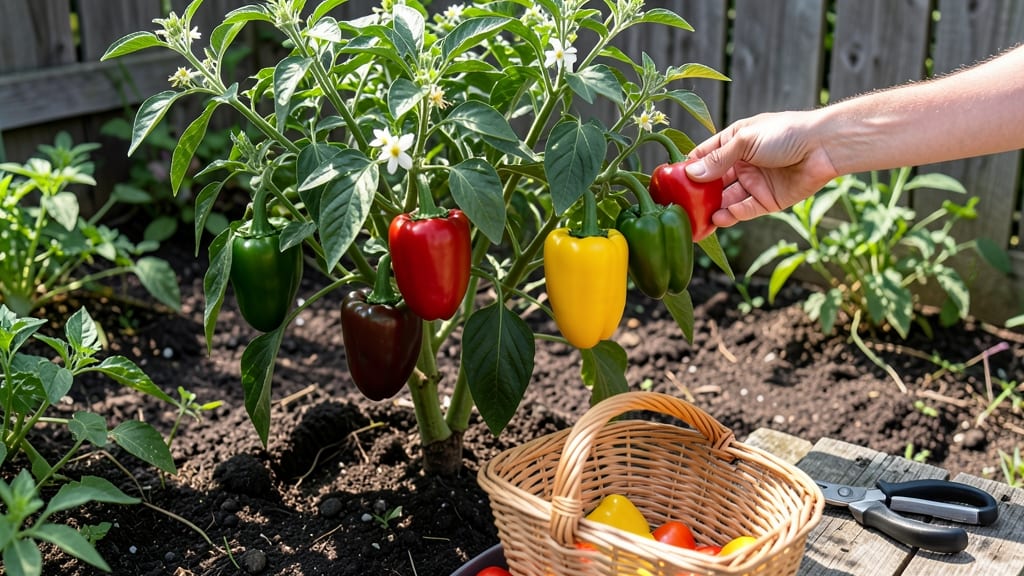
Picking peppers from your garden at the right time ensures the best flavor and texture, so knowing when to harvest is half the battle.
If you’ve ever wondered whether your garden peppers are ready—or if you’ve picked them too early and sacrificed flavor—you’re not alone. Timing is everything when harvesting 🌶️, and color is your best indicator of peak ripeness and taste.
Green peppers can be picked early, but letting them mature to red, yellow, or orange unlocks sweeter, more complex flavors. The key is watching for deep color, firm skin, and a slight give when you gently squeeze them.
In this guide, I’ll break down the exact color cues for different varieties, when to harvest for storage versus fresh eating, and how climate affects your timing. Ready to pick the perfect pepper?


How pepper color determines ripeness and flavor for harvesting
The vibrant colors of garden peppers aren't just for show—they're your clearest indicators of ripeness and flavor potential. When peppers transition from green to red, yellow, or orange, their internal chemistry changes dramatically, affecting sweetness, heat levels, and texture.
Understanding these color stages helps you harvest at peak flavor instead of guessing.
Peppers start green because of chlorophyll, the pigment that captures sunlight for photosynthesis. As they mature, chlorophyll breaks down, revealing carotenoids (yellow/orange) and lycopene (red). This process isn't just about color—it's about sugar accumulation and capsaicin development, which directly impacts taste.
For example, a red bell pepper can have 3x more sugar than its green counterpart.
| Color Stage | Ripeness Level | Flavor Profile | Heat Level | Best For |
|---|---|---|---|---|
| Green | Immature | Grassy, mild | Low (unless hot variety) | Pickling, cooking |
| Yellow | Mature | Sweet, fruity | Moderate | Fresh eating, salads |
| Orange | Near-full | Balanced sweet/heat | Medium-high | Roasting, sauces |
| Red | Fully ripe | Sweetest, richest | Lowest (unless hot) | Fresh eating, storage |
Green peppers are often harvested early because they're crisp and mild, but they lack the complex sugars developed during ripening. For example, a jalapeño picked green will have less heat than one left to turn red.
Meanwhile, bell peppers develop their signature sweetness only when fully colored—red bell peppers contain more vitamin C than green ones.
Yellow and orange peppers represent a transitional sweetness phase, where chlorophyll has broken down but lycopene hasn't fully taken over. These colors indicate peak flavor for many varieties, like banana peppers or yellow wax peppers.
Their slightly waxy texture also signals readiness for harvest, as the skin becomes firmer and glossier.
Red peppers are the sweetest and most nutrient-dense stage for most varieties. The lycopene responsible for the red color acts as an antioxidant and contributes to their richer flavor profile.
However, hot peppers like habaneros or ghost peppers become more intense as they ripen, so timing depends on your tolerance for heat.
Temperature plays a crucial role in color development. In cooler climates (Zones 6-8), peppers may need additional time to ripen fully, while hotter zones (9-11) can produce vibrant colors faster.
If your peppers aren't changing color by late summer, consider using black plastic mulch or a row cover to extend the growing season.
One common mistake is harvesting peppers based solely on size. A 3-inch bell pepper might look perfect but still be green inside if not fully colored. Always check the stem end—it should turn brown or yellow for colored varieties, indicating ripeness.
For green peppers, the stem remains green, but the pepper should feel firm and glossy.
If you're growing peppers for long-term storage, aim for fully colored fruit. Red peppers store best because their lycopene content helps preserve flavor and texture. Green peppers, while great for immediate use, soften quickly when stored.
For hot peppers, harvest at your preferred heat level—some gardeners pick yellow jalapeños for milder flavor.
Remember, every pepper variety has its own ripening timeline. While bell peppers typically take 70-90 days to reach full color, hot peppers like cayenne may need 80-100 days.
Keep a harvest journal to track your plants' progress and adjust future seasons accordingly. The more you observe, the better you'll recognize peak ripeness cues.
3 Critical color cues to pick peppers at perfect ripeness
Harvesting peppers at the right time transforms your garden bounty from mildly edible to flavor-packed perfection. Many gardeners make the mistake of picking too early—sacrificing sweetness—or too late, when peppers become rubbery or overly soft. The secret? Paying close attention to color cues specific to each variety.
For example, a bright red bell pepper isn’t just prettier than its green counterpart—it’s sweeter and more nutritious. But how do you know when your jalapeños or habaneros have reached peak ripeness?
Color isn’t the only factor—surface texture and size benchmarks also play crucial roles—but it’s the most reliable indicator for most gardeners. A deep, vibrant hue signals that the pepper’s sugars have fully developed, while uneven or pale colors mean it needs more time on the vine.
Even experienced growers sometimes overlook subtle shifts, like the shift from yellow-green to golden yellow in banana peppers, which marks the ideal harvest window for maximum heat and flavor.
One common mistake is assuming all peppers follow the same color rules. For instance, banana peppers should be harvested when they’re yellow-green to golden yellow, not fully yellow, to preserve their signature tang.
Meanwhile, shishito peppers are best picked when fully green and glossy, as they rarely change color. Always check the stem end: a brown or yellow transition signals readiness, while a green stem means more time is needed.
Size matters too—bell peppers should be at least 3-4 inches long before harvesting, while jalapeños are ideal at 2-3 inches. Smaller peppers often lack full flavor development. Pro tip: Use a gentle thumb squeeze to test firmness.
A ripe pepper should feel firm but slightly yielding, not hard or squishy. If you press too hard and leave an indent, it’s overripe.
Don’t forget that climate affects timing. In cooler regions, peppers may take longer to ripen fully, while hotter climates can accelerate color changes. If your peppers aren’t changing color by late summer, consider pruning excess leaves to redirect energy to fruit ripening or providing afternoon shade to prevent sunburn.
And if frost threatens before your peppers ripen, harvest them green and let them ripen indoors in a paper bag with a banana to speed up the process.
Mastering these color cues ensures you’ll always harvest peppers at their peak—whether you’re craving a sweet red bell, a fiery habanero, or a mild jalapeño.
The next time you’re in your garden, take a closer look: the perfect pepper isn’t just ready to eat—it’s ready to elevate your dishes.