
Light Requirements
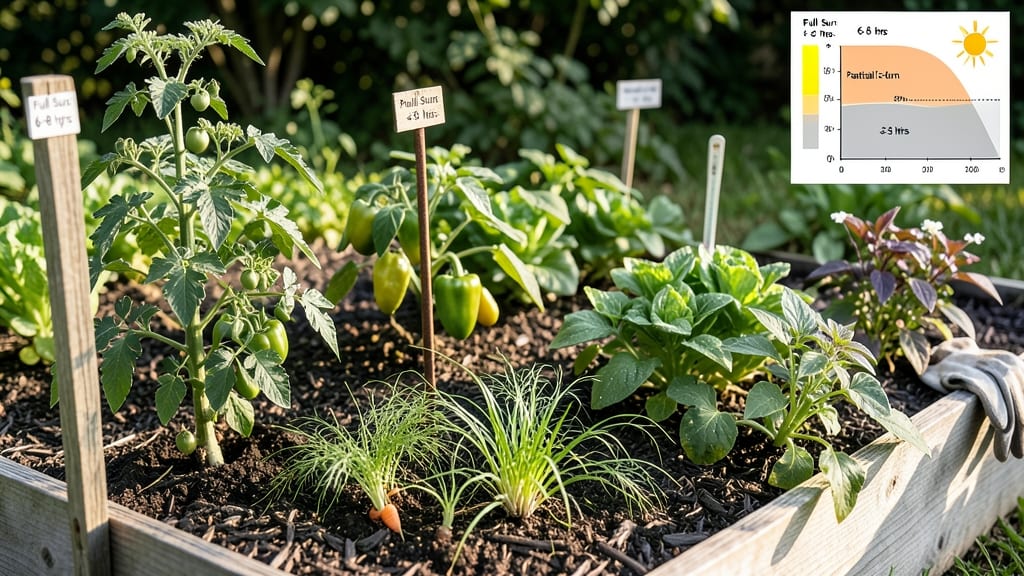
To get your vegetable garden thriving, you’ll need 6 to 8 hours of sunlight daily for most crops—especially tomatoes, peppers, and cucumbers that crave full sun.
Struggling to decide where to plant your tomatoes, peppers, or leafy greens? The right amount of sunlight can make the difference between a thriving vegetable garden 🥬 and one that barely survives.
Without enough light, your plants stretch toward the sky, produce fewer fruits, and may even bolt before you can harvest.
But here’s the catch: not every vegetable needs the same amount of sun. While sun-lovers like beans and eggplants demand full sun, leafy greens such as spinach and lettuce can handle partial shade. Knowing the difference saves you from wasted effort—and a garden full of underperforming plants.
Below, I’ll break down exactly how much sun each crop needs, how to measure sunlight in your space, and how to adjust your garden layout for the best results. No more guesswork—just a bountiful harvest ahead.

Sunlight requirements for vegetable gardens by crop type
Understanding sunlight requirements for your vegetable garden is the first step to growing a productive harvest. Most vegetables thrive with 6-8 hours of direct sunlight, but some tolerate less while others demand more. Getting this right ensures strong plants, better yields, and fewer pests.
For example, tomatoes and peppers need full sun, while lettuce and spinach can handle partial shade. Let’s break down the essentials so you can place every plant in its ideal spot.
Vegetables are typically categorized into three sun exposure groups: full sun (6+ hours), partial sun (3-6 hours), and shade-tolerant (under 3 hours). Misplacing a plant can lead to stunted growth, poor fruiting, or even death.
For instance, cucumbers in too little sun will produce bitter fruit, while kale in full sun may bolt prematurely. Knowing these categories helps you design a balanced garden layout that maximizes space and sunlight.
Full sun lovers like tomatoes, eggplants, and corn need the most light to produce abundant fruit. Partial sun plants such as green beans and beets can handle morning sun and afternoon shade, making them great for areas with afternoon heat. Meanwhile, shade-tolerant greens like arugula and swiss chard thrive in dappled light or under taller plants. Let’s dive into the specifics to help you plan your garden like a pro.
| Vegetable | Sunlight Needs | Growth Impact | Best For |
|---|---|---|---|
| Tomatoes | 6-8+ hours (Full Sun) | Poor fruit set, weak stems | South-facing beds |
| Peppers | 6-8+ hours (Full Sun) | Small, bitter fruit | Containers in sunny spots |
| Cucumbers | 6-8 hours (Full Sun) | Bitter taste, fewer vines | Trellises in open areas |
| Green Beans | 3-6 hours (Partial Sun) | Leggy growth, fewer pods | Morning sun, afternoon shade |
| Lettuce | 3-6 hours (Partial Sun) | Bolting, bitter leaves | Under tall plants or shade cloth |
| Spinach | 3-4 hours (Partial Shade) | Yellowing leaves, stunted growth | North-facing beds or dappled light |
| Kale | 3-6 hours (Partial Sun) | Premature bolting | Containers with afternoon shade |
| Swiss Chard | 3-6 hours (Partial Sun) | Weak stems, pale leaves | Under fruit trees or pergolas |
When planning your garden, start by observing your space. Use a sunlight tracker for a few days to map out how sunlight shifts throughout the day.
Most gardens get the most sun in the midday hours, so place full sun plants like peppers and squash in the center of your beds. If your garden has afternoon shade, opt for partial sun crops like bush beans or carrots in those areas.
This simple adjustment can prevent wasted
How to adjust your garden layout for optimal sunlight exposure
Even the most experienced gardeners face sunlight challenges—whether it's a shady corner under a tree or a small balcony with limited sun. The key to success is strategic planning. By understanding how sunlight moves across your space, you can create a layout that maximizes growth for every plant.
I’ve learned that even small adjustments—like rotating containers or pruning overhanging branches—can transform a struggling garden into a productive one.
Start by observing your garden throughout the day. Note which areas receive morning sun, afternoon sun, or dappled shade. Most vegetables need at least 6 hours of sunlight, but some, like leafy greens, thrive with just 3-4 hours.
My tomatoes and peppers always go in the sunniest spot, while lettuce and spinach get a break from the midday heat.
🌞 Key Adjustments for Sunlight Optimization
-
1. Map Your Sunlight
Use a sunlight tracker (or a simple app) to log sun exposure for 24 hours. Mark full sun (6+ hours), partial sun (3-6 hours), and shade areas on a sketch of your garden. -
2. Prioritize Tall Plants
Place sun-loving plants (like corn or sunflowers) on the north side of your garden to avoid shading shorter crops. This is especially helpful in small spaces. -
3. Use Vertical Gardening
Trellises and cages for vining plants (e.g., cucumbers or beans) keep them off the ground, allowing sunlight to reach lower-growing plants below. -
4. Rotate Containers
If your garden has limited sun, move potted plants to follow the sun’s path. For example, shift herbs from east to south as the day progresses. -
5. Prune Strategically
Trim overhanging branches from trees or fences to increase sunlight to your garden. Even removing a few leaves can make a difference for shade-tolerant plants. -
6. Companion Planting
Pair sun-loving plants (like tomatoes) with shade-tolerant companions (like basil or radishes) to maximize space and sunlight distribution. -
7. Adjust Plant Spacing
Wider spacing between large plants (e.g., squash) prevents them from blocking sunlight for nearby crops. Aim for 18-24 inches between most vegetables.
If your garden has permanent shade from a building or tree, focus on shade-tolerant vegetables like kale, Swiss chard, or bush beans. These crops can thrive with just 3-4 hours of sunlight, making them perfect for tricky spots.
I’ve even grown microgreens under fluorescent lights in fully shaded areas!
For small spaces, like balconies or patios, choose compact varieties and use reflective surfaces (like light-colored walls or mirrors) to bounce extra sunlight onto your plants. This trick can boost growth by up to 20% for sun-hungry crops like peppers.
Don’t forget to monitor your garden’s sunlight needs as seasons change. In winter, days are shorter, so you might need to rearrange plants or add seasonal shade cloth to protect summer crops from too much intensity.
A little flexibility goes a long way in keeping your garden thriving all year round.
With these adjustments, you’ll turn even the trickiest garden spots into productive havens. The secret is observation and adaptability—two traits every great gardener shares! 🌱