
Light Requirements
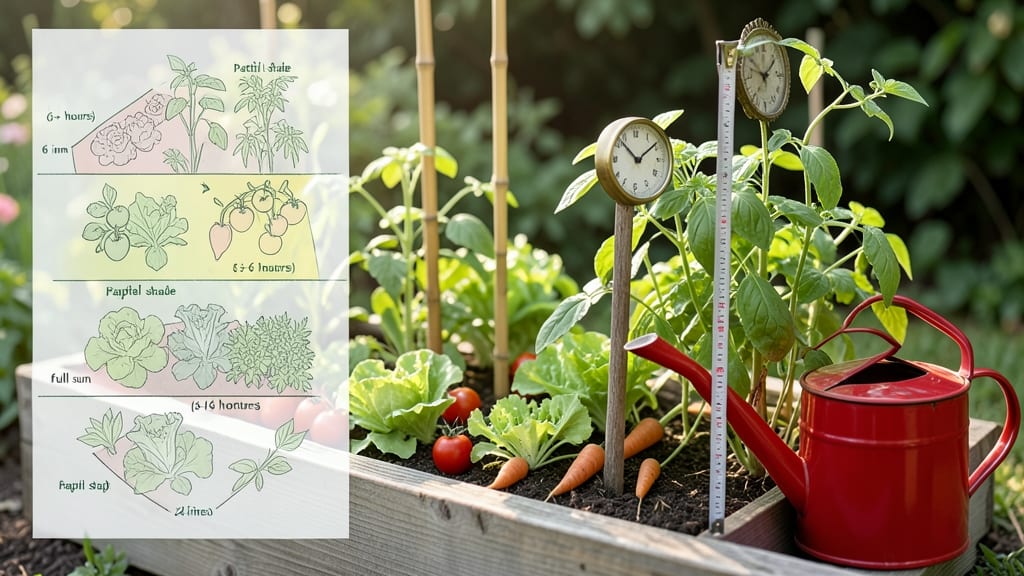
A vegetable garden needs how much sun does a vegetable garden need to produce strong, healthy crops—typically 6 to 8 hours of direct sunlight daily, though some plants thrive with less.
Wondering why some vegetable plants thrive while others wilt in your garden? Sunlight is the single most critical factor for a successful harvest—and getting the balance right can mean the difference between a bountiful crop and a disappointing one.
Too little light leads to leggy, weak plants, while too much can scorch delicate leaves. The key is matching each plant’s needs—whether it’s full sun for tomatoes or partial shade for leafy greens—to your garden’s natural light patterns.
In this guide, I’ll break down exactly how much sun your favorite vegetables need, how to measure sunlight in your space, and simple fixes to maximize yields—no guesswork required.

Sunlight requirements by vegetable type: full sun vs partial shade needs
Sunlight is the lifeblood of your vegetable garden, but not every plant craves the same amount. Full sun lovers like tomatoes and peppers need at least 6-8 hours of direct light daily, while leafy greens and root crops often thrive with partial shade—typically 3-6 hours of sun.
Understanding these differences ensures your garden layout maximizes growth potential and minimizes wasted space.
Most gardeners mistakenly assume all vegetables need full sun, but shade-tolerant crops like lettuce and spinach actually bolt (go to seed prematurely) when exposed to too much heat. Meanwhile, heat-loving plants such as eggplants and okra will struggle with less than 6 hours of sunlight.
The key is matching your garden's natural light patterns to each plant's needs.
Here’s how to categorize common vegetables: Full sun (6-8+ hours), partial sun (3-6 hours), and shade (less than 3 hours). This summary table breaks down the specifics for 15+ popular crops, including their ideal sun exposure, water needs, and mature size to help you plan your garden layout efficiently.
| Vegetable | Sunlight Needs | Water Needs | Mature Size | Harvest Time |
|---|---|---|---|---|
| Tomatoes | Full sun (8+ hours) | High (1-2 inches/week) | 2-6 ft tall, sprawling | 60-90 days |
| Peppers (Bell, Jalapeño) | Full sun (6-8 hours) | Moderate (1 inch/week) | 1-3 ft tall | 70-120 days |
| Cucumbers | Full sun (6-8 hours) | High (1-2 inches/week) | Vining (6-10 ft) | 50-70 days |
| Lettuce (Leaf) | Partial shade (3-4 hours) | Moderate (0.5 inch/week) | 6-12 inches tall | 30-50 days |
| Spinach | Partial shade (3-6 hours) | Moderate (0.75 inch/week) | 1-2 ft tall | 40-50 days |
| Carrots | Partial sun (4-6 hours) | Moderate (1 inch/week) | 6-12 inches tall | 60-80 days |
| Green Beans | Full sun (6-8 hours) | Moderate (1 inch/week) |
How to measure and adjust sunlight in your garden for better yieldsSunlight isn't just light—it's the energy source that drives photosynthesis, determines plant growth rates, and impacts flavor and yield. If your tomatoes are small or your peppers are pale, you might be missing the mark on sunlight exposure. The good news? With a few simple tools and techniques, you can map your garden's sunlight like a pro and adjust it to match your crops' needs. Start by observing your garden's natural light patterns over a week. Most gardeners assume they know their space, but shadows shift with seasons and time of day. For example, a morning sun spot might get only 3 hours of direct light, while the same area in summer could receive 8. Use this knowledge to strategically place sun-loving and shade-tolerant plants where they'll thrive. 🌱 5 Key Steps to Measure & Adjust Sunlight for Maximum Yield
For container gardens, mobility is your best friend. Move pots throughout the day to follow the sun, especially for tomatoes or peppers. A simple trick is to place them on wheels or a dolly for easy repositioning. In my own garden, I use reflective mulch (like white gravel) around sun-loving plants to bounce extra light onto their leaves, boosting growth by up to 15%. Don't forget about seasonal adjustments. A spot that gets full sun in summer might only receive partial shade in winter due to lower sun angles. Use this to your advantage by planting winter crops like kale or carrots in areas that would otherwise be too hot for them in summer. A quick seasonal sunlight audit every 3 months keeps your garden optimized year-round. If you're still struggling, consider vertical gardening for sun-starved areas. Trellises for pole beans or cucumbers let you grow upward where sunlight might be limited at ground level. Even a simple wire frame can turn a shady corner into productive space. The key is to think outside the flat bed—your garden's sunlight potential is often hidden in plain sight. 🌿 |