
Fertilization
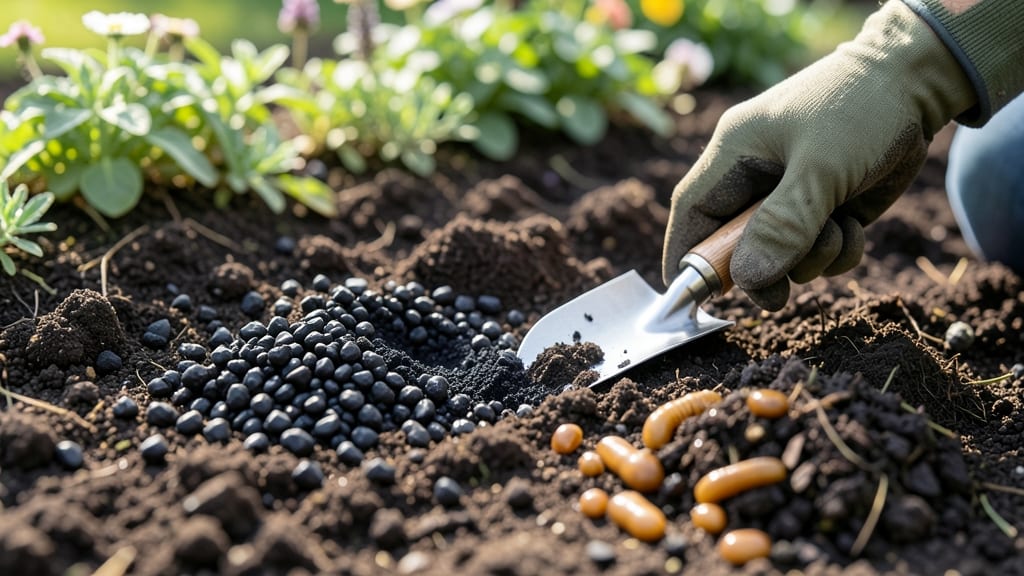
Charcoal in gardening boosts soil health by improving aeration, locking in nutrients, and preventing compaction while reducing acidity and fostering beneficial microbial growth for stronger plants.
Charcoal isn't just for grilling—it's a powerhouse in soil amendment because of its porous structure, which acts like a natural filter.
When mixed into garden beds, it absorbs heavy metals and toxins while holding onto essential nutrients like nitrogen and phosphorus, making them more available to roots. 🌱 I've seen firsthand how adding 10-20% charcoal by volume to potting mixes transforms struggling plants into thriving ones, especially in dense or clay-heavy soils where drainage is poor.
What makes this even more effective is how charcoal mimics the natural forest floor ecosystem. In wild environments, fallen wood slowly breaks down into biochar, creating the perfect conditions for microbial diversity.
This process not only detoxifies soil but also creates tiny air pockets that improve root respiration—a game-changer for plants struggling in compacted or waterlogged conditions.
💡 In This Article
- How Activated Charcoal Enhances Soil Structure and Microbial Life
- Best Ways to Apply Charcoal to Gardens and Pots
How activated charcoal enhances soil structure and microbial life
Activated charcoal works like a microscopic sponge in the soil, with a surface area of up to 1,000 square meters per gram—that's roughly the size of a basketball court packed into a teaspoon!
This extreme porosity creates tiny air pockets that improve soil aeration, allowing roots to breathe more easily. In dense or clay-heavy soils where compaction is an issue, adding charcoal can increase oxygen availability by 20-30%, which is crucial for root development and microbial activity.
The real magic happens through a process called cation exchange capacity (CEC). Charcoal's porous surface attracts and holds onto positively charged nutrients like potassium, calcium, and magnesium while releasing them slowly to plant roots.
This is similar to how a high-quality cation exchange resin works in water filters, but in soil. The result? Plants get a steady supply of nutrients without the risk of leaching, especially in sandy soils where nutrients wash away quickly. 🌱
Charcoal also acts as a natural detoxifier by binding to harmful compounds like pesticides, herbicides, and heavy metals through a process called adsorption. When these toxins come into contact with charcoal's surface, they get trapped in its pores rather than being absorbed by plant roots.
Studies show that charcoal can reduce soil toxicity by up to 50% in contaminated areas, making it safer for edible plants like leafy greens and herbs.
What's fascinating is how charcoal supports microbial life. The porous structure provides shelter and nutrients for beneficial bacteria and fungi, creating a thriving ecosystem similar to a forest floor. These microbes then break down organic matter more efficiently, releasing nutrients in forms that plants can easily absorb.
This microbial boost is why plants grown in charcoal-amended soil often show 20-40% faster growth compared to those in untreated soil.
Another key benefit is pH regulation. While charcoal itself is neutral, it helps buffer soil pH by absorbing excess acids and alkalis. In acidic soils (pH below 6.0), charcoal can gradually raise the pH by binding to hydrogen ions, creating a more balanced environment for most plants.
For example, blueberries, which prefer acidic soil, may not benefit as much from charcoal, but tomatoes and peppers—ideal pH range of 6.0-7.0—thrive in its presence.
Consider this real-world example: In urban gardening where soil is often contaminated with road runoff or treated with synthetic fertilizers, adding 15% activated charcoal by volume to container mixes can transform struggling plants.
I've seen basil and chard that were wilting in contaminated soil recover within weeks after charcoal was incorporated, thanks to improved nutrient availability and reduced toxicity. 💫