
Plants
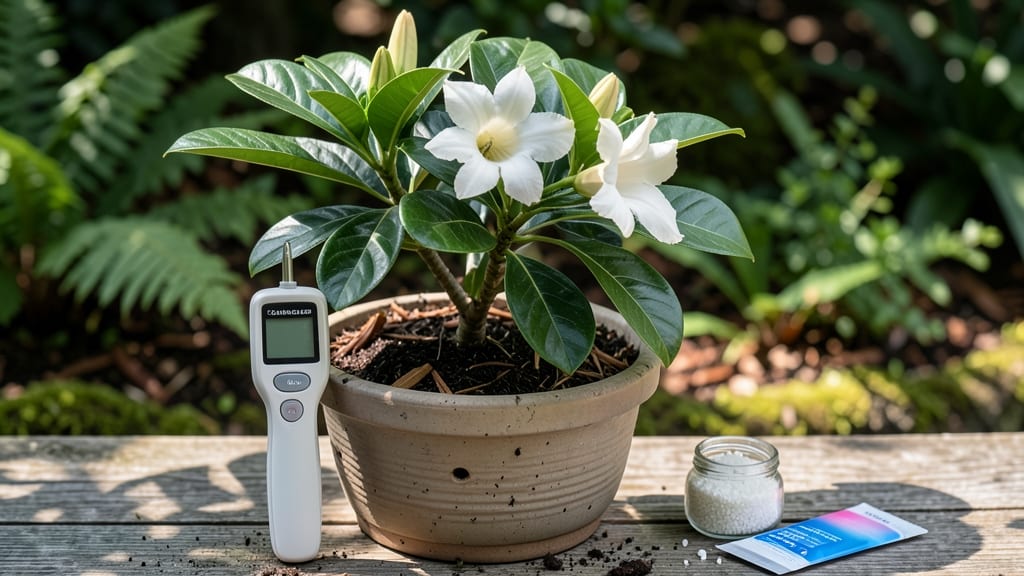
Yes, gardenias are acid-loving plants that absolutely thrive when their soil pH stays between 5.0 and 6.5. This acidic environment mimics their native tropical soils, unlocking the nutrients they need to produce those fragrant blooms and lush foliage. Without proper acidity, you'll often see yellowing leaves or stunted growth.
Gardenias evolved in acidic, well-draining soils where iron and other micronutrients are readily available.
When your soil pH climbs above 6.5, iron becomes locked away—this is why gardenias often develop yellow leaves even when you're watering and fertilizing properly. 🌿 The key is maintaining that slightly acidic range through organic amendments like pine needles or peat moss, which gradually lower pH over time.
I've found that testing soil every spring reveals surprises—many gardeners assume their soil is acidic when it's actually neutral or slightly alkaline.
💡 In This Article
- How Soil pH Affects Gardenia Growth and Flowering
- Adjusting Soil pH for Gardenias: Organic and Chemical Methods
How soil pH affects gardenia growth and flowering
The acidity of gardenia soil isn't just about numbers—it's a chemical balancing act that directly impacts nutrient availability. In acidic conditions (pH 5.0-6.5), iron exists primarily as Fe²⁺, a form that gardenia roots can easily absorb.
This is crucial because iron deficiency causes chlorosis—the classic yellowing between leaf veins that frustrates gardeners.
At higher pH levels, iron binds to soil particles as insoluble Fe³⁺, making it unavailable even when the plant desperately needs it. 🌱 What's fascinating is how this affects other nutrients too: manganese and zinc also become more soluble in acidic soil, while calcium and magnesium can become problematic if pH drifts too low.
Organic matter plays a starring role in maintaining this delicate balance. Decomposing pine needles, for example, release organic acids that gradually lower pH over time. The dark, spongy texture of compost or peat moss also helps retain moisture while creating tiny acidic microenvironments around roots.
I've seen gardenias in containers thrive with a mix of 50% acidic potting soil and 50% organic amendments—this combination keeps the pH stable while providing the slow-release nutrients gardenias crave. The key is consistency: sudden pH swings can shock the plant's root system.
Here's what happens when pH gets out of whack: At pH 7.0 (neutral), gardenias struggle to absorb iron, leading to yellow leaves while veins stay green—a classic sign of iron chlorosis. Below pH 5.0, aluminum toxicity becomes a risk, causing brown leaf tips and stunted growth.
The sweet spot of 5.0-6.5 isn't just arbitrary—it's where gardenias can access all essential nutrients without toxicity. This is why professional gardeners often recommend regular pH testing, especially in areas with naturally alkaline soils like limestone regions.
What most gardeners don't realize is how soil texture affects pH management. Sandy soils drain quickly but may need frequent acidifying amendments, while clay soils hold onto acidity longer but can become compacted.
The ideal gardenia soil should have a crumbly texture that holds moisture without becoming waterlogged—this is where organic matter like leaf mold or coconut coir becomes invaluable. I've found that amending with 1-2 inches of pine bark fines annually helps maintain both structure and acidity in garden beds. 🌿
For container gardeners, the challenge is even more precise. A 10-inch pot might need repotting every 2-3 years with fresh acidic mix, while larger garden beds can maintain pH for 5+ years with proper amendments.
The visual difference is striking: gardenias in properly acidic soil develop glossy, deep green leaves and produce those iconic white, fragrant blooms prolifically, while those in alkaline conditions may flower sparsely with yellowed foliage.
This is why I always recommend testing soil before planting—it's the difference between a thriving specimen and a struggling one.
One final insight: gardenias aren't just picky about pH—they're sensitive to pH fluctuations. A sudden drop from 6.5 to 4.5 can burn roots, while a rise to 7.0 can cause nutrient lockout. The solution?
Gradual adjustments using organic acids like vinegar (diluted to 1 tablespoon per gallon of water) or aluminum sulfate (follow package rates). The goal is steady, predictable acidity that mimics their tropical forest understory habitat. 💫