
Light Requirements
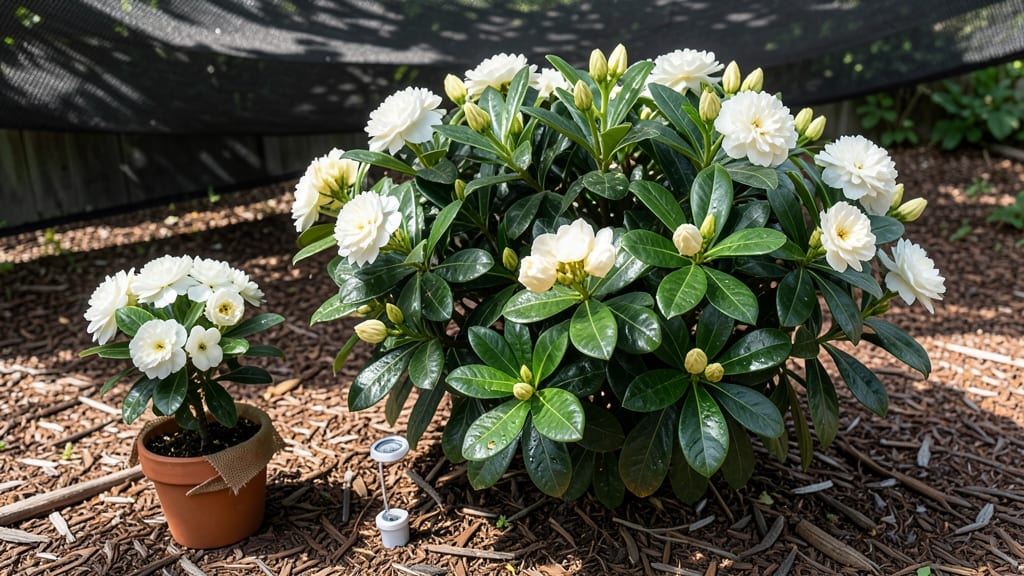
Gardenias can grow in shade, but their fragrant blooms and lush foliage depend on the right balance of light and care.
If you’ve ever watched a gardenia struggle in deep shade, you’re not alone. The key isn’t just any shade—it’s partial shade with filtered light, like dappled sun through trees.
Too little light, and your plant will fight to bloom; too much direct shade, and it may lose its signature scent entirely.
Here’s the good news: with the right variety, soil tweaks, and a few smart adjustments, you can coax thriving gardenias 🌸 even in shadier spots.
We’ll break down how much shade they can handle, which cultivars perform best, and the simple tricks to keep them happy—without sacrificing those intoxicating white flowers.
Ready to turn your shady corner into a fragrant oasis? Let’s dive into the secrets of growing gardenias in partial sun.


How much shade can gardenias tolerate before struggling?
Gardenias are famous for their intoxicating fragrance and glossy foliage, but their light requirements often leave gardeners confused. While they thrive in partial shade, too much shade can stunt growth and reduce blooms.
The key lies in understanding how much shade your gardenia can handle before it starts struggling to survive—let alone flourish.
Native to tropical and subtropical regions, gardenias naturally grow under dappled sunlight and filtered shade. However, their ability to tolerate shade depends on the type of shade and your climate. In cooler regions, gardenias may tolerate more shade, while hotter climates demand more light to prevent stress.
The science behind this is simple: gardenias need photosynthesis energy to produce blooms, and shade limits this process.
Here’s the critical threshold: gardenias can tolerate up to 6 hours of shade per day—but only if they receive bright, indirect light for the remaining hours. Deep, dense shade (like under a thick canopy) will cause leggy growth, sparse foliage, and few to no flowers.
Think of it like a balance: too much shade starves the plant, while too little sun scorches it.
| Light Condition | Daily Sunlight | Bloom Production | Foliage Health | Growth Habit |
|---|---|---|---|---|
| Full Sun (6+ hours direct) | 6-8 hours | Abundant, vibrant blooms | Dark green, glossy leaves | Compact, bushy growth |
| Partial Sun (3-6 hours direct) | 3-6 hours | Moderate blooms, slightly fewer | Healthy, slightly lighter green | Balanced, upright growth |
| Partial Shade (2-3 hours direct) | 2-3 hours | Few blooms, small size | Pale green, sparse leaves | Leggy, stretched growth |
| Deep Shade (0-2 hours direct) | 0-2 hours | Almost no blooms | Yellowing, weak leaves | Stunted, weak structure |
If your gardenia is in partial shade, aim for at least 3 hours of morning sunlight—this gentle light helps prevent leaf burn while providing enough energy for blooms. Morning sun is ideal because it’s less intense than afternoon rays, which can scorch delicate gardenia leaves.
In my own garden, I’ve found that placing gardenias near an east-facing window or under a light dappled tree (like a Japanese maple) strikes the perfect balance.
The science behind gardenia light needs ties to their natural habitat. In the wild, these shrubs grow under the canopy of larger trees, where they receive filtered sunlight. This means they’re adapted to thrive in bright, indirect light rather than harsh direct sun.
However, their blooming mechanism is triggered by sunlight, so too little light means fewer flowers. Think of it like a battery: gardenias need enough "charge" (sunlight) to power their blooms.
Watch for these signs that your gardenia is getting too much shade: yellowing leaves, sparse foliage, and no blooms. If you notice these, it’s time to adjust its location or supplement with a grow light during winter months when natural light is scarce.
I once had a gardenia in deep shade that looked like it was dying—until I moved it to a sunnier spot and saw it rebound within weeks!
For container gardenias, the stakes are even higher. Potted plants have less root access to light, so they need more direct sunlight—up to 4-6 hours daily—to compensate.
If you’re growing gardenias in pots, place them in a south-facing spot or use a reflective surface (like a white wall) to bounce more light onto the leaves. This trick can make a huge difference in bloom production.
One common misconception is that all shade is equal. Dappled shade (like under a lattice or loose tree branches) is far better than dense shade (like under a thick evergreen). The former allows light to filter through, while the latter blocks it entirely.
If you’re working with dense shade, consider pruning nearby trees or relocating your gardenia to a sunnier area. Even a few extra hours of light can transform a struggling plant into a blooming beauty.
In summary, gardenias can tolerate up to 6 hours of shade per day—but only if they receive bright, indirect light for the rest of the time. For optimal blooms, aim for 3-6 hours of morning sun, and avoid deep, dense shade.
With the right light conditions, your gardenia can thrive even in shady spots, filling your garden with its signature fragrance and lush foliage. 🌸
5 Proven tips to grow thriving gardenias in shade
Gardenias in shade aren’t a lost cause—they just need a little help adapting to lower light conditions. The secret lies in mimicking their natural habitat while compensating for reduced sunlight.
Unlike sun-loving plants, gardenias thrive with bright, indirect light rather than harsh midday rays, making them perfect for dappled shade spots.
I’ve grown gardenias in partial shade for years, and the difference between struggling plants and lush, fragrant shrubs comes down to a few key adjustments.
Whether you’re dealing with deep shade under trees or just filtered light from a nearby building, these tips will help you coax the best blooms from your gardenias—even when sunlight is limited.
First, focus on soil quality—gardenias in shade need well-draining, acidic soil (pH 5.0-6.5) to thrive. Amend your existing soil with compost or peat moss to improve texture and nutrient availability.
I’ve seen gardenias in heavy clay completely transform after adding a 3-inch layer of organic matter to their planting hole.
Next, pruning makes all the difference in shaded conditions. Prune in late winter or early spring to remove dead or crossing branches and open up the plant’s center.
This allows more light to reach inner growth, which is crucial for bloom production. Avoid heavy pruning in fall, as this can stress the plant before winter.
Companion planting is another game-changer. Pair your gardenias with shade-loving perennials like ferns, hostas, or impatiens. These plants create a moisture-retentive microclimate while adding visual interest. Just be sure to choose companions that won’t compete for nutrients or shade your gardenia too much.
Finally, don’t forget about seasonal adjustments. In early spring, apply a balanced, acidic fertilizer (like 10-10-10) to give your gardenias a nutrient boost. During the growing season, water deeply but avoid soggy soil, as this can lead to root rot—a common issue in shaded gardens.
Mulching with pine needles or oak leaves helps maintain soil acidity and reduces water loss.
With these five tips, your gardenias will not only survive in shade—they’ll thrive and bloom like they’re basking in full sun. The key is patience and consistency, but the reward of those heavily fragrant white flowers is worth every effort. 🌸