
Vegetables
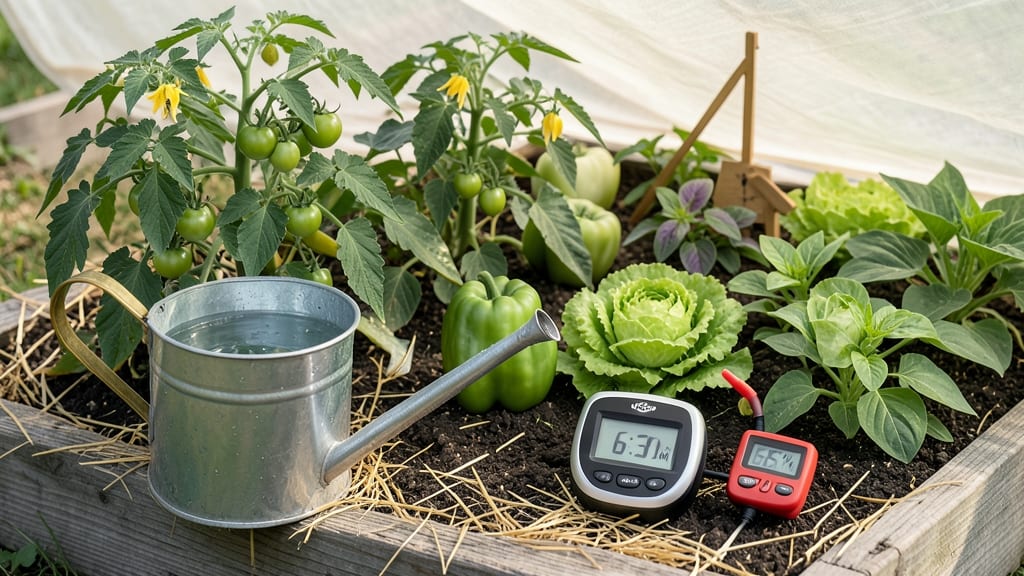
Watering your vegetable garden at the best time of day isn’t just about convenience—it’s the secret to deeper roots and fewer wasted gallons.
Picture this: you’ve just planted your 🥬 garden after the last frost, and you’re eager to see those seedlings thrive. But if you water at the wrong time, you’re basically handing evaporation a free pass while your plants struggle to absorb moisture. That’s why timing matters more than you think.
The ideal window—early morning, before the sun climbs too high—lets water soak deep into the soil where roots can access it all day. It also cuts down on fungal risks and keeps your plants from wilting under midday heat.
But what if your schedule doesn’t align with 6 AM? Don’t worry; we’ll break down how to adjust for your lifestyle and climate.
By the end of this guide, you’ll know exactly when to water for maximum efficiency, how to spot the signs of over- or underwatering, and why skipping midday watering saves both your plants and your time. Let’s get those roots growing!
Why early morning watering boosts vegetable garden growth
Watering your vegetable garden at the wrong time can turn your hard work into wasted effort. When you water in the heat of the day, up to 30% of moisture evaporates before roots can absorb it.
But early morning watering—between 6 AM and 10 AM—lets your plants soak up hydration when temperatures are cool, giving them the best start to the day.
This timing isn’t just about efficiency; it’s about plant physiology. Most vegetables, like tomatoes and peppers, have shallow roots that need consistent moisture. Watering in the morning ensures roots stay hydrated when they’re most active, fueling growth and photosynthesis throughout the day.
Here’s the science: Cooler morning temperatures (60-75°F) reduce evaporation rates by up to 50% compared to midday. Plus, wet foliage dries quickly in the morning sun, cutting the risk of fungal diseases like powdery mildew and blight, which thrive in damp, humid conditions.
🌱
| Time of Day | Evaporation Rate | Fungal Risk | Root Absorption | Best For |
|---|---|---|---|---|
| 6 AM - 10 AM (Early Morning) | Low (30% loss) | Low (foliage dries quickly) | High (roots active) | All vegetables |
| 10 AM - 4 PM (Midday) | High (70%+ loss) | High (wet foliage in heat) | Low (roots stressed) | Emergency only |
| 4 PM - 8 PM (Evening) | Medium (40% loss) | Medium (humidity risk) | Medium (roots less active) | Drought conditions |
Adjusting for your climate zone is key. In hot, dry regions (like USDA Zone 9-11), water even earlier—by 5 AM—to beat the rising heat. Meanwhile, in cooler climates (Zones 3-6), a 7 AM to 9 AM window works perfectly, aligning with when soil temperatures are ideal for absorption.
For leafy greens like lettuce and spinach, morning watering prevents bolting (premature flowering) caused by stress. Root vegetables, such as carrots and potatoes, benefit from deep morning watering, which encourages roots to grow deeper into the soil for stability.
Pro tip: Use a soaker hose or drip irrigation in the morning to deliver water directly to the soil. This method minimizes evaporation and ensures 1-2 inches of water reach the root zone without wetting leaves, further reducing disease risk.
If you’re in a humid climate, like the Southeast U.S., stick to morning watering to avoid prolonged leaf wetness. In arid regions, like the Southwest, morning watering combined with mulch can cut water needs by up to 40% by retaining moisture longer.
💧
Consistency is critical. Watering at the same time daily helps your plants develop strong root systems. Over time, they’ll learn to expect moisture when they need it most—right at dawn.
This routine also makes it easier to spot underwatering signs, like wilting leaves by midday, which shouldn’t happen if roots are hydrated from the start.
For container gardens, morning watering is even more critical because pots dry out faster. Check soil moisture in the morning—if the top inch is dry, it’s time to water. This habit prevents overwatering, which can lead to root rot in compacted container soil.
Late evening watering: when it works (and when to avoid it)
Watering your vegetable garden in the late evening might seem like a smart move—after all, the cooler temperatures reduce evaporation, right? While this approach has its advantages in certain climates, it also comes with hidden risks that could harm your plants.
Understanding the balance between overnight hydration and fungal threats is key to making the right choice for your garden.
In humid climates like the southeastern U.S., late evening watering can create a perfect storm for fungal diseases. When water sits on leaves overnight, pathogens like powdery mildew or blight thrive in the damp, warm conditions.
Even drought-prone areas may see benefits, but only if you follow specific guidelines to mitigate risks.
For arid regions where evaporation is a major concern, evening watering can help replenish soil moisture before the next day’s heat. However, this only works if you water deeply and infrequently, allowing roots to absorb moisture overnight without surface pooling.
Shallow watering at night is a common mistake that leads to wasted water and weak growth.
🌱Pro Tip: If you must water in the evening, aim for 2-3 hours before sunset. This gives foliage time to dry slightly, reducing fungal risks while still taking advantage of cooler air temperatures.
Late Evening Watering: Pros vs. Cons
Pros
- Reduced evaporation: Cooler night air minimizes water loss.
- Overnight hydration: Roots absorb moisture slowly for steady growth.
- Ideal for arid climates: Helps maintain soil moisture in dry conditions.
- Less leaf burn: Avoids midday heat stress on foliage.
Cons
- Fungal risks: Damp leaves overnight invite powdery mildew and blight.
- Poor absorption: Shallow watering leads to surface runoff.
- Humidity hazards: High moisture levels promote bacterial growth.
- Weed growth: Evening watering can encourage unwanted plants.
Climate-Specific Rule: Only use evening watering in low-humidity areas (below 50% humidity) or with drip irrigation to avoid leaf contact.
Your local climate plays a huge role in whether late evening watering is safe. In tropical zones with high humidity, stick to early morning sessions instead.
For desert gardens, evening watering can be a lifesaver—but only if you water deeply and infrequently, using soaker hoses or drip systems to target roots directly.
Watch for red flags like yellowing leaves or white powder on foliage, which signal fungal issues. If you notice these, switch to morning watering immediately and consider adding fungicide treatments or mulch to protect your plants.
Consistency is key—if evening watering works for you, stick with it, but always monitor your garden’s response.
💧Final Verdict: Late evening watering can work in dry, low-humidity areas, but it’s a high-risk strategy elsewhere. When in doubt, morning watering remains the safest bet for most vegetable gardens.