
Advice
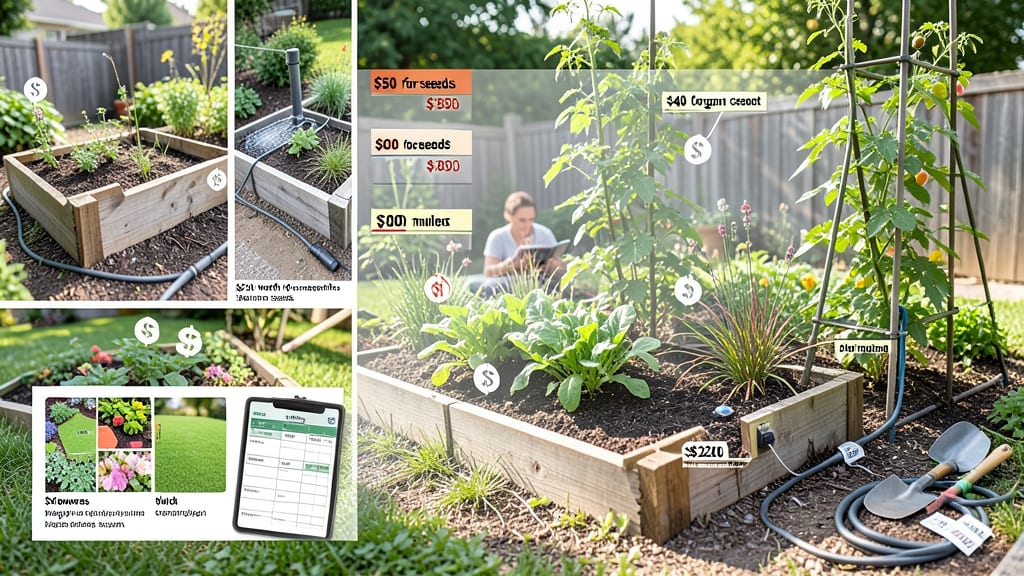
The average cost to create a garden typically falls between $500 and $5,000+, with variations based on project scale, regional pricing, and material choices. Small backyard gardens (50 sq ft) often run $200–$800, while expansive landscape designs (1,000+ sq ft) can surpass $10,000 when accounting for soil conditioning, plant selections, and professional installation.
The price tag for your garden isn't just about plants and dirt—it's a reflection of your location's unique challenges.
For example, drought-prone areas like Arizona may push costs higher due to water-efficient irrigation needs, while coastal regions like Florida could see premium pricing for salt-tolerant species. 🌱 I've noticed that seasonal timing also plays a role: spring planting often means higher demand for soil amendments and young plants, driving up costs by 15-20% compared to off-season purchases.
Beyond the obvious expenses like mulch and flowers, you'll want to account for hidden costs that can sneak up on budgets. Irrigation systems alone can add $500–$2,000 depending on complexity, while hardscaping elements like pathways or trellises might require an additional $300–$1,500.
Don't forget about ongoing maintenance—fertilizers, pest deterrents, and tool replacements can accumulate $100–$300 annually for a mid-sized garden.
💡 In This Article
- Regional Cost Factors Affecting Garden Budgets
- Hidden Expenses to Budget for Beyond Plants and Soil
Regional cost factors affecting garden budgets
Climate dictates which plants thrive—and which cost more. In arid regions like Arizona or Nevada, drought-resistant succulents (e.g., agave or yucca) may cost $5–$20 per plant, while their water needs reduce irrigation expenses by 40–60% compared to thirsty annuals like petunias.
Conversely, Florida’s humid climate demands salt-tolerant palms or mangroves, which can run $30–$100+ per specimen due to specialized growing conditions.
Local labor rates create wild swings—landscaping help in California averages $50–$100/hour, while Midwest rates hover around $30–$50/hour. Soil amendments tell a similar story: compost in urban areas (e.g., NYC) costs $0.50–$1.50 per gallon, while rural farms offer bulk discounts at $0.20–$0.40 per gallon.
Seasonal pricing amplifies these differences—spring mulch deliveries spike 25–35% higher than winter rates due to demand.
Plant availability also shifts costs. Native species (e.g., black-eyed Susans in the Midwest) are often 30–50% cheaper than imported varieties, but require less maintenance. For example, a 5-gallon container of native milkweed costs $12–$18, while a tropical hibiscus (non-native) may reach $40–$70.
This trade-off affects long-term budgets—native plants need 20–30% less water and fewer chemical treatments.
Regional regulations add layers. Some cities (like Los Angeles) mandate water-efficient landscaping, requiring $1,000–$3,000 in retrofitted irrigation systems. Others impose permit fees for hardscaping—e.g., $200–$500 for a 10-foot stone pathway in suburban areas. These hidden climate-driven costs can inflate budgets by 10–20% without obvious warning.
Consider this real-world example: A 500 sq ft garden in Texas might cost $1,200 for drought-tolerant plants and minimal irrigation, while the same space in Oregon—with its milder climate—could require $2,500 for moisture-loving ferns and frequent watering.
The key is matching plant choices to your local growing conditions to avoid costly mistakes.
Pro tip: Check your USDA Plant Hardiness Zone (Zone 5 vs. Zone 9) and local nursery price sheets before shopping. Many nurseries offer free soil tests—use them to avoid over-fertilizing, which wastes $50–$150 annually on unnecessary amendments. 🌿