
Tools
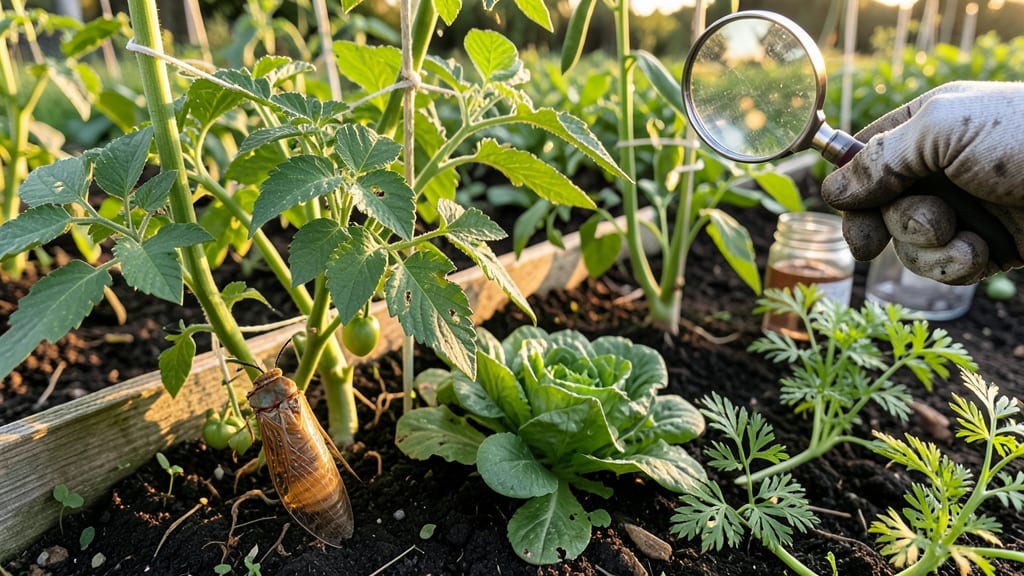
Your garden won’t be eaten by cicadas—they only feed on tree sap through specialized mouthparts, but their nymphs can harm roots underground during development. Adult cicadas ignore vegetables, flowers, and ornamental plants, though their emergence may temporarily stress trees.
Cicadas focus entirely on tree sap, not garden plants, because their mouthparts are designed to pierce bark and access xylem vessels. 🌳 The real concern comes from their nymph stage, which lives underground for years, feeding on root systems—particularly in young trees or those already stressed by drought.
While adults won’t touch your basil or tomatoes, their mass emergence can temporarily weaken trees by draining moisture, making them more vulnerable to disease.
This lifecycle explains why gardeners often see no direct damage to their prized vegetables or blooms, but nearby trees might show signs of stress during peak cicada years. The key difference lies in what cicadas target: roots for nourishment during their nymph stage, and sap for sustenance as adults.
Understanding this helps you focus protection efforts where they matter most—supporting tree health rather than worrying about vegetable patches.
💡 In This Article
- How Cicadas Interact With Plants: Sap-Feeding vs Root Damage
- Protecting Your Garden From Cicada Emergence Stress
How cicadas interact with plants: sap-feeding vs root damage
Adult cicadas don’t eat garden plants because their mouthparts are specifically adapted for tree sap extraction. These insects have specialized stylets that pierce bark to reach the xylem vessels—tubes that transport water and nutrients within trees.
When they insert their stylets, they inject saliva containing enzymes that break down cell walls, creating a "sap well" where they sip for hours.
This process is similar to how aphids feed, but cicadas target only woody plants, particularly oaks, maples, and willows, which contain the right balance of sugars and water for their diet.
The real plant interaction happens underground during the nymph stage, which can last 2-17 years depending on the cicada species. Nymphs attach themselves to tree roots and insert their mouthparts into the root xylem, feeding on the same sap source as adults.
The damage occurs when multiple nymphs feed on a single root system, creating tiny wounds that can weaken young trees or those already stressed by drought. 🌱 Unlike adult cicadas, these nymphs don’t move far—typically staying within 1-2 feet of their hatching site—which explains why you might see stressed trees in one area while other plants in your garden remain unaffected.
Vegetables, flowers, and ornamental plants are completely ignored because cicadas lack the mouthparts to feed on leaves or stems. Their entire lifecycle revolves around accessing xylem sap, which requires specialized equipment they don’t possess for other plant types.
This explains why gardeners rarely see cicadas on their prized tomatoes or roses—they’re simply not interested in those food sources. The confusion often arises from the dramatic emergence of adult cicadas, which can make trees appear stressed as the insects drain moisture during their final feeding stage before molting.
Certain tree species are more vulnerable to cicada stress due to their root systems. Young trees with shallow root networks or those already weakened by poor soil conditions are particularly at risk.
Even mature trees may show temporary wilting or leaf yellowing during peak cicada years, but this is usually a short-term effect as the tree’s vascular system compensates. 🌳 The key difference between adult feeding and nymph damage lies in timing: adults cause visible stress during their 4-6 week above-ground phase, while nymphs work silently underground for years, making their impact harder to detect until it’s too late for young trees.
Understanding these interactions helps explain why gardeners often see no direct damage to their vegetable patches. Cicadas don’t eat garden plants—they’re exclusively tree specialists with a very specific diet.
The real concern comes from their indirect effects: weakened trees become more susceptible to diseases like Dutch elm disease or fungal infections during cicada outbreaks. This is why monitoring tree health during brood periods becomes crucial for gardeners who want to minimize long-term damage while enjoying a cicada-free vegetable garden.