
Companion Plants
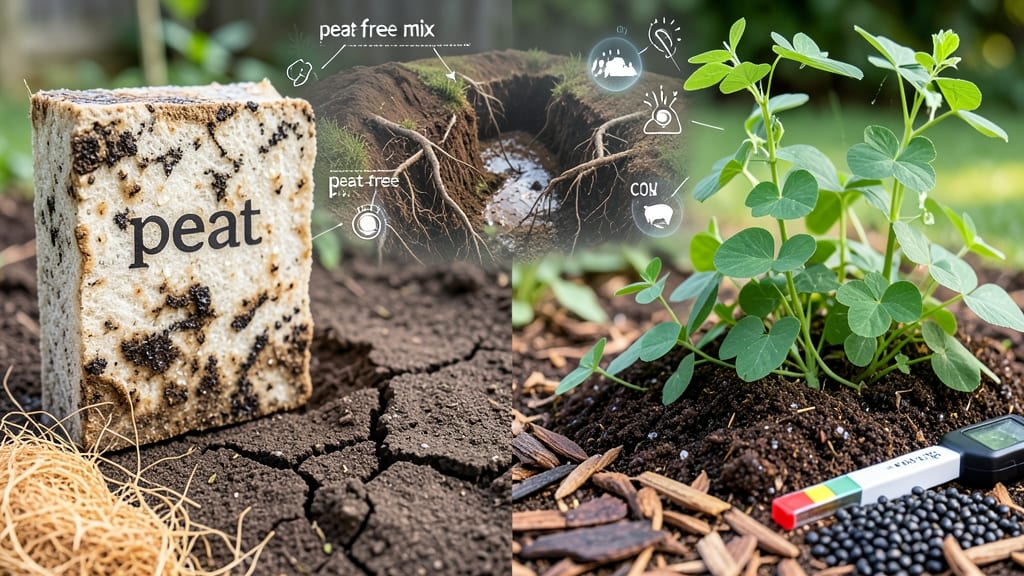
Peat is bad for gardens because its extraction destroys fragile ecosystems, releases stored carbon, and depletes a non-renewable resource. Sustainable alternatives like coconut coir or compost improve soil health without environmental harm.
Peat’s environmental damage starts with how it’s harvested—massive open-pit mining dries out wetlands, killing plants and wildlife that rely on these ecosystems. 🌱 These bogs have stored carbon for thousands of years, but once exposed to air, the peat decomposes rapidly, releasing CO₂ equivalent to burning fossil fuels.
Even "sustainable" peat harvesting still drains water tables, harming local biodiversity. For gardeners, the cost isn’t just ecological—it’s a missed opportunity to use renewable, nutrient-rich alternatives that also support soil microbes and plant growth.
Instead of peat, I recommend coconut coir for its water-retention properties or compost for long-term fertility. Both break down naturally and replenish soil structure without the carbon footprint. Leaf mold is another excellent option, mimicking peat’s texture while being completely free and locally sourced.
The key is balancing moisture retention with organic matter—peat-free mixes achieve this just as effectively, often with better results for plant roots.
💡 In This Article
- How Peat Extraction Harms Wetlands and Carbon Storage
- Best Peat-Free Soil Amendments for Healthy Gardens
How peat extraction harms wetlands and carbon storage
Peat forms over centuries in waterlogged bogs, where partially decomposed plant matter accumulates in thick layers—sometimes up to 10 meters deep. When harvested through open-pit mining, these wetlands are drained, exposing the peat to oxygen.
This triggers rapid decomposition, releasing carbon dioxide (CO₂) and methane (CH₄) at rates comparable to deforestation. A single cubic meter of peat can release 400 kg of CO₂ when oxidized, equivalent to burning 160 liters of gasoline.
The ecological damage extends beyond carbon emissions. Wetlands are biodiversity hotspots, home to rare species like the bog asphodel and crossbill birds, many of which have no other habitat. Draining bogs also lowers the water table, drying out surrounding ecosystems and reducing groundwater supplies.
In the UK alone, 98% of lowland bogs have been destroyed by peat extraction, with irreversible consequences for local climates and wildlife. The process even disrupts global nitrogen cycles, as peat holds 2-3 times more nitrogen than mineral soils.
What makes this especially troubling is peat’s non-renewable nature. Bogs regenerate at a rate of just 1 mm per year, meaning even "sustainable" harvesting still depletes a resource that took 10,000 years to form.
The carbon released from drained peat persists for decades, long after the gardeners who used it have moved on. This creates a vicious cycle: more peat demand leads to more wetland destruction, which accelerates climate change—further increasing the need for peat-based products in agriculture.
For gardeners, the irony is that peat’s benefits—moisture retention and aeration—can be replicated without harm. Peat-free alternatives like coconut coir or composted bark mimic these properties while supporting soil microbes that break down organic matter into plant-available nutrients.
The texture of peat (a 50:50 mix of fibrous and amorphous material) can also be achieved with leaf mold, which improves soil structure over time without the carbon cost.
Consider this: a 10-liter bag of peat might cost $3-$5, but its true price includes the 20 kg of CO₂ released during production and transport. That’s enough to power a 40-watt LED bulb for 14 days.
When you factor in the loss of ecosystem services—water filtration, flood control, and carbon storage—peat becomes one of the least sustainable gardening materials available today. The good news? The alternatives perform just as well, often better, while healing the planet instead of harming it.