
Planting
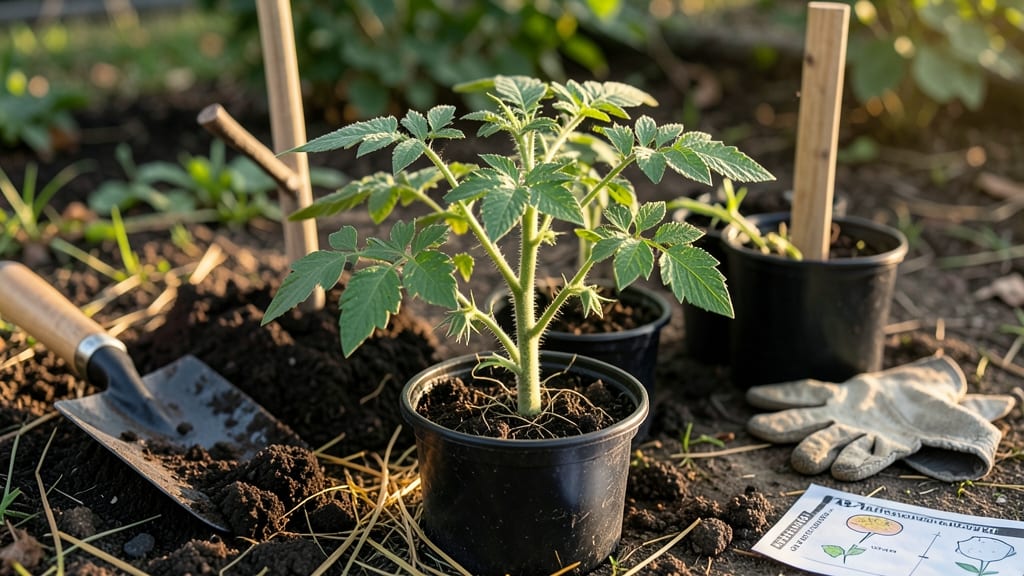
To plant tomato seedlings in the garden, wait until after your last frost date and when soil temperatures hit at least 55°F—that’s the sweet spot for strong root growth and quick establishment.
Timing your tomato seedlings perfectly—just a few weeks too early or late—can mean the difference between a bountiful harvest and a sad, wilted disappointment. But with the right soil temperature math and frost-free strategy, you can nail the window every time.
In Zone 6a, that usually lands in late April to early June, but your exact date depends on whether you’re planting in a sunny spot or using row covers to push back the calendar.
A soil thermometer is your best friend here—bury it an inch deep and check it daily.
Below, I break down the exact soil temperature rules, how to calculate your frost-free window, and pro tips for extending the season without risking failure—so you can finally grow tomatoes that thrive from seedling to harvest.
The exact soil temperature rules for planting tomato seedlings
Tomatoes are warm-season crops that refuse to thrive when the soil is too cold. The magic number? 50°F (10°C) is the absolute minimum for planting seedlings, but most experts recommend waiting until the soil hits 55-60°F (13-16°C) for optimal root growth and fruit production.
Why? Cold soil slows root development, making seedlings vulnerable to disease and transplant shock. Even if daytime temps feel warm, the soil may still be chilly—especially in early spring when air and ground temperatures play catch-up.
Here’s the hard truth: Planting too early can stall growth for weeks or even months. Seedlings may survive, but they’ll struggle to establish roots, leaving them weak and prone to blossom-end rot or fungal infections later in the season.
| Soil Temp Range | Planting Readiness | Risk Level | Action Needed |
|---|---|---|---|
| Below 50°F (10°C) | Not Ready | High (stunted growth) | Delay planting; use row covers |
| 50-54°F (10-12°C) | Marginal | Medium (slow root growth) | Plant only if no frost risk; monitor closely |
| 55-60°F (13-16°C) | Ideal | Low (optimal growth) | Perfect time to plant; mulch to retain warmth |
| Above 60°F (16°C) | Ready | None (fast establishment) | Plant immediately; water deeply |
To test your soil temperature, use a soil thermometer (dig 2-3 inches deep in full sun). Early mornings are best—soil temps lag behind air temps by 5-10°F.
If your readings are below 50°F, resist the urge to plant early. Even heat-loving varieties like 'Celebrity' or 'Sungold' will sulk in cold soil.
Regional adjustments matter! In Zone 5 or colder, aim for late May or early June when soil finally warms. Meanwhile, Zone 8+ gardeners can plant as early as March in protected beds. Always check your last frost date and soil temps—don’t rely on one alone.
Pro tip: Black plastic mulch can raise soil temps by 5-10°F within days. Lay it down 1-2 weeks before planting to give your seedlings a head start. Just remember to remove it once temps exceed 85°F (29°C) to prevent overheating.
Nighttime temps below 50°F (10°C) after planting? Use floating row covers or a mini greenhouse to shield seedlings. Without protection, cold snaps can trigger physiological stress, delaying fruit set by weeks.
For container gardeners, soil in pots cools faster. Move containers to a sheltered, south-facing spot and use self-heating planting mix if temps dip below 50°F. A simple black bucket filled with water near your pots can also radiate heat overnight.
Remember: Tomatoes won’t forgive rushed planting. When in doubt, wait a week. Your future harvest—and your plants’ health—will thank you.
Frost-free date math: how to calculate your planting window
Determining the perfect time to plant your tomato seedlings starts with understanding your frost-free date. This critical number tells you when the last expected frost will occur in your area, giving you a clear starting point for your planting schedule.
For most gardeners in USDA Zone 6a (like my own backyard), this typically falls around April 15th, but your mileage may vary.
Once you know your frost-free date, the next step is calculating backward based on your tomato variety's days to maturity. Most tomatoes need 60-90 days from transplant to harvest, so you'll want to plant them 2-3 months before your first expected frost in fall.
This ensures your plants have enough time to grow, flower, and produce fruit before cooler weather arrives.
Check your local USDA Plant Hardiness Zone map or ask your local extension office for precise data. For example, Zone 6a averages April 15th as its last frost date.
If your tomato variety takes 70 days to harvest, plant 70 days before your first frost. For Zone 6a, that’s around July 15th for fall harvests.
In hotter climates (Zones 8-10), plant earlier to avoid blossom drop from extreme heat. In cooler zones (Zones 4-5), use row covers or plant heat-tolerant varieties like 'Solar Fire' or 'Heatmaster.'
Even after your frost-free date, wait until soil reaches 55°F (13°C). Use a soil thermometer to confirm—cold soil slows root growth and delays fruiting.
For a continuous harvest, stagger plantings every 2-3 weeks until 6-8 weeks before your first frost. This ensures fresh tomatoes all season long!
Don’t forget to account for heat zone adjustments—your planting window can shift dramatically depending on whether you're in a cooler northern climate or a warmer southern region.
For instance, gardeners in Zone 10 might plant tomatoes as early as February, while those in Zone 4 should wait until late May or early June to avoid frost damage.
Pro tip: Use a planting calendar tailored to your USDA zone to simplify the process. Many free online tools (like the Old Farmer’s Almanac) provide customizable planting schedules based on your location. I’ve found these tools save me hours of guesswork every year!
Finally, always double-check your soil temperature before planting. Even if the air feels warm, cold soil can stunt your seedlings’ growth. A quick test with a soil thermometer gives you the confidence to plant at the perfect moment—no more waiting too long or risking frost damage.