
Companion Plants
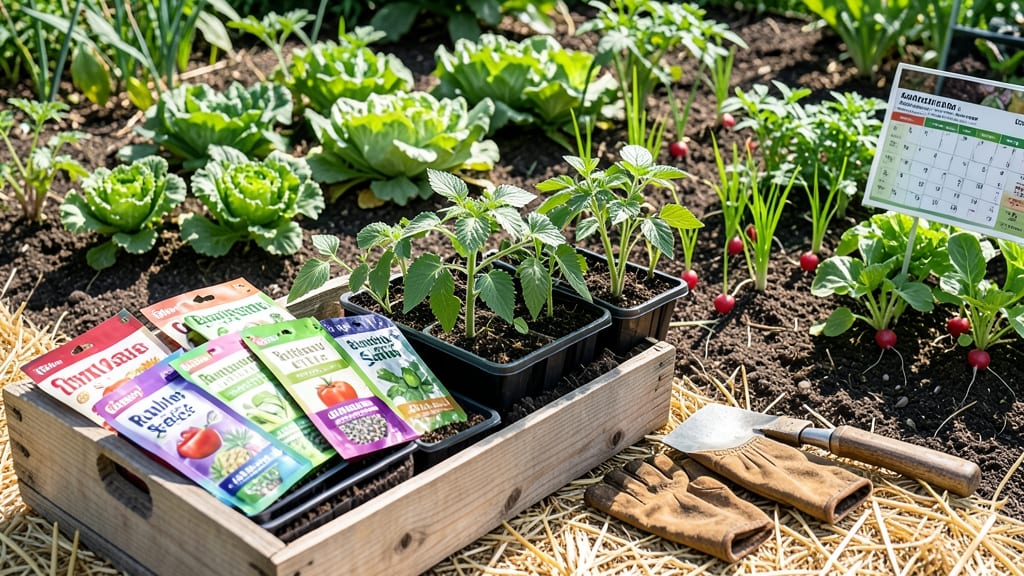
Planting a vegetable garden in Kansas depends on timing cool-season crops 4-6 weeks before the last spring frost (typically mid-March to early April) and warm-season plants 2-3 weeks after the last frost (late April to early May). Always verify local USDA Zone 5 frost dates for precise scheduling.
Kansas's USDA Zone 5 climate means frost dates vary slightly by region—Wichita's average last frost is around April 15, while Kansas City tends to be a week earlier. 🌱 The key is soil temperature: cool-season crops like lettuce and carrots need 40-50°F soil to germinate, while tomatoes and peppers thrive when soil reaches 60°F consistently.
I always check the National Weather Service's frost prediction tool to adjust my planting timeline, especially in years with unpredictable spring weather patterns.
For backyard gardens or raised beds, this timing ensures healthy starts. Cool-season crops planted too late may bolt (go to seed) before harvest, while warm-season plants risk frost damage if seeded too early.
Using row covers can extend the growing window by 2-3 weeks in both directions, which is especially helpful for Kansas City's cooler nights.
💡 In This Article
- Kansas Frost Dates and Hardiness Zones for Vegetable Planting
- Best Vegetables to Grow in Kansas by Season
Kansas frost dates and hardiness zones for vegetable planting
Kansas's USDA Zone 5 classification means frost dates can shift by weeks between regions. For example, Wichita typically sees its last spring frost around April 15, while Kansas City averages April 8—a critical difference when planning your backyard garden.
These dates aren't just about avoiding frost; they reflect how quickly soil warms. Cool-season crops like spinach and peas need 40-50°F soil to germinate, while warm-season favorites like tomatoes require 60°F+ for consistent growth. The transition zone between these temperatures is where many gardeners see failed starts.
Here's how soil temperature works: When air temperatures hover around freezing, the ground stays cold for weeks. A soil thermometer shows this lag—what feels like spring above ground might still be 35°F below. This is why I always plant cool-season crops in mid-March even if air temperatures are mild.
The soil's thermal mass keeps it cooler longer than you'd expect. For warm-season plants, waiting until soil consistently hits 60°F (usually late April to early May) prevents stunted growth from chilly roots.
Local variations matter too. Topeka's last frost often comes 2-3 days earlier than Wichita's due to its slightly higher elevation. That might seem minor, but it's enough to shift your pepper transplanting window by a week.
The National Weather Service's frost prediction tool helps adjust these timelines—just plug in your ZIP code for precise dates. What most gardeners overlook is how microclimates (like south-facing slopes or urban heat islands) can push frost dates back by 5-7 days.
For container gardens or raised beds, timing becomes even more critical. These heat up faster than traditional soil, so you might plant warm-season crops 1-2 weeks earlier than in-ground gardens.
However, they also cool down rapidly at night, which is why I always use black plastic mulch to maintain 5-10°F warmer soil temperatures. This technique extends the growing season by 2-3 weeks in both directions—perfect for Kansas's unpredictable springs.
Don't forget about hardiness zones within Zone 5. Some areas in southeast Kansas (like Pittsburg) can reach Zone 6 conditions, while northwest Kansas (like Hays) stays firmly in Zone 4. These differences affect which varieties thrive.
For instance, heirloom tomatoes that need 90+ days to mature might struggle in northern Kansas unless started indoors. The USDA Plant Hardiness Zone Map shows these variations—always check your exact location.
Here's a pro tip: Use frost-free date calculators like the Old Farmer's Almanac or your local Cooperative Extension Service. These tools account for historical data and give you a 3-year average of last frost dates.
For example, in 2023, Kansas City's last frost came April 12—5 days earlier than the average. Planning around these averages with a 10-day buffer gives your plants the best chance to thrive.
Remember, frost dates aren't just about avoiding damage—they're about optimizing growth. Cool-season crops planted too late bolt (go to seed) before you can harvest, while warm-season plants seeded too early rot in cold soil.
The goal is to align your planting with the soil's readiness, not just the calendar. 🌱