
Companion Plants
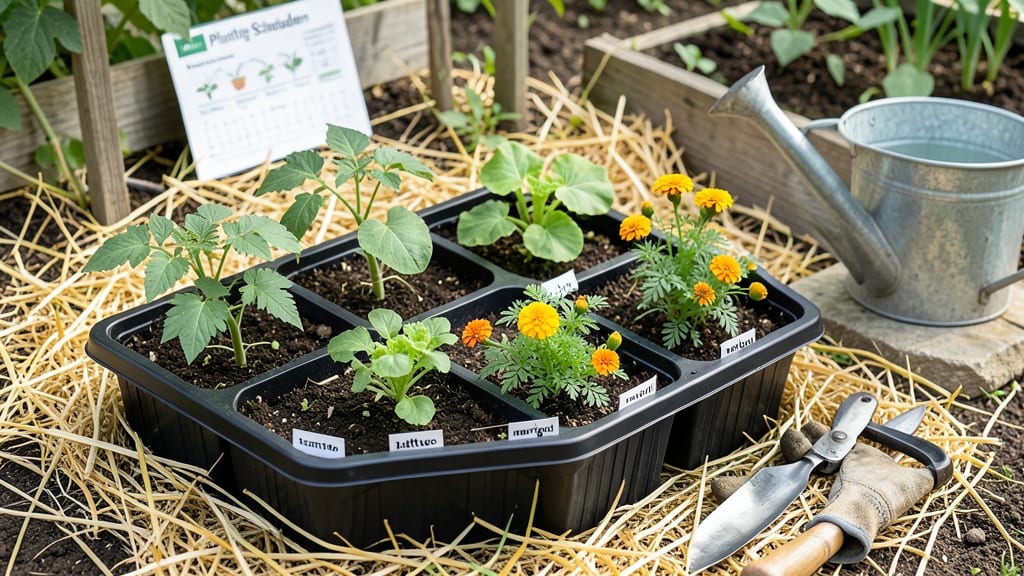
To plant your garden in Illinois, time your cool-season crops like kale or lettuce 4-6 weeks before the last frost (typically mid-March to early April), while warm-season plants like tomatoes or peppers should go in after the last frost (mid-May to early June). Always verify your local frost-free date for accuracy.
Timing your garden in Illinois isn't just about guessing—it's about understanding your USDA zone (5-6) and local frost patterns. Northern Illinois (zone 5) often sees its last frost around April 15-30, while southern Illinois (zone 6) might be frost-free by April 1-15.
Microclimates near lakes or hills can shift these dates by weeks, so I always check my county's NOAA frost data before planting. For example, cool-season crops like spinach thrive when soil temps stay below 70°F, while warm-season plants like peppers need soil at least 60°F before transplanting. 🌱
Pro tip: Use succession planting to extend harvests—sow lettuce every 2 weeks from March through September, and plant beans every 3 weeks after your last frost. This keeps your garden productive without overcrowding.
I've found that Illinois's humid summers mean warm-season crops like zucchini and cucumbers grow fastest when planted in late May, giving them enough time to mature before fall rains arrive.
💡 In This Article
- Illinois USDA Zones 5-6: Frost Dates and Planting Windows
- Best Illinois Garden Planting Calendar by Crop Type
Illinois USDA zones 5-6: frost dates and planting windows
Illinois spans USDA zones 5a-6b, which means your frost-free dates can vary dramatically between northern and southern regions. Zone 5a (northern Illinois) typically sees its last spring frost between April 15-30, while zone 6b (southern Illinois) often warms up by April 1-15.
The USDA's frost data shows that northern Illinois averages 120-130 frost-free days per year, while southern Illinois enjoys 140-150 frost-free days. This difference allows southern gardeners to plant warm-season crops like tomatoes 2-3 weeks earlier than their northern counterparts.
The science behind frost timing involves atmospheric pressure systems and geographic features. Northern Illinois's proximity to the Great Lakes creates microclimates where cold air pools, delaying spring warming. Meanwhile, southern Illinois's flatter terrain allows warmer air to move in more quickly.
For example, Chicago's last frost date averages May 1, while St. Louis typically sees its last frost by April 15. Soil temperature plays a critical role too—most warm-season crops need soil at 60°F for 10+ days before planting.
Microclimates can shift these dates by 1-3 weeks in either direction. South-facing slopes warm up faster, while low-lying areas stay colder longer. I've noticed that gardens near lakes (like Lake Michigan) often experience 10-14°F warmer daytime temperatures in spring compared to inland areas just miles away.
This is why I always check my specific county's NOAA frost data—it's the most accurate way to determine your exact planting window. For instance, in zone 5a, cool-season crops like broccoli should go in by March 15, while zone 6b gardeners can wait until April 1.
What most people don't realize is how humidity affects frost timing. Illinois's high humidity creates what meteorologists call "radiation fog," which can keep temperatures near freezing for days after the official frost date.
This is why I recommend waiting until all risk of frost has passed—not just the average date. For warm-season plants like peppers, which are sensitive to cold, I wait until May 15 in northern Illinois to ensure no late frosts will damage tender seedlings.
Here's how to use this information practically: If you're in northern Illinois, start cool-season crops like spinach indoors by February 15 to have them ready for transplanting by March 15. For warm-season crops, wait until after May 15 to plant tomatoes—this gives you a 90% buffer against late frosts.
In southern Illinois, you can push these dates forward by 2-3 weeks. The key is matching your planting schedule to your specific microclimate's frost patterns, not just the general zone averages.
One advanced technique I've found useful is using frost-free date calculators from local agricultural extensions. These tools factor in your specific latitude, elevation, and nearby water bodies to give you a personalized frost date.
For example, a garden in zone 5b near the Wisconsin border might have frost dates 10 days later than a similar garden in zone 5a near Chicago. This level of precision makes all the difference when planning your 120-day tomato varieties or 60-day radish crops.
Remember that frost isn't just about temperature—it's about heat accumulation too. Cool-season crops like lettuce thrive when daytime temps stay below 75°F, while warm-season crops need consistent 80°F+ days to produce.
This is why Illinois gardeners often experience bolting (premature flowering) in spring crops—the plants sense the warming trend and rush to reproduce before setting fruit. By understanding these patterns, you can time your plantings to maximize growth and yield.