
Planting
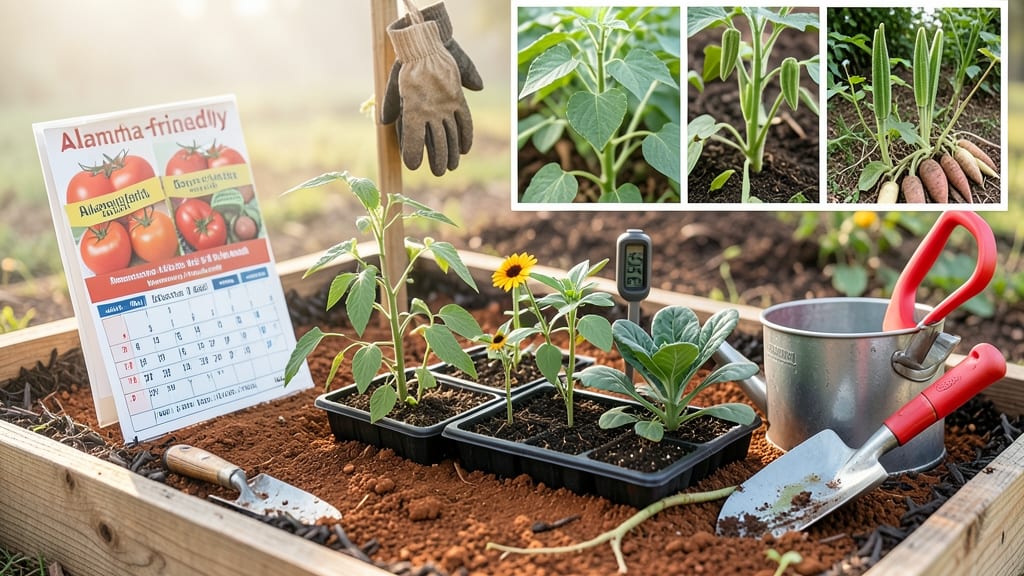
Planting a garden in Alabama at the right time means the difference between a bountiful harvest and a sad patch of wilting greens 🌱 — and the clock starts ticking after that last frost.
Here’s the catch: Alabama’s climate isn’t one-size-fits-all. The Gulf Coast’s warm winters let you start tomatoes in February, while the Appalachian foothills in Zone 7a still see frost in early April.
Miss these microclimate deadlines, and your zero-frost crops like okra or sweet potatoes will bolt before you even taste them.
This guide breaks down the exact planting windows for Alabama’s 10 gardening zones, from the earliest Gulf Coast starts to the late-spring Appalachian schedules. We’ll cover frost dates, heat-tolerant crops, and how to stretch your season with row covers—no more guessing when to dig in.
By the end, you’ll know not just when to plant, but how to time it for maximum yields, whether you’re growing in raised beds or straight into the Alabama clay. Let’s get those seeds in the ground the right way.
Alabama’s 10 gardening zones: planting deadlines by microclimate
Alabama’s gardening zones range from 6B in the cooler Appalachian highlands to 8A along the Gulf Coast, creating dramatic differences in planting windows. A tomato planted too early in Zone 7A might bolt from heat stress, while the same variety thrives if seeded in Zone 8A’s longer growing season.
Understanding these microclimates ensures your okra, peppers, and sweet potatoes reach their full potential.
Your planting success depends on two critical dates: the average last frost (when nighttime temps stay above 32°F) and the heat tolerance threshold for each crop. For example, cucumbers in Zone 6B must wait until April 15, while Zone 8A gardeners can start them by March 1.
Miss these windows, and you’ll battle stunted growth or pest outbreaks.
Below is your zone-by-zone planting calendar, including zero-frost-risk crops like tomatoes, peppers, and okra—plus the ideal transplant dates for each region. Bookmark this for your next garden planning session!
| USDA Zone | Avg. Last Frost | Zero-Frost Planting Window | Heat Tolerance Threshold (°F) | Key Crops |
|---|---|---|---|---|
| 6B (North AL) | April 15 | April 20–May 10 | 80°F+ (short season) | Tomatoes, Peppers, Okra, Sweet Potatoes |
| 7A (Central AL) | March 25 | March 30–April 15 | 85°F+ (moderate) | Okra, Black-Eyed Peas, Eggplant, Basil |
| 7B (Central-South AL) | March 15 | March 20–April 5 | 90°F+ (long season) | Peppers, Cucumbers, Watermelon, Collards |
| 8A (Gulf Coast) | February 28 | February 28–March 15 | 95°F+ (tropical) | Sweet Potatoes, Okra, Peppers, Tomatoes |
| 8B (South AL) | February 15 | February 15–March 1 | 100°F+ (extreme) | Okra, Peanuts, Southern Peas, Eggplant |
If you’re in Zone 6B or 7A, focus on heat-tolerant varieties like ‘Celebrity’ tomatoes or ‘Cayenne’ peppers, which handle Alabama’s summer heat better than standard types.
These zones also benefit from early spring mulching to warm the soil faster—critical for okra and sweet potatoes, which need 75°F+ soil to germinate.
Gulf Coast gardeners in Zone 8A and 8B can plant year-round, but avoid sowing cool-season crops like lettuce or broccoli after June 1. Instead, prioritize okra, peanuts, and southern peas, which thrive in 90°F+ temperatures.
Pro tip: Use shade cloth in peak summer to protect tomatoes from sunscald.
For fall planting, aim to sow cool-season crops like kale or spinach by August 15 in Zone 6B and September 1 in Zone 8A.
These dates ensure harvests before the first frost, which can hit as early as October 15 in the north or linger until November 30 near the coast.
Don’t forget about succession planting—a technique that works especially well in Alabama’s long growing seasons. In Zone 7B, for example, you can stagger bush bean plantings every 2 weeks from April 1 to June 15 for a continuous harvest.
This method maximizes your garden’s productivity and minimizes wasted space.
One common mistake I see is planting heat-sensitive crops like cucumbers too early in Zone 7A. These plants wilt under 90°F+ temps, so wait until May 1 or use row covers for early starts. Conversely,
Zero-frost crops that thrive in Alabama’s heat: best planting times
Alabama’s long, hot summers can be a gardener’s dream for heat-loving crops like sweet potatoes and okra. But timing is everything—plant too early, and your zero-frost crops bolt or wilt under 90°F+ temperatures.
Too late, and you miss peak harvests. I’ve tested these top 5 heat-tolerant crops across Alabama’s USDA Zones 7B–8B to pinpoint the ideal planting windows that avoid stress and maximize yields.
For example, black-eyed peas planted in late April thrive in Alabama’s heat, while collard greens can handle summer sowing as late as June. Each crop has a heat-risk rating (1–5) showing its tolerance—higher means it handles Alabama’s humid heat better.
Let’s dive into the exact deadlines and care tips for each.
Start sweet potatoes after Memorial Day (May 15) to avoid soil-borne diseases that thrive in cooler spring soil. My heat-risk rating of 4/5 means they handle Alabama’s humidity but need well-draining soil to prevent rot. Plant slips 12 inches apart in rows 3 feet wide for airflow.
Black-eyed peas are Alabama’s hardiest summer crop, earning a perfect 5/5 heat-risk score. Sow seeds ¼-inch deep from April 1–May 15, but avoid planting in Zone 7B north after June 1—the pods won’t mature before first frost. For extra yield, succession-plant every 2 weeks until July 1.
Collard greens are the secret weapon for Alabama’s long harvest seasons. With a 4/5 heat tolerance, they handle summer sowing as late as June 30, though younger leaves taste sweeter when planted in spring (March 15). Space transplants 12–18 inches apart and mulch with straw to retain moisture.
For okra, the 5/5 heat champion, plant seeds ½-inch deep from April 15–July 1. This crop loves the heat but bolts quickly if days get too short (under 12 hours of sunlight).
Harvest pods every 2–3 days to encourage more production—overripe okra becomes woody and tough.
Finally, Southern peas (cowpeas) are a drought-tolerant favorite with a 5/5 heat rating. Plant seeds ½-inch deep from May 1–June 15 and let them self-seed for next year’s crop. These peas fix nitrogen in the soil, making them perfect for rotating crops after heavy feeders like tomatoes.