
Picking
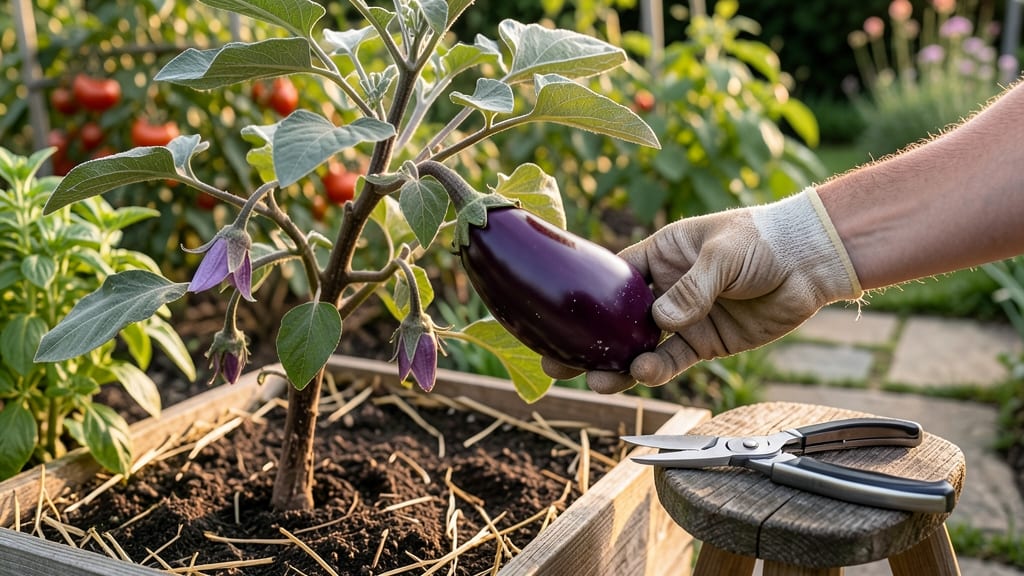
To pick eggplant in the garden at the perfect time means harvesting when it’s deep in color, firm to the touch, and ready for its richest flavor—before it turns seedy or bitter. 🍆
Harvesting eggplant at the wrong time can mean the difference between a rich, creamy texture and a bitter, seedy disappointment—so knowing exactly when to pick matters just as much as planting correctly.
Most gardeners wait for the classic glossy purple or black skin, but size and stem firmness are equally important clues. A 5-7 inch circumference (for standard varieties) and a stem that twists off cleanly signal peak ripeness.
Below, I’ll walk you through the color shifts by variety, the foolproof finger test, and how to adjust for your climate—so you never miss the sweet spot between underripe and overripe.
How to identify the perfect eggplant color for harvesting
Eggplant skin color is your best indicator of ripeness, but not all varieties follow the same rules. The shift from green to mature hues signals peak flavor, but timing varies dramatically between Black Beauty and Rosa Bianca.
Ignoring these color cues can lead to bland, seedy fruit—or worse, bitter-tasting overripe eggplants that ruin dishes. The key lies in understanding each variety's unique color progression and glossy finish.
For most gardeners, the moment an eggplant reaches its deepest, most vibrant color is the sweet spot for harvest. However, this isn't a one-size-fits-all rule. Some varieties like Ichiban mature to a pale yellow-green with white blushes, while others like Rosa Bianca develop soft pink streaks.
The glossy sheen on the skin is another critical clue—it indicates proper ripening and firm, flavorful flesh.
Timing your harvest based on color ensures you avoid two common mistakes: underripe eggplants (which taste bland and watery) and overripe fruit (which develops tough skin and bitter seeds). The color shift isn't just about aesthetics—it's directly tied to flavor development.
For example, a Black Beauty eggplant with a dull purple hue may still be firm and underdeveloped, while one with a rich, glossy sheen is ready to pick.
Here’s how to match eggplant color cues to harvest readiness for the most popular varieties:
| Variety | Mature Color | Harvest Color Cue | Size Range (inches) | Key Flavor Note |
|---|---|---|---|---|
| Black Beauty | Deep purple-black | Glossy purple with slight sheen | 6-8 | Creamy, mild |
| Ichiban | White | Pale yellow-green with white blush | 5-6 | Sweet, nutty |
| Rosa Bianca | Light pink | Soft pink with faint streaks | 4-5 | Delicate, floral |
| Thai Long | Dark purple | Glossy, elongated shape | 8-12 | Mild, slightly sweet |
| Fairy Tale | White with purple stripes | Even stripes, glossy finish | 4-5 | Sweet, tender |
The glossy finish on an eggplant’s skin isn’t just about looks—it’s a sign the fruit has developed optimal flavor compounds. A matte or dull finish often means the eggplant is either underripe or overripe.
For varieties like Black Beauty, the glossy sheen appears just before the fruit reaches its full size, so don’t wait until it’s giant and heavy. In contrast, Ichiban eggplants develop their pale yellow-green blush while still small, so size matters less than color intensity.
If you’re growing multiple varieties in your garden, pay close attention to the color progression of each. For example, Rosa Bianca eggplants might look ready when they’re still small, while Thai Long varieties need to develop their elongated shape before they’re fully flavorful.
The key is to harvest when the color is deepest and most uniform, not when it starts to fade or develop uneven patches.
Don’t overlook the stem end of the eggplant—it should match the rest of the fruit’s color. If the stem area stays green while the rest of the eggplant turns purple or pink, it’s not yet ripe.
This is especially true for heirloom varieties, which often have slower color development. Patience here pays off with richer flavor and better texture.
One pro tip from my years of gardening: harvest in the morning when the eggplants have had a full night to develop their colors. The cooler temperatures help the skin retain its glossy finish, making it easier to spot the perfect moment to pick.
If you notice the color fading by afternoon, it’s a sign the eggplant is ready—don’t wait for "perfect" conditions.
Finally, remember that color alone isn’t enough. Always pair your visual cues with a finger press test and stem twist check to confirm ripeness. But mastering the color shift is your first step toward consistently delicious eggplants straight from your garden.
Eggplant size guide: when to harvest by finger test & stem check
Knowing exactly when to harvest your eggplants ensures peak flavor and tender texture. Unlike many vegetables, eggplants don’t ripen further after picking, so timing is everything.
The right size, combined with a few simple tests, will help you avoid bitter, seedy disappointment and enjoy that perfect creamy, mild taste we all love.
Most gardeners rely on a mix of visual cues, size measurements, and physical tests to determine readiness. For example, I’ve learned that Black Beauty varieties often reach harvest size around 70-90 days, but environmental factors like heat or drought can speed up or slow down maturity.
Let’s break down the foolproof methods I use in my garden every season.
Adjusting for your growing conditions is key. In hot climates, eggplants may mature faster, so I check them every 3-4 days starting around 70 days after transplanting.
Meanwhile, in cooler zones, they might take closer to 90 days. Pay attention to your plants’ growth rate and adjust your schedule accordingly.
One mistake I see often is relying solely on color. While deep purple or glossy skin are good indicators, size and firmness matter just as much. For instance, a Black Beauty might look ready at 6 inches, but if it’s still rock-hard, it needs more time.
Combine all three tests for the most accurate results.
Harvesting at the right time also prevents overcrowding on the vine, which can lead to smaller, less flavorful fruit. I like to pick in the morning when the skin is cool and firm, using a sharp knife or pruners to avoid bruising.
This method keeps the plant healthy and encourages more production.
Remember, Asian varieties like Thai eggplants are best when tiny—often just 3-4 inches long. Their sweetness peaks when they’re small, so don’t wait for them to grow larger. For these, I focus on the finger dent test and stem twist rather than size.