
Picking
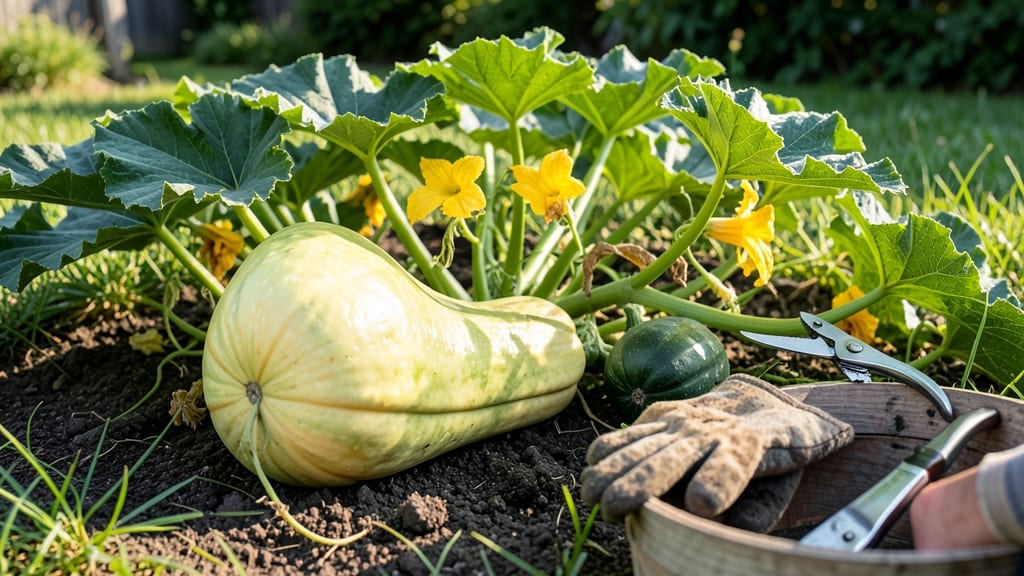
Knowing when to harvest spaghetti squash from the garden ensures tender, string-free strands ready for your favorite pasta dishes.
Picking too early means rubbery, underdeveloped strands that fall apart when cooked, while waiting too long risks tough skin and wasted effort. The key is knowing exactly when to pull it from the vine—before the vines yellow and die back.
Look for a dull, grayish-yellow rind and a stem end that turns brown and dries slightly. These visual cues, paired with a firm thump test, tell you the squash is ready to harvest in late summer or early fall, typically 80-100 days after planting.
Below, I’ll walk you through the three foolproof signs your spaghetti squash 🎃 is ready, plus how to test it for peak ripeness and store it for maximum freshness.
3 Visual signs your spaghetti squash is ready for harvest
Knowing exactly when to harvest your spaghetti squash can be tricky—one wrong move and you’ll end up with either underripe, stringy flesh or overripe, tough-skinned disappointment. The good news? Mother Nature provides clear visual cues if you know what to look for.
These three key signs will help you pick your squash at peak perfection, ensuring those signature spaghetti-like strands are tender and flavorful.
First-time growers often struggle because spaghetti squash maturity isn’t as obvious as a ripe tomato or pumpkin. Unlike its round cousins, this elongated gourd doesn’t rely on a dramatic color shift—its readiness is more subtle.
That’s why I’ve focused on the most reliable visual maturity indicators that even beginners can spot with confidence. Master these cues, and you’ll never second-guess your harvest timing again.
- 1. Rind Color Shift: The skin transforms from bright green to a dull yellowish-gray hue—like faded parchment. Run your thumb along the surface; if it feels slightly rough rather than smooth, it’s ready.
- 2. Stem Changes: Check the stem end (where the squash attaches to the vine). When it turns yellow-brown and dries out slightly, that’s your green light. A still-green stem means wait a few more days.
- 3. Vine Decline: The vine leaves nearest the squash will start yellowing and dying back—nature’s way of signaling it’s time to harvest. Healthy green leaves mean more time to grow; crispy brown ones mean it’s ready now.
Let’s break down the first sign in more detail because it’s where most gardeners trip up. The rind color change is your primary indicator, but it’s easy to misread.
A squash that’s still bright green (like when you first planted it) means it’s not ready—those strands will be woody and underdeveloped. On the flip side, if the rind turns orange or deep yellow (like a pumpkin), you’ve waited too long and risk tough skin and shriveled flesh.
The ideal rind should look matte and faded, almost like it’s been lightly dusted with chalk. Think of it as the squash’s way of saying, “I’ve reached my prime!”
Pro tip: Check the underside of the squash where it rests on the ground—this area often shows the color change first. If you’re still unsure, combine this with the stem test for absolute confidence.
Many gardeners overlook the stem end because it’s hidden under the vine, but this is actually one of the most reliable signals. A dried, brown stem indicates the squash has stopped growing and is ready for harvest.
If you gently twist the stem and it snaps easily (rather than pulling out), that’s another good sign. This separation happens naturally as the plant redirects energy to seed production—a clear biological cue that the squash is mature.
Don’t ignore the vine’s condition either. Healthy vines with lush green leaves mean your squash still has growing to do. But when you see those lower leaves yellowing and crisping up—especially near the squash—it’s a strong signal to harvest soon.
This is your plant’s way of saying, “I’ve given everything I’ve got to this fruit, now it’s your turn!” Pay attention to the leaves closest to the squash, as they’re the first to show these signs.
Here’s a common mistake I see: gardeners harvest based solely on size. While spaghetti squash typically grows to 12-24 inches long, some varieties stay small even when mature. Others can grow larger but remain underripe inside.
Always combine size benchmarks with the other two visual cues. A squash that’s heavy for its size (indicating dense, developed flesh) is another subtle clue—pick it up and compare it to others in your patch.
Timing your harvest right also depends on your growing season length. In cooler climates (like USDA Zone 6a), you’ll need to harvest by early October before the first frost hits. In warmer zones, you might have until November.
If you’re unsure about your frost date, err on the side of harvesting slightly early—spaghetti squash stores well for weeks in a cool, dry place, so you can always let it cure indoors if needed.
Remember, the goal is tender, string-free flesh that cooks up perfectly. When you see all three signs—the dull rind, dried stem, and yellowing vines—grab your pruners or sharp knife, cut the squash from the vine, and give it a gentle twist to separate it completely.
Then, let it cure in the sun for 3-5 days before storing to develop its full flavor and texture.
How to test spaghetti squash ripeness before picking
Testing spaghetti squash ripeness is key to avoiding stringy, underripe strands or overly tough skin. Unlike other squash varieties, spaghetti squash relies on internal maturity rather than just external cues. I’ve found that combining physical tests with seasonal timing gives the most accurate results.
Whether you’re a first-time grower or a seasoned gardener, these methods will help you pick your squash at peak perfection.
One of the simplest ways to test ripeness is the thump test. Gently tap the squash with your knuckles—if it sounds dull and hollow, it’s likely ready. A high-pitched, echoey sound means it needs more time.
I always pair this with a visual inspection of the rind, which should transition from bright green to a dull, yellowish-gray hue. This color shift indicates the squash has reached its sugar peak.
⚠️ callout-warning
Waiting past 120 days after planting risks tough skin and woody fibers. In USDA Zone 6a, aim to harvest between late September and early October—before the first frost (October 15). If your growing season is shorter, prioritize stem drying over size.
🌱 Pro Tip: Mark planting dates to track 80-100 days to harvest.
Another foolproof method is checking the stem end. A ripe spaghetti squash will have a dry, papery stem that’s slightly shriveled and turns yellow-brown. If the stem is still green and firm, the squash isn’t ready yet.
I also look for vines turning yellow and dying back—a clear sign the plant is redirecting energy to the fruit. This is your cue to harvest within 24-48 hours before the vines completely wither.
For a deeper test, try the seed check. Pierce the squash lightly with a knife and peek inside. If the seeds are fully formed and the flesh is pale yellow, it’s ready. Underripe squash will have greenish seeds and stringy, underdeveloped strands.
This method is especially useful if you’re unsure about the thump test or stem color. I’ve found it’s the most reliable way to confirm internal readiness.
Timing your harvest based on your growing season length is just as important as physical tests. In short-season climates (like Zone 6a), prioritize stem drying over size—smaller squash can still be ripe.
In longer seasons, wait until the rind is fully dull and the squash feels heavy for its size. I’ve learned the hard way that rushing the harvest leads to underdeveloped strands, while waiting too long means tough, inedible flesh.
Once you’ve confirmed ripeness, harvest on a dry, sunny morning using a sharp knife or pruners. Leave a 1-inch stem attached to prevent rot. Store your squash in a cool, dry place (50-55°F) for up to 3 months.
Properly cured squash will keep longer and taste sweeter. Now you’re ready to enjoy those tender, spaghetti-like strands without the guesswork!