
Picking
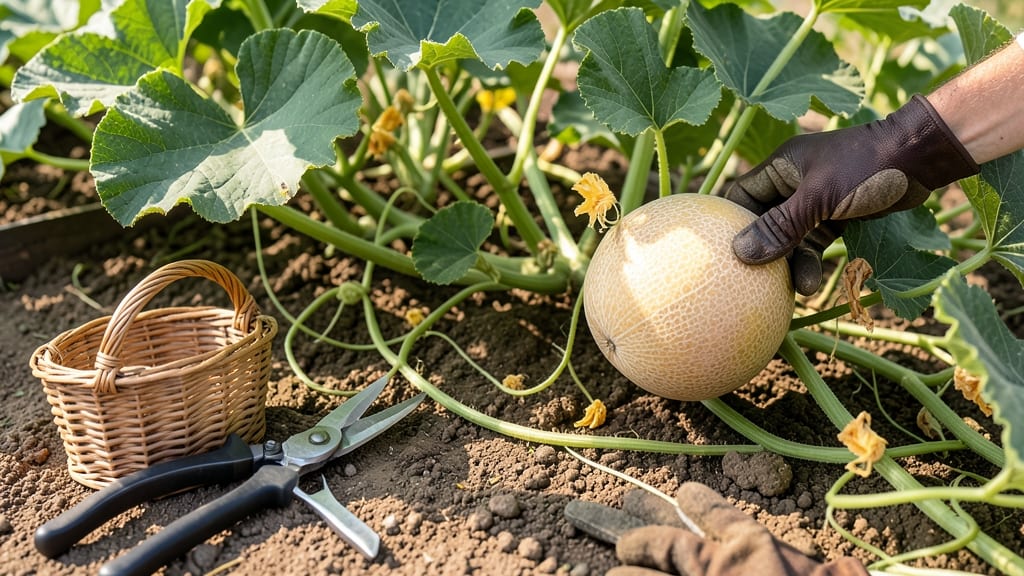
Harvesting cantaloupe from your garden at the right time turns a simple task into a flavor explosion—but timing it wrong means sacrificing sweetness for seeds and disappointment.
Picture this: you’ve waited months, the vines are thick with 🍈, and now you’re staring at a melon that could be perfect—or a mushy mess. The difference lies in three non-negotiable checks that separate homegrown perfection from store-bought blandness.
Most gardeners focus on color or size, but the real secrets are hidden in the stem’s texture, the rind’s hue, and that unmistakable aroma. Ignore these cues, and you’ll end up with cantaloupe that’s either too hard or too soft—neither of which tastes like summer.
Below, I’ll walk you through the exact signs to watch for, how to test for ripeness without damaging the vine, and what to do if you miss the window. No more guesswork—just bursting, sweet cantaloupe every time.


3 Non-negotiable signs your cantaloupe is ripe for harvesting
There's nothing worse than biting into a cantaloupe that's either underripe and bland or overripe and mushy. The good news? With these three foolproof checks, you'll never second-guess your harvest timing again.
I've grown cantaloupe for years, and these visual, scent, and touch-based cues have never failed me. Let's dive into the science behind why they work.
The first clue comes from the underside of the cantaloupe. When ripe, this area transforms from a dull green to a creamy tan or buttery yellow hue. This color change signals the fruit's sugars have fully developed.
I always check this spot first—it's the most reliable indicator because it's protected from direct sunlight, which can sometimes fool you with false color changes on exposed areas.
- 1. The Creep Test: Gently press your thumb near the stem. If the stem slips easily (like it's "creeping" away), it's ready. This happens because the abscission layer forms naturally at harvest time.
- 2. Stem Separation: Look for a dry, brown stem near the fruit. When you gently twist, it should separate cleanly—this means the plant is signaling it's time to let go.
- 3. Sweet Aroma: Sniff near the blossom end (stem side). A powerful, sweet muskmelon scent means peak ripeness. If you smell nothing, it's not ready yet.
Don't overlook the weight test—a ripe cantaloupe feels surprisingly heavy for its size. This happens because the water content shifts as sugars develop. I always compare two melons of similar size; the heavier one is always the winner.
Pro tip: Tap the melon—if it sounds hollow, it's overripe and past its prime.
The blossom end (where the stem connects) is your secret weapon. When ripe, this area will have a slightly soft texture when pressed gently with your thumb. If it feels firm, the cantaloupe needs more time.
I've found this trick especially helpful for heirloom varieties that sometimes ripen unevenly. Always check this spot last—it's the final confirmation you need.
Timing matters too—most cantaloupes take 75-90 days from planting to harvest, but heat waves can speed this up. I've seen cantaloupes ripen in just 60 days during exceptionally hot summers. Pay attention to your local frost dates too; you don't want to wait too long if cooler weather is coming.
In my zone 6a garden, I start checking for ripeness in early July.
Never ignore the background color of the rind. While the underside turns tan, the rest should be a muted net pattern (not bright green). I once picked a cantaloupe with a green rind because I missed the underside check—it was terrible.
The net pattern fades as the fruit matures, so look for a dull, matte finish rather than a shiny appearance.
For container growers, these signs work too—but be extra vigilant. Potted cantaloupes often ripen faster due to heat stress from limited root space. I check my container-grown melons every 3 days starting at day 60, while in-ground plants get weekly inspections.
The same ripeness rules apply, but the timeline might be slightly accelerated.
Remember: One perfect cantaloupe beats a bushel of mediocre ones. If your melon passes all three tests, harvest it immediately—even if it's not your largest fruit.
I've learned the hard way that waiting "just a few more days" often leads to overripe disappointment. Trust your senses and enjoy that sweet victory.
How to harvest cantaloupe without ruining the vine or future fruit
Harvesting cantaloupe at the perfect moment ensures sweetness while protecting your vine for future fruit. The wrong technique can stress the plant, reduce yields, and even invite pests. I’ve learned that gentle handling and proper tools make all the difference between a thriving cantaloupe patch and a struggling one.
Start by gathering your tools: a sharp pruning shears for clean cuts, a small knife for stubborn stems, and a glove to protect your hands. Avoid pulling the fruit—this can tear the vine and expose it to rot.
Instead, focus on making precise cuts that leave the plant healthy and ready to produce more melons.
Step-by-Step Cantaloupe Harvesting Guide
- 🌱 Step 1: Choose the Right Fruit
Select cantaloupes with a cream-colored underside, a dry brown stem, and a sweet aroma near the stem end. These are your non-negotiable ripeness signs. - 🪴 Step 2: Use the Right Tools
Grab your pruning shears or small knife—never pull the melon from the vine. A clean cut prevents damage to the plant and reduces disease risk. - ✂️ Step 3: Cut 1-2 Inches from the Vine
Make your cut 1-2 inches above the melon, leaving a small stem attached. This helps the fruit ripen evenly and prevents rot. - 💧 Step 4: Handle with Care
Support the cantaloupe with your other hand while cutting to avoid bruising. Place it gently in a mesh bag or wooden crate to prevent squishing. - 🌿 Step 5: Store Properly for Longevity
Let harvested cantaloupes ripen at room temperature for 1-2 days before refrigerating. Store them in a cool, dry place (50-55°F) to extend shelf life up to 2 weeks.
After harvesting, inspect your vine for any damaged leaves or stems. Remove any affected areas with sterilized pruners to prevent fungal infections. This is also the perfect time to water your cantaloupe patch deeply—1-2 inches of water—to help the plant recover and encourage new fruit development.
If you’re harvesting multiple cantaloupes, space them out over 2-3 days to avoid overwhelming the vine. Overharvesting can stress the plant, leading to smaller or fewer melons next season. Keep an eye on the remaining fruit and check for ripeness every 2-3 days during peak harvest season.
Pro tip: Save the seedless varieties for later planting if you’re not using them immediately. Cantaloupe seeds stay viable for 4-5 years when stored in a cool, dry place in a sealed container. This way, you can grow your own sweet cantaloupes year after year without buying new seeds!