
Picking
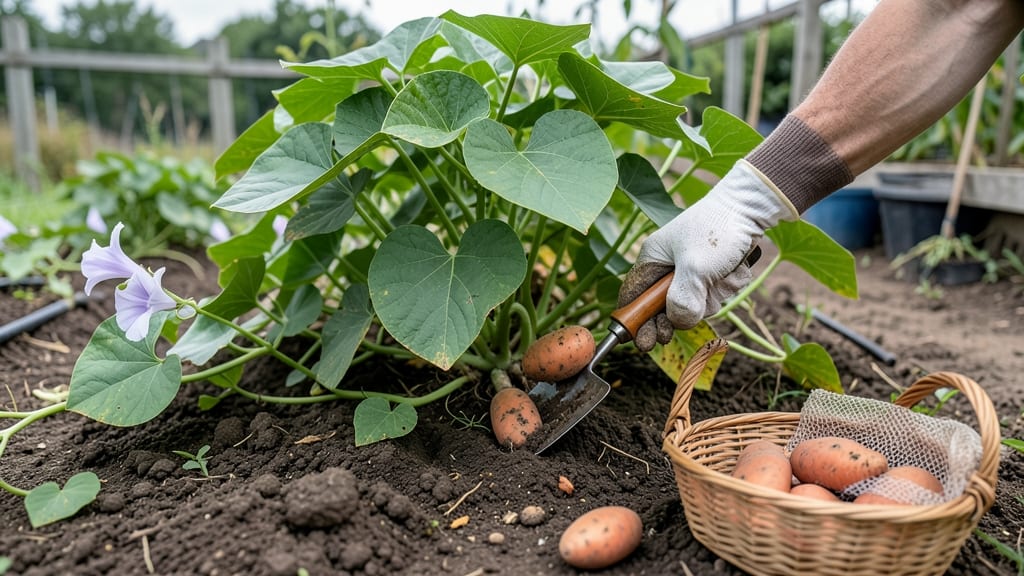
Knowing when to pick sweet potatoes from the garden means the difference between a sweet, tender harvest and tough, starchy tubers that fall apart.
Sweet potatoes left in the ground too long turn starchy and tough, while harvesting too early means small, underdeveloped tubers—so timing is everything. Learn the exact skin cues and seasonal signals to pick your sweet potatoes at peak sweetness and texture.
The key is watching for three telltale signs: when the leaves start yellowing, the skin toughens just enough to resist your fingernail, and the tubers reach 3-6 inches in length. These clues tell you the moment to dig before frost or pests ruin your crop.
Below, I break down the perfect harvest window by region, how to cure your sweet potatoes for maximum flavor, and what to do if you miss the mark—so you end up with a pantry full of sweet, storable tubers.


3 Visual skin checks to determine perfect sweet potato harvest time
Timing your sweet potato harvest correctly ensures you get the sweetest, most flavorful tubers possible. Unlike regular potatoes, sweet potatoes develop their signature sweetness and texture after reaching full maturity.
But how do you know when they're ready? The answer lies in three key visual cues on the plant's skin and foliage.
First, pay attention to the vine and leaf condition. Healthy green vines signal active growth, but when they start yellowing and wilting, it's a clear sign your sweet potatoes are nearing maturity. This natural dieback happens as the plant redirects energy to the tubers below ground.
The skin texture is your second critical clue. Immature sweet potatoes have soft, easily pierced skin. But when they're ready to harvest, the skin becomes thick and tough, almost like a small apple.
You can test this by gently pressing your fingernail against the skin—if it resists, it's time to dig.
Finally, examine the skin color. Mature sweet potatoes develop a deep, rich hue—whether that's the classic orange, purple, or red—depending on the variety. Immature tubers often look pale or dull in comparison. This color change happens as the tubers stop growing and focus on sweetening up.
| Check Type | Ready Indicator | Not Ready Sign | Action Needed |
|---|---|---|---|
| Leaf/Vine Condition | Yellowing and wilting leaves | Bright green, healthy leaves | Harvest within 1-2 weeks |
| Skin Texture | Thick, tough skin (resists fingernail) | Soft, easily pierced skin | Wait 2-3 more weeks |
| Skin Color | Deep, vibrant hue (orange/purple/red) | Pale or dull color | Wait for full color development |
| Tuber Size | 3-6 inches in length | Smaller than 2 inches | Wait for full growth |
One common mistake is confusing overripe tubers with mature ones. Overripe sweet potatoes develop a wrinkled, shriveled skin and may even split open. These tubers lose sweetness and become tough. If you see this, harvest immediately to salvage what you can.
For dwarf varieties, which mature faster (around 90 days), watch for these signs earlier than standard varieties (which take 120-150 days). Dwarf types often show maturity cues 2-3 weeks sooner, so stay vigilant if you're growing them.
Pro tip: Dig up one tuber to test when you're unsure. Gently brush away soil to check its size, color, and texture. If it's not ready, leave the rest in the ground for another 1-2 weeks and check again. This minimizes risk and ensures you don't harvest too early.
Remember, frost sensitivity plays a role too. If frost is forecast within 2 weeks, harvest even if the tubers aren't perfectly mature. Sweet potatoes can tolerate light frost but will rot if left in frozen soil. In colder climates, use row covers to extend the growing season.
Once you've confirmed all three visual checks, it's time to harvest! Use a garden fork to gently loosen soil around the base of the plant, then pull the vines upward to reveal the tubers. Handle them carefully—their skin bruises easily, which can lead to rot during storage.
After harvesting, let the sweet potatoes cure in warm conditions (80-85°F) for 5-10 days to develop their full sweetness. This step is crucial for flavor and storage life. Store them in a cool, dark place with good airflow to keep them fresh for months.
Seasonal timing guide: when to harvest based on growing season
Sweet potatoes thrive in warm climates, but their harvest timing varies dramatically based on your USDA zone and whether you're growing short-season or long-season varieties. In Zone 6a, where frost typically arrives by mid-October, most varieties need 90-150 days to mature.
Adjust your planting schedule to avoid losing crops to early frost—this means starting slips after May 15 for a late fall harvest.
For northern climates (Zones 4-6), focus on early-maturing varieties like 'Beauregard' (90 days) or 'Georgia Jet' (100 days). Plant slips after the last frost (usually mid-May) to ensure tubers reach 3-6 inches before the first frost.
In southern climates (Zones 7-10), you can extend harvests into December with long-season varieties like 'Centennial' (120-150 days), but watch for heat stress in summer.
Your planting schedule directly impacts harvest timing. If you plant slips too early, vines may overgrow, and tubers can become woody or fibrous. Conversely, late planting risks small, underdeveloped tubers.
Aim to harvest 1-2 weeks before the first frost—this gives tubers time to cure properly after digging. In Zone 6a, this means harvesting between October 1-15.
Adjust your harvest timing if you experience unexpected frost or heatwaves. In Zone 6a, if temperatures drop below 40°F (4°C) before harvest, dig up tubers immediately—even if they’re not fully mature.
For late-season adjustments, prioritize smaller tubers (2-3 inches) over larger ones, as they’ll cure better after harvest. Always test soil temperature before planting—sweet potatoes need consistent warmth to grow.
Pro tip: Use black plastic mulch to extend the growing season in cooler zones. This raises soil temperatures by 5-10°F, allowing you to plant slips 2-3 weeks earlier and harvest 1-2 weeks later.
In southern climates, focus on shade cloth during peak summer to prevent vine stress and ensure tubers develop properly. Always monitor leaf color—yellowing vines signal it’s time to harvest, regardless of the calendar.
Don’t forget to cure harvested tubers for 5-10 days in a warm (80-85°F), humid (80-90%) environment. This process enhances sweetness and storage life. If frost hits unexpectedly, dig immediately and cure tubers indoors—just be prepared for slightly less sweet but still edible potatoes.
With the right timing, you’ll enjoy homegrown sweet potatoes at their peak flavor all season long.