
Planting
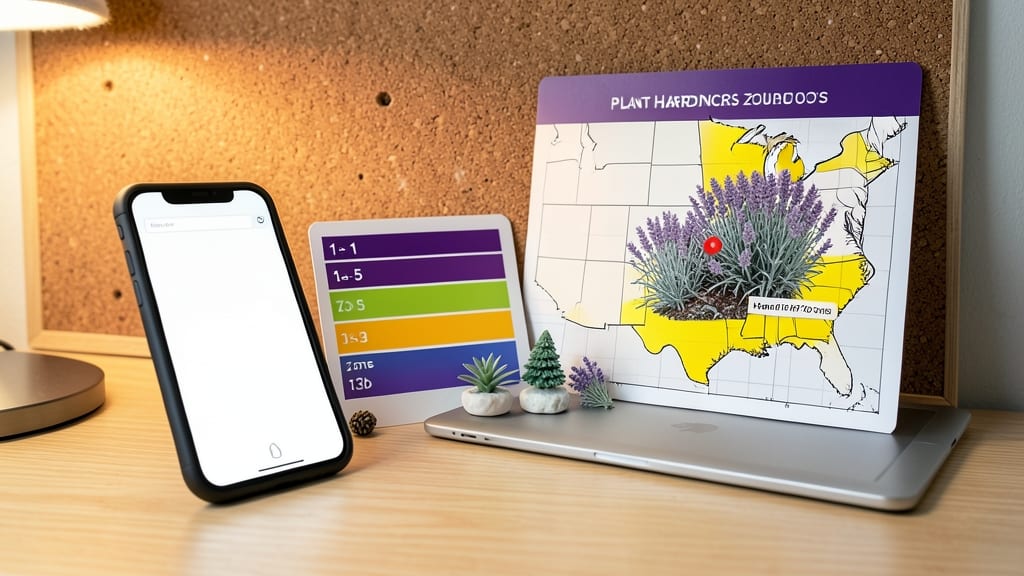
To determine what zone you're in for gardening, use the USDA Plant Hardiness Zone Map by entering your ZIP code or city, which reveals your climate zone (like Zone 6a) based on average winter temperatures. This zone tells you which plants will survive in your area year-round.
Your gardening zone isn't just a number—it's a climate fingerprint that predicts which plants will thrive in your area.
The USDA calculates zones using average annual minimum temperatures, so a Zone 7 in Florida differs dramatically from one in Ohio. 🌱 For precise planting, I recommend cross-checking with local nurseries, as microclimates (like south-facing slopes) can shift your effective zone by half a number.
For example, Zone 5b plants might survive in a sheltered microclimate where Zone 5a would normally fail.
Once you know your zone, you'll understand why some plants flourish while others struggle. For instance, blueberries need acidic soil and specific temperature ranges that only certain zones can provide. The map also helps plan seasonal transitions—knowing your zone lets you time plantings to avoid frost damage or heat stress.
💡 In This Article
- How USDA Plant Hardiness Zones Determine Your Garden’s Climate Suitability
- Finding Your Exact Gardening Zone: Step-by-Step Location Lookup
How USDA plant hardiness zones determine your garden’s climate suitability
The USDA Plant Hardiness Zone Map divides North America into 13 zones (1-13) based on the average annual minimum temperature of a location.
These zones are further split into 'a' and 'b' subzones, representing a 5°F difference—for example, Zone 6a ranges from -10°F to -5°F, while Zone 6b spans -5°F to 0°F. This precision matters because plants have specific cold tolerance thresholds.
A rose bush rated for Zone 5 might survive a -20°F winter, but a Zone 6 plant would likely perish in those conditions. 🌡️
The science behind these zones involves decades of climate data collected from weather stations across the country. The USDA analyzes 30-year averages of the coldest winter temperatures to create a reliable baseline.
This is why your zone might differ from a neighbor's even if you live just a few miles apart—terrain, elevation, and proximity to large bodies of water create microclimates that can shift your effective zone by half a number or more.
For instance, a south-facing slope in Zone 6 might experience 10°F warmer winter lows than a north-facing valley, allowing you to grow plants rated for Zone 7.
Understanding these zones helps you select plants that won’t just survive but thrive in your area. For example, peach trees need Zone 5 or warmer, while winter wheat can handle Zone 3’s -40°F winters.
The map also explains why some plants struggle in unexpected places—a Zone 8 in California might have milder winters than a Zone 8 in the Midwest, but both share the same cold-hardiness baseline. This is why local nurseries often recommend plants based on your specific zone and microclimate. 🌿
Zone ranges also account for seasonal variations. A plant rated for Zone 6b might survive in Zone 6a if it’s planted in a sheltered spot, but it’s riskier because the colder extremes could still damage it.
The USDA map includes a 10-year projection tool showing how zones may shift due to climate change, helping gardeners plan for future conditions. For instance, some areas in the Northeast might see their zones shift from 5b to 6a within 20 years, allowing for new plant varieties to be introduced.
Beyond cold tolerance, zones indirectly influence other growing factors like frost-free dates and heat tolerance. Warmer zones (like 9-11) have longer growing seasons, while cooler zones (like 3-5) may require cold-hardy varieties.
For example, tomatoes in Zone 9 can be planted in early spring, while Zone 5 gardeners often wait until after the last frost date in mid-May.
The zone system also helps with pest management—certain insects thrive in specific temperature ranges, and knowing your zone can help you anticipate which pests to watch for. 🐛
One common misconception is that zones only matter in winter. However, the summer heat tolerance of plants is also tied to your zone. A Zone 10 plant might struggle in Zone 7’s 90°F+ summers, just as a Zone 4 plant might not handle Zone 8’s heat.
This is why the USDA map is just the starting point—local growing conditions, soil types, and even wind exposure play equally important roles in plant success. For instance, a Zone 6 garden in Colorado might handle colder winters than one in New York due to drier air and lower humidity.