
Companion Plants
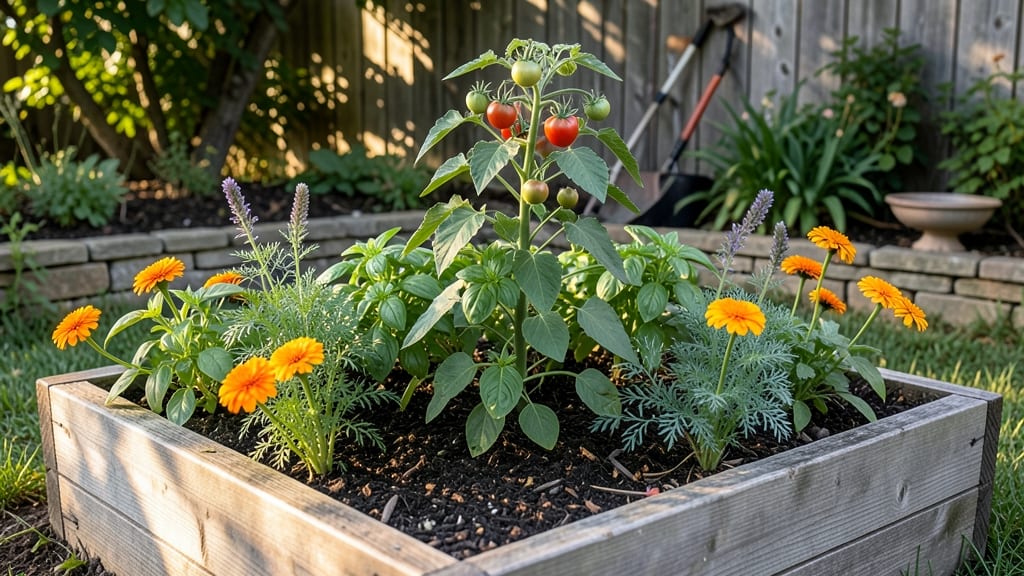
To plant together in a garden, combine fast-growing plants like radishes with slower carrots to optimize space, or pair basil with tomatoes to deter pests and enhance flavor. Thoughtful plant pairings create healthier soil and higher yields through natural synergies.
Smart gardening isn't just about what you plant—it's about how you arrange it. 🌱 The right neighbors can deter pests naturally (like marigolds keeping aphids away) while improving soil quality through nitrogen fixation from legumes.
For example, planting beans near corn provides shade and nutrients, while nasturtiums act as a trap crop for squash bugs. Seasonal timing matters too—some plants compete for nutrients if grown together at the wrong time.
Many gardeners swear by the "three sisters" method: corn, beans, and squash growing together in a mutually beneficial cycle. This ancient technique shows how companion planting can work on multiple levels—structural support, pest control, and soil enrichment.
Start with small test patches to see which combinations thrive in your specific climate and soil conditions.
💡 In This Article
- How Companion Planting Works: Science Behind Successful Garden Pairings
- Best Companion Planting Charts for Vegetable, Herb, and Flower Gardens
How companion planting works: science behind successful garden pairings
Companion planting thrives on ecological relationships that mimic natural ecosystems. At its core, this method leverages how plants interact through their roots, foliage, and even chemical signals. For instance, marigolds release a compound called pyrethrin, which naturally repels pests like aphids and nematodes, creating a protective barrier for nearby vegetables.
This chemical defense system works similarly to how some wildflowers deter herbivores in meadows, but on a smaller, more controlled scale in your garden.
The root systems of certain plants form symbiotic relationships that boost growth. Legumes like peas and beans contain nitrogen-fixing bacteria in their root nodules that convert atmospheric nitrogen into a form plants can absorb.
When planted near heavy feeders such as corn or tomatoes, these legumes effectively "feed" their neighbors by enriching the soil with nitrogen, reducing the need for synthetic fertilizers.
This process mirrors how forests naturally recycle nutrients through fallen leaves and decaying matter, but with the added benefit of targeted placement for maximum efficiency.
Physical space optimization plays a crucial role too. Fast-growing plants like radishes or lettuce act as living mulch, shading the soil to retain moisture and suppress weeds while they mature. When paired with slower-growing crops such as carrots or cabbage, they create a layered garden that maximizes vertical space.
This technique isn't just about saving room—it's about creating microclimates where each plant thrives in its own niche, much like how different species occupy distinct layers in a rainforest canopy.
Some combinations work through scent-based communication. Herbs like basil emit volatile oils that mask the scent of vulnerable plants, confusing pests that rely on smell to locate their prey. For example, basil's strong aroma can deter whiteflies and thrips, while also enhancing the flavor of nearby tomatoes.
This sensory strategy is particularly effective in small gardens where space is limited, as it combines pest control with culinary benefits in one elegant solution.
Timing is another critical factor. Planting deep-rooted crops like dandelions alongside shallow-rooted herbs prevents nutrient competition, as their root zones don't overlap. The dandelion's deep taproot accesses nutrients from lower soil layers, leaving more for the herb's surface roots.
This division of labor mirrors how different plant species in a prairie ecosystem coexist without depleting shared resources, creating a balanced and productive garden ecosystem.
Consider the "three sisters" method—a Native American agricultural technique that combines corn, beans, and squash. The corn provides vertical support for the beans to climb, while the beans fix nitrogen in the soil. The squash's large leaves act as living mulch, suppressing weeds and retaining moisture.
This triad demonstrates how companion planting can work on multiple levels simultaneously—structural, nutritional, and environmental—creating a self-sustaining garden system that requires minimal intervention.