
Planting
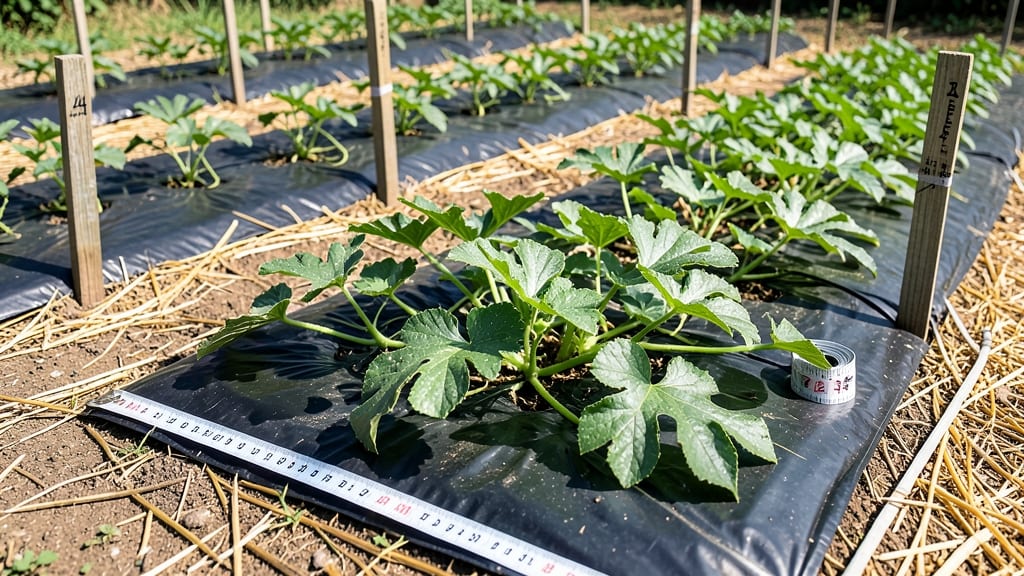
Getting your watermelon garden spacing right is the difference between tiny, bitter melons and explosively sweet giants that feed the whole neighborhood.
Picture this: you’ve planted your 🍉 seeds after the last frost, watered them faithfully, and even babied them through a few late-night squash bug raids. But when harvest time comes, your melons are the size of softballs instead of the 20-pound monsters you dreamed of.
The problem? Crowded vines steal nutrients, block sunlight, and trap moisture—turning your garden into a disease magnet.
Proper spacing isn’t just about fitting more plants into a small plot. It’s about giving each vine the room to sprawl, circulate air, and develop the strong roots and vines needed to support heavy, juicy fruit.
Whether you’re working with bush varieties in a raised bed or long-vining types in a traditional row, the right distances make all the difference between a disappointing harvest and a bountiful one.
In this guide, I’ll break down the exact spacing you need—from plant-to-plant distances to row spacing—plus how to adjust for your soil, climate, and even the type of watermelon you’re growing.
By the end, you’ll know exactly how to space your vines for maximum yield, fewer pests, and melons so big they need a dolly.
Optimal watermelon garden spacing by variety type
Watermelons thrive when given the right space to spread their vines and develop large, sweet fruit. But spacing needs vary dramatically between bush varieties and vining types. Plant too close, and you’ll end up with small, bitter melons and disease-prone vines.
Too far apart, and you waste garden space. Let’s break down the exact spacing rules for each type, plus how to adapt for small spaces or trellises.
First, understand that watermelon vines fall into three main categories: compact bush types, semi-bush varieties, and standard vining types. Each requires different spacing to maximize yield and fruit size.
For example, a 'Sugar Baby' bush type needs just 3 feet of space, while a 'Charleston Gray' vining type can stretch 15+ feet if unchecked. Getting this right ensures your melons grow to their full potential.
🍉
| Variety Type | Plant Spacing | Row Spacing | Trellis Use? | Best For |
|---|---|---|---|---|
| Compact Bush (e.g., 'Sugar Baby', 'Black Diamond') | 3–4 feet apart | 4–5 feet between rows | No (unless small trellis for fruit) | Containers, raised beds, small gardens |
| Semi-Bush (e.g., 'Crimson Sweet', 'Jubilee') | 4–5 feet apart | 5–6 feet between rows | Optional (partial trellis for vines) | Standard gardens, larger containers |
| Standard Vining (e.g., 'Charleston Gray', 'Moon and Stars') | 6–8 feet apart | 8–10 feet between rows | Yes (vertical trellis for vines) | Large gardens, trellis systems |
| Hybrid Vining (e.g., 'Crimson Crunch', 'Congo') | 5–6 feet apart | 6–7 feet between rows | Yes (partial trellis for vines) | Balanced yield and space efficiency |
For compact bush varieties, like 'Sugar Baby', you can plant them 3–4 feet apart in rows spaced 4–5 feet apart. These varieties are perfect for raised beds or container gardening because they stay contained.
In a 4x8-foot raised bed, you can fit 4–5 plants comfortably, producing 6–8 melons per bed. Just avoid planting more than one variety in the same bed to prevent cross-pollination issues.
Semi-bush varieties, such as 'Crimson Sweet', need a bit more room—4–5 feet apart in rows 5–6 feet apart. These are great for traditional in-ground gardens because they strike a balance between space efficiency and vine growth.
If you’re short on space, consider using a partial trellis to guide the vines upward, freeing up ground space for other plants. Just leave 2–3 feet of vine length on the ground to encourage root development and fruit production.
🌱
Standard vining varieties, like 'Charleston Gray', are the most space-hungry. These can spread 15–20 feet if unchecked, so give them 6–8 feet apart in rows 8–10 feet apart. If you’re working with limited space, a trellis system is a game-changer.
Train the vines vertically to save space while still producing large, high-quality melons. Just be sure to use a strong trellis—watermelons can weigh 20+ pounds each! For trellised plants, space them 4–5 feet apart along the trellis line.
In small-space gardens, like urban yards or patio containers, opt for bush or hybrid varieties and use vertical growing techniques. For example, a 5-gallon container can hold 1–2 'Sugar Baby' plants if given 3–4 feet of trellis space.
Place containers in full sun and water deeply every 2–3 days to mimic in-ground conditions. Mulch around the base to retain moisture and keep roots cool.
Another pro tip: orient your watermelon rows north-south to maximize sunlight exposure. This ensures all vines get equal access to light, which is critical for fruit ripening and sugar development.
If your garden is shaded in the afternoon, plant the tallest varieties on the north side of the bed to avoid blocking sunlight for shorter plants.
Finally, don’t forget that overcrowding leads to disease. Poor air circulation creates a humid microclimate perfect for powdery mildew and downy mildew. Always space plants according to their mature size, and thin seedlings early to avoid competition.
If you notice leaves touching, it’s time to adjust your spacing or prune gently to improve airflow.
✂️
How to adjust spacing for different soil and climate conditions
Your watermelon vines thrive when spacing matches your local soil type and climate zone. In sandy soil, for example, roots spread wider to access moisture, while clay soil holds water longer, requiring closer spacing to prevent root rot.
Climate also plays a role—hot, arid regions need wider spacing for airflow, while humid areas benefit from tighter rows to maintain moisture.
Start by testing your soil drainage. Dig a hole, fill it with water, and time how long it takes to drain. If it drains in less than 2 hours, you likely have sandy soil.
If it takes 4+ hours, clay soil dominates. Adjust your plant spacing accordingly—sandy soil needs 12-18 inches apart, while clay soil can handle 8-12 inches between plants.
⚠️ CALLOUT-WARNING ⚠️
Clay soil retains moisture, creating a perfect breeding ground for fungal diseases like powdery mildew. If you pack plants too closely (6 inches apart), poor air circulation traps humidity, leading to rotting vines and blossom-end rot in fruit. Space rows 5-6 feet apart to allow airflow, even in humid climates.
💡 Pro Tip: Add organic mulch (straw or leaves) to improve drainage and reduce soil compaction.
In hot, dry climates (like USDA Zones 9-11), increase spacing to 24-36 inches between plants and 8-10 feet between rows. This prevents competition for water and reduces the risk of vine stress.
Use drip irrigation to deliver water directly to roots, and apply 2-3 inches of mulch to retain moisture. For high-humidity regions (e.g., Southeast U.S.), tighten spacing to 12-18 inches but space rows 6-8 feet apart to maximize airflow.
For limited-space gardens, opt for bush varieties like 'Sugar Baby' and plant them 12 inches apart in hills, with hills spaced 3 feet apart.
This mimics natural vine behavior while saving space. If using trellises, space plants 18-24 inches apart vertically to encourage upward growth and reduce ground sprawl.
Watch for pollination challenges in tight spaces. Watermelons rely on bee activity, which decreases in crowded gardens. Leave one extra plant per 10 feet of row as a "pollinator plant" to ensure fruit set. In windy climates, stake vines to prevent damage and improve access for pollinators.
Finally, adjust spacing based on vine growth habits. Standard vines (like 'Charleston Gray') need 3-4 feet of space per plant, while dwarf varieties (like 'Black Diamond') thrive in 18-inch circles. Always account for vine length—a single plant can spread 12-20 feet if unchecked!