
Flowers
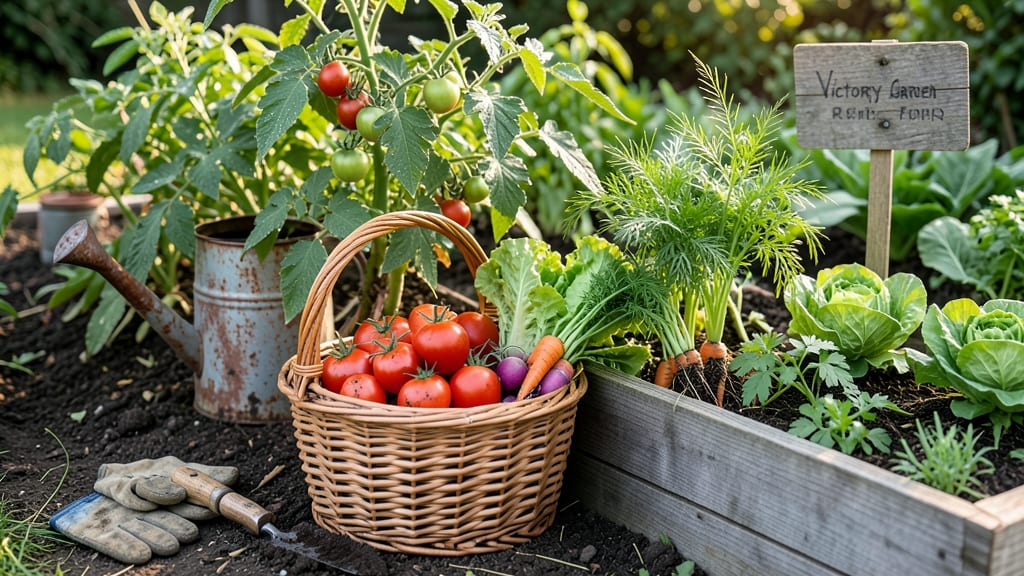
The meaning of victory gardens comes from World War I and II homegrown vegetable plots that boosted food supplies during shortages, fostering community resilience and self-sufficiency through urban and rural gardening efforts.
These wartime gardens weren't just about growing food—they were a patriotic movement that turned backyards into battlefields against hunger. 🌱 The U.S. government even distributed free seeds and published gardening guides to maximize yields, proving how personal efforts could impact national security.
Today, the concept lives on in community gardens and urban farming initiatives that prioritize sustainability over commercial agriculture.
Modern victory gardens adapt the original principles by focusing on local food systems, seed-saving techniques, and education about self-reliance. Whether you're growing herbs on a balcony or planting a full vegetable plot, the core idea remains the same: cultivating your own food strengthens both your community and your independence.
💡 In This Article
- Origins of Victory Gardens in Wartime America
- Modern Victory Gardens: Reviving the Tradition Today
Origins of victory gardens in wartime america
The concept of victory gardens emerged as a direct response to food shortages during World War I (1914-1918), but it reached its peak in World War II (1939-1945).
With commercial food supplies diverted to troops overseas, the U.S. government launched the National War Garden Commission in 1942, encouraging families to grow their own vegetables. The campaign distributed 10 million seed packets and published gardening guides, emphasizing easy-to-grow crops like tomatoes, carrots, and potatoes.
Propaganda played a crucial role in mobilizing citizens. Posters featuring Rosie the Riveter and slogans like "Food Will Win the War" transformed gardening into a patriotic duty.
The U.S. Department of Agriculture reported that by 1943, victory gardens produced 40% of the nation's fresh vegetables, freeing up commercial supplies for military use. Rationing policies—like limiting meat and sugar—further incentivized home gardening as families sought alternatives to stretch their groceries.
What made these gardens uniquely effective was their adaptability. Urban dwellers grew vegetables in window boxes and rooftops, while rural families expanded their plots. The average victory garden measured 1,000 square feet, yielding enough produce to feed a family of four for a season.
This grassroots effort wasn’t just about survival—it was a collective act of resistance against scarcity, proving that small-scale agriculture could have large-scale impact.
Interestingly, the movement extended beyond the U.S. Britain’s "Dig for Victory" campaign and Canada’s "Victory Gardens" mirrored the American effort, with over 1.4 million gardens established in the UK alone.
The shared goal was to reduce reliance on imports and bolster morale, turning gardens into symbols of national unity. 🌿 The legacy of these wartime efforts laid the foundation for modern sustainable agriculture and community gardening movements.
The psychological impact was just as significant. For many, gardening provided a sense of control and hope during uncertain times. Studies from the era show that communities with active victory gardens reported higher morale and lower stress levels.
The act of nurturing plants became a metaphor for nurturing resilience—both for individuals and the nation as a whole.
Even the design of victory gardens reflected wartime pragmatism. Gardens were laid out in intensive planting grids to maximize yield per square foot, often using raised beds or trellises to optimize space.
Techniques like succession planting (harvesting crops in stages) ensured a continuous supply of fresh produce. These methods later influenced modern organic farming and permaculture practices.
Today, revisiting the history of victory gardens offers a powerful lesson: self-sufficiency isn’t just about growing food—it’s about reclaiming agency in a world of uncertainties.
The wartime spirit lives on in contemporary movements like urban farming and food sovereignty, proving that the principles of victory gardens remain as relevant as ever. 🌱