
Vegetables
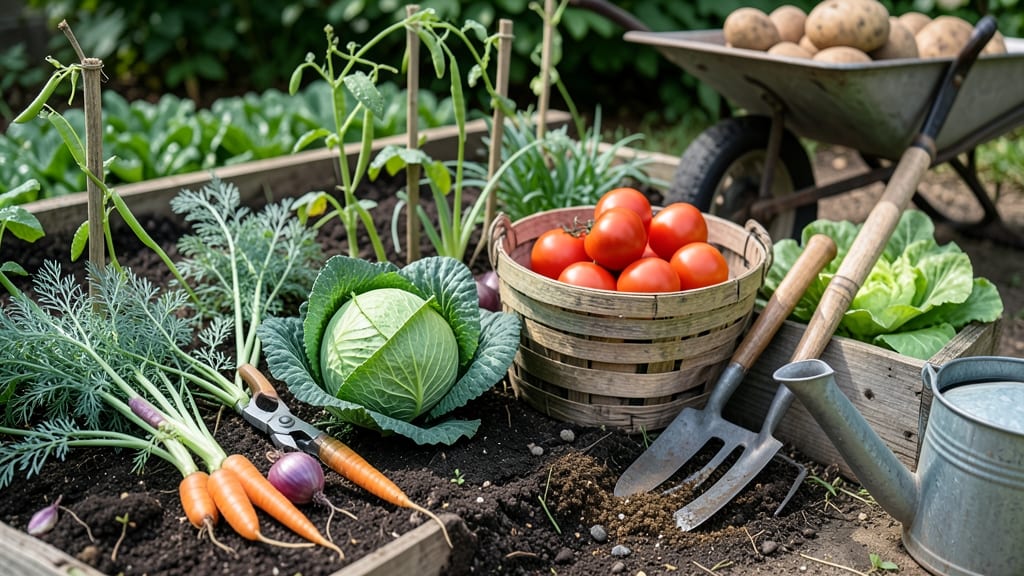
During WW2, victory gardens transformed America by producing over 40% of the nation's vegetables, which allowed commercial crops to be sent to troops and allies while fostering community spirit through widespread gardening across cities and rural areas. Households cultivated high-yield crops like tomatoes, carrots, and potatoes in backyards, community plots, and even vacant lots.
These gardens weren't just about growing food—they were a patriotic movement. 🌱 The U.S. government launched campaigns like "Food Will Win the War," encouraging families to plant vegetables in even small spaces, with standard plot sizes of 18x36 feet designed for maximum efficiency.
Seed rationing ensured everyone had access to quality seeds, while crop selection focused on fast-growing, nutrient-dense produce to stretch supplies further. The impact was immediate: by 1943, over 20 million victory gardens were in operation nationwide, proving that ordinary citizens could make extraordinary contributions during a crisis.
The legacy of these gardens lives on today through modern gardening techniques. Many contemporary gardeners use square-foot gardening methods inspired by WW2 efficiency, while community programs revive the spirit of shared effort.
Urban farming initiatives in cities like Detroit and New York are bringing back the idea of growing food together, proving that victory gardens weren't just a wartime solution—they were a blueprint for resilience that still works today.
💡 In This Article
- How WW2 Victory Gardens Boosted Food Production
- Modern Victory Gardens: Reviving WW2 Techniques Today
How WW2 victory gardens boosted food production
The U.S. government launched the victory garden initiative in 1942 through the "Food Will Win the War" campaign, which transformed backyards and vacant lots into productive farms. 🌱 The standard plot size of 18x36 feet was carefully calculated to maximize yield while using minimal space—enough for a family of four to grow 40% of their annual vegetable needs.
This design prioritized efficiency, with rows spaced just 12 inches apart to prevent weeds while allowing easy access for harvesting.
Crop selection was strategic, focusing on high-yield, nutrient-dense vegetables that grew quickly and stored well. Tomatoes (producing 20-30 pounds per plant in ideal conditions) and potatoes (yielding 5-10 pounds per hill) were staples, while leafy greens like lettuce and spinach provided quick harvests.
The government distributed 10 million seed packets in 1943 alone, with rationed seeds ensuring quality and fairness. This system prevented waste while guaranteeing every gardener could grow food, even with limited resources.
What made these gardens so effective was their dual purpose: they fed families while freeing up commercial crops for the military. 💛 By 1944, victory gardens produced 8 million tons of food annually—equivalent to 10% of all fresh produce consumed in the U.S. That same year, the U.S. shipped 15 million tons of food overseas to support Allied troops, proving how civilian efforts directly impacted the war effort.
The psychological boost was just as significant—gardening gave people a sense of purpose and control during uncertain times.
Seed rationing played a critical role in resource conservation. Families received limited quantities of seeds (often just enough for one plot) to prevent hoarding and ensure equitable distribution.
The government also promoted companion planting—growing compatible crops together (like tomatoes with basil to repel pests)—to maximize space and reduce the need for chemical pesticides, which were scarce during the war. This method remains a cornerstone of sustainable gardening today.
Another key innovation was the use of intensive planting techniques, such as hill planting for potatoes and trellising for beans, which increased yields by 30-50% per square foot. These methods allowed gardeners to grow more food in smaller spaces, a principle still used in modern urban farming.
The success of victory gardens proved that even small-scale efforts could have massive impacts when organized collectively.
The government’s role extended beyond seed distribution. Local agricultural extensions offices provided free gardening advice, while radio broadcasts and pamphlets taught techniques like crop rotation and succession planting to extend harvests. By 1945, over 20 million victory gardens were active nationwide, covering an area larger than the state of Iowa.
This collective effort wasn’t just about growing food—it was about proving that resilience and community could overcome even the greatest challenges. ✨