
Tools
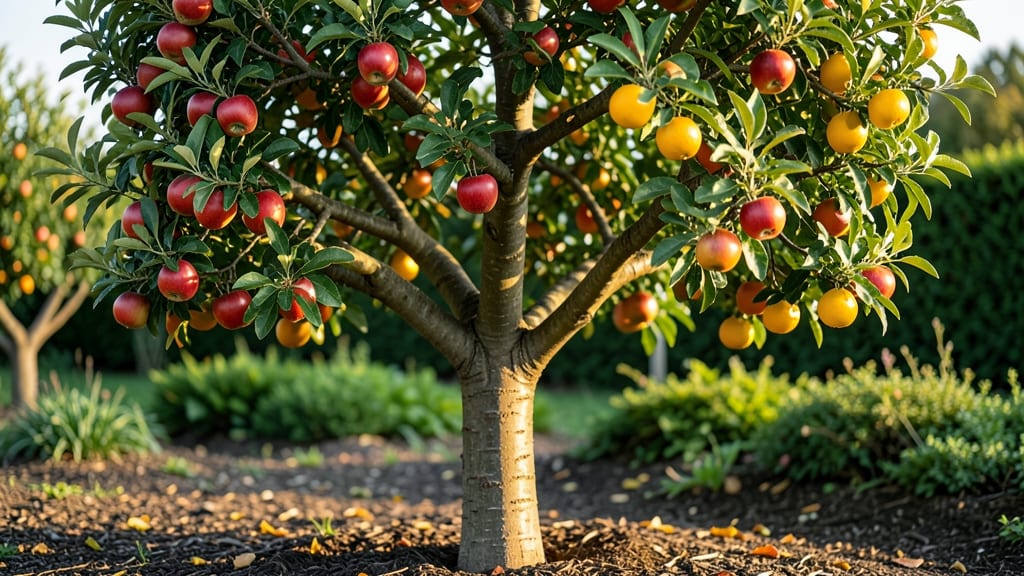
Tomatoes are to gardens what trees are to forests: foundational plants that define the space, provide food, support biodiversity, and structure the environment for thriving ecosystems. Both anchor their systems while enabling growth around them.
This analogy highlights how tomatoes act as the backbone of garden ecosystems.
Like towering oaks, they create microclimates that shelter smaller plants, attract pollinators with their flowers, and improve soil health through their deep root systems. 🌱 The difference is that while trees take decades to mature, tomatoes deliver fast-growing structure and harvestable fruit in just a few months.
This makes them perfect for creating balanced, productive gardens that mimic nature's efficiency.
For gardeners, this means thinking of tomatoes as more than just a crop—they're the garden's "keystone species." By planting them strategically, you can transform even small spaces into self-sustaining ecosystems that require less maintenance over time.
The key is understanding how their growth patterns interact with other plants, much like how forest trees create layers that support different types of life.
💡 In This Article
- How Tomatoes Function Like Trees in Garden Ecosystems
- Designing Your Garden Like a Forest: Planting Tomatoes Strategically
How tomatoes function like trees in garden ecosystems
Tomatoes create garden ecosystems much like trees shape forests through their deep root systems, which extend 3-5 feet into the soil—similar to how forest trees anchor their canopies.
These roots break up compacted soil, allowing water and nutrients to penetrate deeper, just as tree roots create underground channels that prevent erosion.
The tomato's indeterminate varieties (like 'Sungold' or 'Brandywine') grow 6-10 feet tall, forming a vertical structure that provides shade for smaller plants below, mirroring how forest canopies regulate temperature and humidity.
The tomato plant's flowering habit is another key parallel to trees. Each vine produces hundreds of flowers that attract bees, butterflies, and hummingbirds—just like forest trees support pollinator populations. Tomatoes also self-prune by dropping excess fruit when overloaded, a survival mechanism akin to how trees allocate resources during drought.
Their leaf structure creates microclimates: broad leaves provide shade for heat-sensitive plants, while their hairy stems deter pests naturally, much like how tree bark protects against insects.
What makes tomatoes uniquely effective as garden "trees" is their fast growth cycle. While an oak tree takes decades to mature, a tomato plant reaches full productivity in 60-90 days, producing edible fruit that feeds both humans and wildlife.
The plant's nitrogen-fixing bacteria in root nodules improve soil fertility, just as forest trees enrich soil through leaf litter decomposition. This dual role—producing food while enhancing soil—is why tomatoes are often called the "keystone species" of home gardens.
Consider the tomato's role in nutrient cycling: When leaves and fruit decompose, they return potassium, phosphorus, and organic matter to the soil, creating a self-sustaining loop. This is identical to how fallen leaves from forest trees become rich humus.
The difference is scale—while a single tree might feed hundreds of forest creatures, a single tomato plant can support bees, birds, and beneficial insects while producing pounds of fruit for humans. This makes tomatoes the ultimate multi-functional garden anchor.
For visual comparison, imagine a forest understory: ferns and wildflowers grow beneath towering trees, benefiting from their shade. In a tomato garden, bush beans, lettuce, or radishes thrive in the dappled shade of tomato vines, while marigolds planted at the base deter pests—just like ground covers in a forest.
The tomato's vertical growth creates this natural layering, maximizing space efficiency in small gardens.
Here's the ecological breakdown of how tomatoes mimic trees:
- Structure: Vertical growth (6-10 ft) creates shade and windbreaks
- Pollinator support: Flowers attract bees and butterflies (like forest blossoms)
- Soil improvement: Root systems and leaf litter enrich soil fertility
- Pest control: Natural repellents (like leaf hairs) reduce chemical needs
- Food production: Edible fruit feeds humans while supporting wildlife
This is why permaculture experts often recommend planting tomatoes as the first structural element in any garden design—just as you'd plant trees first in a forest restoration project. 🌿