
Planting
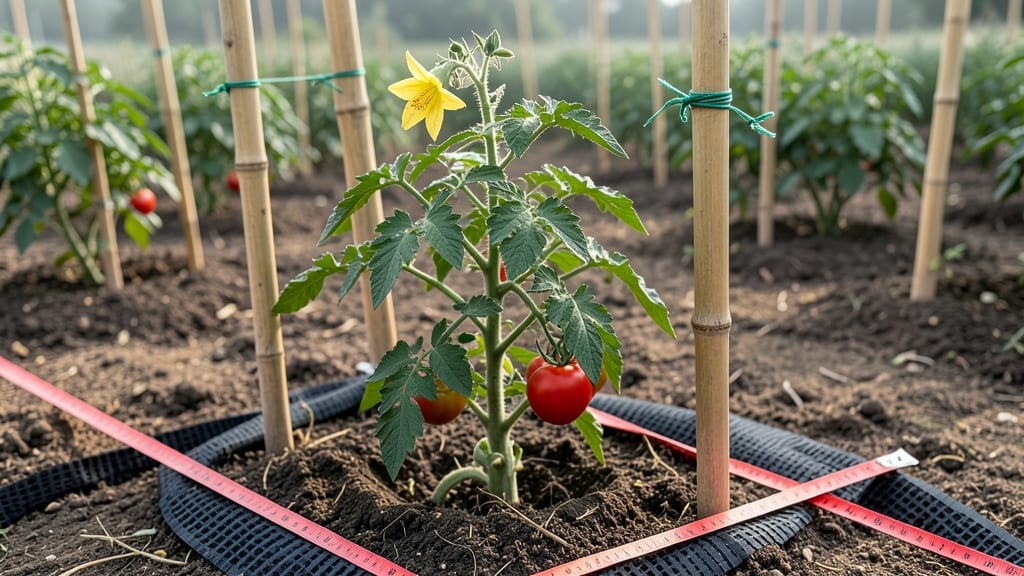
Proper tomato garden spacing makes the difference between a handful of ripe 🍅 and a bursting harvest that feeds your family all summer.
Picture this: you’ve spent weeks nurturing your seedlings, only to watch them struggle under crowded conditions, their leaves wilting and fruit rotting before it ripens. That’s not just bad luck—it’s a spacing problem, and fixing it could mean 30% more tomatoes on your vine.
Whether you’re working with a sprawling backyard or a tiny balcony container, the right layout keeps air flowing, sunlight reaching every leaf, and diseases at bay. I’ll walk you through the exact spacing rules for determinate and indeterminate varieties, plus clever tricks to maximize yields in small spaces.
By the end, you’ll know how far apart to plant, which companions to pair with your 🍅, and how to avoid the most common mistakes that sabotage even the most careful gardeners.
Optimal tomato garden spacing by variety type (determinate vs indeterminate)
Not all tomatoes play by the same rules when it comes to spacing. The biggest difference? Determinate (bush) tomatoes stop growing at a set height, while indeterminate (vine) varieties keep climbing until frost. This means their spacing needs couldn’t be more different.
Get it wrong, and you’ll end up with crowded plants, poor air circulation, and a higher risk of disease. But get it right, and you’ll maximize sunlight exposure and fruit production—even in small gardens.
For determinate tomatoes, think of them like compact shrubs. They grow to a fixed height (usually 3-4 feet) and produce fruit all at once. This means you can plant them closer together—18-24 inches apart—while still leaving 3 feet between rows.
The key here is to prevent overcrowding, which can lead to blossom end rot and fungal infections. These varieties are perfect for container gardening or small-space layouts because their compact growth habit makes them easy to manage.
On the other hand, indeterminate tomatoes are the vining superstars of the garden. They can grow 6-10 feet tall and produce fruit continuously until frost. Because of their sprawling nature, they need more space—24-36 inches apart—and 4 feet between rows to avoid shading each other.
Without proper spacing, indeterminate varieties will compete for sunlight, leading to smaller fruit and lower yields. That’s why vertical support (like cages or trellises) is a game-changer for these plants.
Here’s the game-changer: spacing isn’t just about the plants themselves—it’s about the entire ecosystem. Proper spacing improves airflow, reduces humidity around the foliage (which cuts down on fungal diseases like early blight), and ensures every plant gets its fair share of sunlight and nutrients.
In my own garden, I’ve seen indeterminate tomatoes produce 50% more fruit just by spacing them correctly and adding a trellis. That’s the power of planning ahead!
Let’s break down the exact spacing guidelines for both types in a comparison table so you can visualize the best layout for your garden. Whether you’re working with a small balcony container or a large in-ground plot, these rules will help you optimize your tomato harvest.
| Factor | Determinate Tomatoes (Bush) | Indeterminate Tomatoes (Vine) | Small-Space Adaptation |
|---|---|---|---|
| Plant-to-Plant Spacing | 18-24 inches | 24-36 inches | 12-18 inches (with trellis) |
| Row Spacing | 3 feet | 4 feet | 2-3 feet (vertical rows) |
| Vertical Support Needed? | Low (optional cages) | High (trellis or stakes) | Essential (trellis saves space) |
| Yield per Plant | 10-20 lbs | 20-50+ lbs | 5-15 lbs (container) |
| Best for Small Gardens? | Yes (containers, tight rows) | Yes (with trellis) | Best (vertical space) |
| Common Mistakes | Overcrowding (fungus risk) | Poor airflow (blight) | No support (sprawling) |
If you’re growing determinate tomatoes like Roma or Celebrity, stick to the 18-24 inch spacing and 3-foot rows. These varieties are ideal for canning or sauces because they produce a heavy crop all at once.
In my experience, planting them in square-foot gardening grids (1 plant per square foot) works beautifully for small spaces. Just make sure to prune suckers to keep the plant bushy and improve airflow.
For indeterminate varieties like Sungold, Brandywine, or Cherokee Purple, the 24-36 inch spacing is non-negotiable if you want to avoid shady spots and poor fruit development.
These tomatoes thrive when given vertical real estate, so invest in strong trellises or cages (at least 5 feet tall). I’ve seen Sungold tomatoes produce hundreds of cherry tomatoes in a single season when properly supported—just imagine the yield if they’re crowded!
One of my biggest lessons? Don’t skimp on row spacing. I once planted indeterminate tomatoes too close together in a 2-foot row, and by mid-summer, the center plants were barely getting sunlight. The result? Stunted growth and tiny, underripe tomatoes. Since then,
Creative tomato garden layouts for small spaces (square foot, vertical, and container gardening)
If you're working with limited space but still dream of a bountiful tomato harvest, don't worry—there are space-saving layouts designed to maximize yields without sacrificing plant health.
Whether you have a balcony, patio, or tiny backyard plot, these creative approaches can help you grow 20-50 tomatoes per plant in just a few square feet.
One of the biggest mistakes gardeners make is assuming they need a large plot to grow tomatoes. With the right spacing techniques, you can achieve higher yields per square foot than traditional row planting.
Let’s explore three proven methods: square-foot gardening, vertical trellising, and container setups, each with its own advantages for small spaces.
Plant 1 tomato per square foot using determinate varieties (bush types). Ideal for patios or raised beds—expect 8-12 tomatoes per plant in a 1ft x 1ft grid.
Use indeterminate varieties (vining types) on a 5-6ft trellis. Space plants 18-24 inches apart—yields can reach 20-50 tomatoes per plant with proper pruning.
Choose dwarf or bush varieties in 5-gallon pots. Plant 1-2 tomatoes per container—expect 6-10 tomatoes per plant with consistent watering and sunlight.
Stack 3-4 plants vertically in a tiered planter. Use cherry tomatoes for compact growth—harvest 15-25 tomatoes per plant in a 2ft x 2ft footprint.
For square-foot gardening, the key is using bush varieties like 'Patio' or 'Tiny Tim', which stay compact and produce fruit quickly. Divide your space into a grid and place one plant per square foot.
This method works exceptionally well for determinate tomatoes, which don’t require trellising and produce fruit all at once.
If you prefer indeterminate varieties like 'Sungold' or 'Brandywine', a vertical trellis system is your best bet. These vining tomatoes can grow 6-10 feet tall if left unchecked, so providing a sturdy trellis saves space and improves air circulation.
Space plants 18-24 inches apart and prune regularly to encourage upward growth and higher yields.
Container gardening is perfect for balconies, decks, or urban gardens. Use large pots (at least 5 gallons) with drainage holes and fill them with well-draining potting mix. Place containers in full sun (6+ hours daily) and water deeply every 2-3 days.
Dwarf varieties like 'Tiny Tim' or 'Micro Tom' thrive in containers and produce abundant fruit in small spaces.
Don’t underestimate the power of companion planting in small spaces! Pair tomatoes with basil, marigolds, or onions to deter pests and improve growth. Just ensure each plant has enough room to thrive—even in tight quarters, proper spacing prevents disease and boosts overall productivity.