
Tools
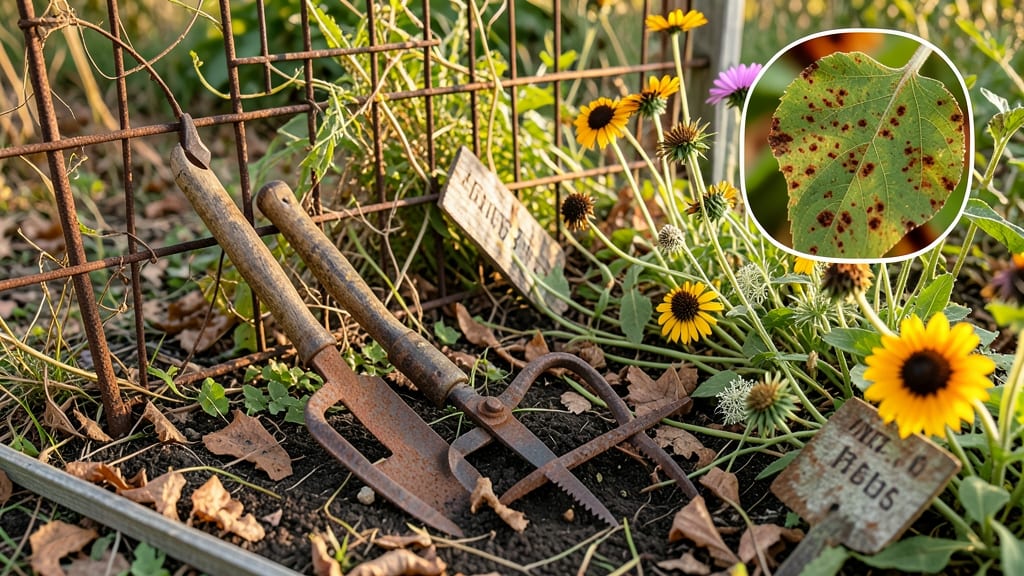
Reviving a rusted garden begins with restoring your tools using vinegar or baking soda paste to remove corrosion, followed by applying a protective oil like linseed or mineral oil. Proper storage in dry conditions and rust inhibitors will keep them looking sharp for years.
Rust forms when iron in your tools reacts with oxygen and moisture, creating that familiar reddish-brown flakes. 🔥 Organic debris like leaves and dirt speeds up this process, trapping moisture against metal surfaces.
Tools made of cast iron rust slower than steel because of its carbon content, but both need regular care to prevent long-term damage.
Start by scrubbing tools with a stiff brush and a mix of vinegar or baking soda paste to break down rust. After cleaning, dry them thoroughly before applying a light coat of oil—this creates a protective barrier against future corrosion.
For storage, use racks or hangers to keep tools off damp ground, and consider adding silica gel packets to your toolbox for extra moisture control.
💡 In This Article
- Science Behind Rust Formation in Garden Tools
- Step-by-Step Guide to Restoring and Protecting Garden Tools
Science behind rust formation in garden tools
Rust isn't just cosmetic—it's a chemical reaction called oxidation where iron atoms in your tools lose electrons to oxygen and water. This creates iron oxide (Fe₂O₃), the reddish-brown compound we recognize as rust.
The process accelerates dramatically when moisture lingers, especially in damp climates or when tools sit in sheds with poor ventilation. Organic debris like leaves or soil acts like a sponge, trapping moisture against metal surfaces and creating the perfect breeding ground for corrosion.
Different metals resist rust at varying rates. Cast iron, with its higher carbon content (2-4%), forms a protective layer that slows oxidation compared to carbon steel (0.05-2% carbon). However, both metals eventually succumb without proper care.
The key difference lies in their microstructure: cast iron's graphite flakes disrupt corrosion pathways, while steel's uniform structure makes it more vulnerable.
For example, a pruner made of carbon steel may show rust spots within months if left exposed, while a cast iron trowel might last years under the same conditions.
The real damage happens at the microscopic level where rust flakes break away, exposing fresh metal to oxygen. This creates a cycle where corrosion spreads like a chain reaction.
The texture of rust also matters—powdery rust is easier to remove than hard, embedded corrosion that's been baking in damp conditions for years. Understanding this helps explain why tools rust fastest in spring (high humidity) and why winter storage requires extra precautions.
pH levels play a surprising role too. Acidic environments (like vinegar) speed up rust formation initially, but can also help dissolve existing corrosion when used as a cleaner. Conversely, alkaline solutions like baking soda create a protective layer that slows oxidation.
This is why gardeners often see tools rust more quickly after acidic soil contact—those same chemicals that help plants grow can accelerate metal degradation.
Temperature matters as well. Warmer conditions increase molecular movement, making oxidation happen faster. That's why tools left in hot, humid sheds rust more quickly than those stored in cool, dry garages.
The ideal storage environment maintains temperatures below 70°F and relative humidity under 50%—conditions that significantly slow the rusting process.
What most people don't realize is that rust isn't just surface-level—it creates internal stress in metal that weakens structural integrity. A rusted trowel may look functional but could snap under pressure. This hidden damage is why regular maintenance isn't just about appearance but about tool longevity and safety.