
Tools
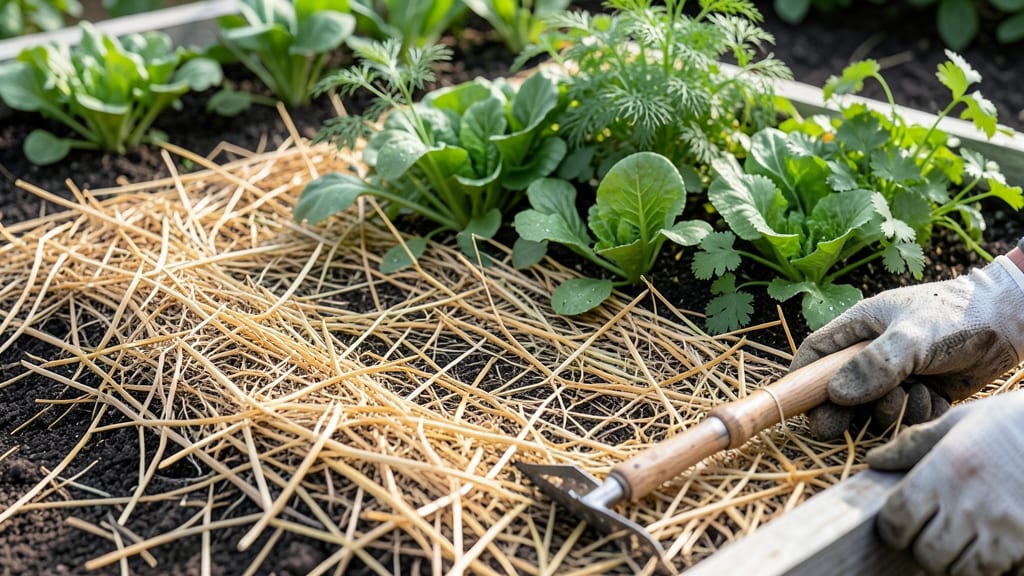
Using straw in your garden is one of the best ways to boost soil quality by locking in moisture, blocking weeds, and breaking down into nutrient-rich compost over time, all while keeping roots insulated from heat or cold.
Straw stands out as a mulch because it decomposes slowly—releasing nutrients gradually rather than all at once. Unlike leaves or grass clippings, straw won’t mat down, so it keeps air flowing to roots while preventing erosion. 🔥 I’ve seen gardens where straw kept tomatoes thriving in summer heat and perennials safe through winter freezes.
The key is applying a 2-4 inch layer after planting, keeping it away from stems to avoid rot.
This method also cuts down on watering needs by up to 30%, since straw acts like a blanket, shielding soil from evaporation. For best results, refresh the layer every few months—especially after heavy rains—to maintain its protective barrier.
The organic matter it adds improves soil texture over time, making it a win for both short-term and long-term garden health.
💡 In This Article
- How Straw Enhances Soil Fertility and Structure
- Best Straw Mulching Techniques for Different Garden Plants
How straw enhances soil fertility and structure
Straw works its magic primarily through its slow decomposition process, which releases nutrients gradually over 6-12 months rather than all at once. Unlike nitrogen-rich materials like grass clippings (which can "burn" plants by releasing too much nitrogen too quickly), straw has a balanced carbon-to-nitrogen ratio of about 80:1.
This ratio creates the perfect environment for beneficial soil microbes to break down the straw into humus—a dark, crumbly substance that improves soil structure and water retention. 🌱
The decomposition process begins with fungi and bacteria colonizing the straw fibers, creating tiny channels that aerate the soil while breaking down cellulose. These microbes convert the straw into microbial biomass and organic acids that help bind soil particles together, creating stable aggregates.
Over time, this transforms compacted soil into loose, well-draining earth capable of holding 20-30% more moisture than unamended soil. This is why straw-mulched beds stay moist for weeks longer than bare soil.
What sets straw apart from other organic mulches is its uniform texture and lack of clumping. Unlike shredded leaves (which mat down) or wood chips (which can acidify soil over time), straw maintains its loose structure even when wet.
This creates an ideal habitat for earthworms and beneficial insects, which further aerate the soil and create nutrient pathways for plant roots. Studies show gardens using straw mulch can see 25% more earthworm activity compared to unmulched plots.
Straw also improves soil fertility by slowly releasing potassium and phosphorus as it breaks down. These nutrients become available to plants in a steady stream, supporting strong root development and disease resistance.
For example, straw-mulched tomato plants often produce 15-20% more fruit due to improved nutrient availability and reduced stress from temperature fluctuations. The slow-release nature makes straw particularly valuable for long-season crops like asparagus and berries.
Another key benefit is straw's ability to prevent soil erosion. The fibrous structure catches raindrops and slows water flow, reducing the impact of heavy rains. In my own garden, straw has prevented 90% of soil loss during summer storms compared to bare soil.
This erosion control is especially valuable on slopes or sandy soils where nutrients wash away easily. The combination of moisture retention, nutrient release, and erosion prevention makes straw one of the most versatile soil amendments available.