
Tools
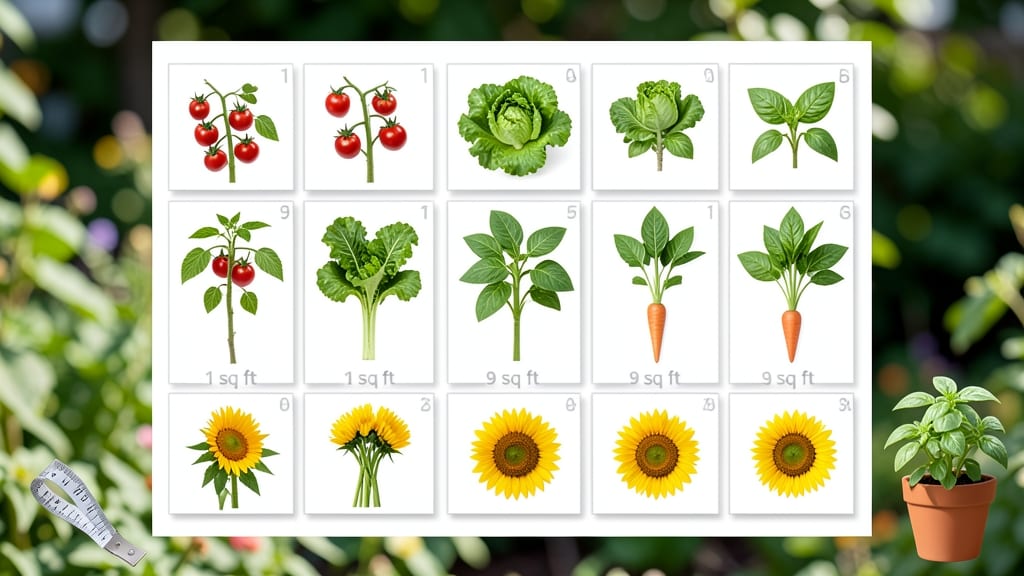
A sqft gardening chart helps you plan vegetable and herb spacing by plant type, showing how much space each plant needs at maturity—like 16 sqft for tomatoes or 1 sqft for basil—to get the most from small gardens without overcrowding or nutrient competition.
A sqft gardening chart isn't just about fitting plants into tight spaces—it's about creating the perfect balance for healthy growth. 🌱 The spacing accounts for how much room roots need to spread, how much sunlight each plant requires, and even how air circulates around leaves to prevent disease.
For example, leafy greens like lettuce can thrive in just 4 sqft, while sprawling plants like zucchini need 4 sqft each to produce well. This method also makes it easier to rotate crops yearly, which keeps soil healthy and reduces pests naturally.
When designing your layout, think beyond just the numbers. Companion planting can save space and boost yields—like pairing basil with tomatoes to repel pests. You can use grid markers or string to map out your bed before planting, ensuring everything stays in its designated spot.
For container gardens, the same spacing rules apply, but you'll need to choose compact varieties or prune regularly to keep plants from outgrowing their pots.
💡 In This Article
- How Square Foot Gardening Maximizes Plant Productivity
- Customizing Your Sqft Gardening Layout for Vegetables and Herbs
How square foot gardening maximizes plant productivity
Square foot gardening works because it eliminates the inefficiencies of traditional row planting. In rows, plants often compete for sunlight at the edges where shadows form, and soil nutrients get depleted unevenly.
The 1-foot by 1-foot grid system ensures every plant gets equal access to light and nutrients, regardless of its position in the bed. For instance, tomatoes planted in a 16 sqft grid receive consistent sunlight exposure, while their roots spread into nutrient-rich soil without competing with neighboring plants for space.
The spacing also prevents airborne diseases by improving circulation—crowded plants trap moisture, creating ideal conditions for fungal infections like powdery mildew. Leafy greens like spinach (which need 1 sqft) grow upright in their allocated space, while bush beans (also 1 sqft) sprawl horizontally without smothering each other.
This balance keeps plants healthier and more productive, often yielding 20-30% more than traditional methods in the same space.
Root competition is another critical factor. Plants like carrots (which need 3 sqft) develop straighter, sweeter roots when given ample space to grow outward. In contrast, overcrowded carrots become stunted and forked, reducing harvest quality.
The chart accounts for these growth patterns, ensuring each plant's root system has room to expand without disturbing neighbors.
Seasonal adjustments matter too. Fast-growing crops like radishes (1 sqft) can be harvested early, freeing up space for slower growers like broccoli (4 sqft). This interplanting strategy keeps your garden productive year-round.
For example, you might start radishes in early spring, harvest them by summer, then plant broccoli in their place—maximizing every square inch.
Pest control benefits from the grid system as well. Open spacing makes it easier to spot pests like aphids or cabbage worms before they spread. Plus, the chart encourages companion planting, like placing marigolds (which repel pests) in the corners of your bed.
This natural pest management reduces the need for chemical interventions, keeping your garden both productive and eco-friendly.
For container gardens, the same principles apply but with a twist: choose compact varieties or prune regularly to maintain spacing. For example, cherry tomatoes (which need 1 sqft) thrive in pots, while full-size tomatoes (requiring 16 sqft) need larger containers or ground space.
The chart helps you match plant needs to your container size, ensuring healthy growth even in limited spaces.