
Landscaping
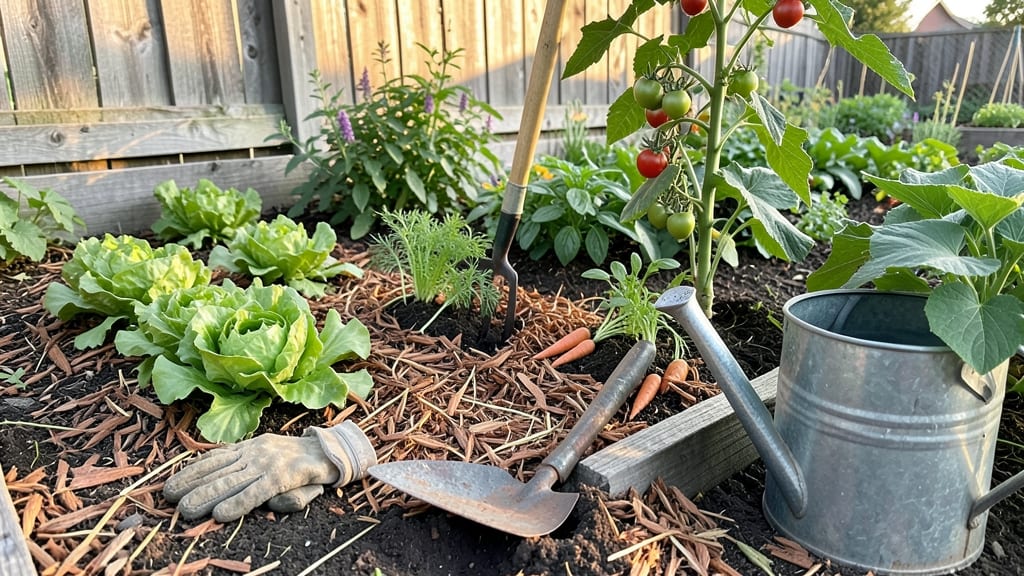
You should put mulch in your vegetable garden because it preserves moisture, blocks weeds, and maintains even soil temperatures while enriching soil quality—but avoid piling it against plant stems or using untreated wood chips that can rob nitrogen.
Mulch acts like a protective blanket for your garden, keeping soil consistently moist by reducing evaporation. This is especially valuable during dry spells when plants need steady hydration. 🌱 The layer also blocks sunlight from reaching weed seeds, preventing them from sprouting while your vegetables grow.
Over time, organic mulches break down, adding nutrients back into the soil—a natural fertilizer process that improves long-term plant health.
Not all mulches are equal, though. Straw and shredded leaves work beautifully for vegetables, while untreated wood chips can actually harm your plants by drawing nitrogen from the soil. Always apply mulch in a 2-3 inch layer, keeping it at least an inch away from plant stems to prevent rot.
For early spring planting, you might skip mulch entirely to let soil warm up faster.
💡 In This Article
- How Mulch Improves Vegetable Garden Soil and Growth
- Best Mulch Types for Vegetable Gardens and When to Avoid Them
How mulch improves vegetable garden soil and growth
Mulch works like a natural insulator by creating a protective barrier that reduces soil moisture evaporation by up to 30-50% during hot, dry periods. The science behind this involves capillary action—when mulch covers the soil, it blocks direct sunlight from heating the surface, which slows water loss through evaporation.
This is especially critical for vegetables like tomatoes and peppers that need consistent moisture to develop properly. Without mulch, soil can dry out 2-3 times faster in full sun conditions, leading to stressed plants and reduced yields.
The weed suppression benefit comes from mulch physically blocking sunlight, which weed seeds need to germinate. A 2-3 inch layer of mulch can reduce weed growth by 70-90% while allowing your vegetables to thrive.
This isn't just about aesthetics—weeds compete aggressively for water and nutrients, so fewer weeds mean healthier vegetable plants. The texture of mulch also matters: finer materials like straw create a denser mat that blocks light more effectively than chunkier options.
Temperature regulation is another key benefit where mulch shines. During summer heatwaves, mulch can keep soil 5-10°F cooler than bare soil, protecting delicate root systems. In cooler seasons, it acts as an insulator to prevent rapid temperature swings that can shock plants.
This stability is particularly important for root crops like carrots and beets, whose development depends on consistent soil warmth. The organic matter in mulch also breaks down over time, adding valuable nutrients back into the soil—think of it as a slow-release fertilizer that improves soil structure and microbial activity.
However, not all mulches behave the same way. Straw and grass clippings decompose relatively quickly, adding nutrients within 3-6 months, while wood chips take 1-2 years to break down completely.
The decomposition process also affects soil pH—straw and leaves tend to be neutral, while wood chips can make soil slightly more acidic over time. For vegetable gardens, this means choosing mulch based on both immediate needs (moisture retention) and long-term goals (nutrient enrichment).
One often-overlooked benefit is how mulch improves soil structure by preventing compaction from rain and foot traffic. Bare soil becomes dense and hard when exposed to repeated impacts, while mulched areas stay loose and well-aerated.
This is crucial for root vegetables that need room to expand. The organic matter also encourages beneficial soil microbes and earthworms, which further improve nutrient availability for your plants. 🌱
For best results, maintain a 2-3 inch layer of mulch and refresh it annually as it breaks down. This thickness provides optimal moisture retention without smothering plants. The key is balance—too little mulch won't provide enough protection, while too much can create anaerobic conditions that harm roots.
Regularly check for signs of over-mulching, like yellowing leaves or stunted growth, which may indicate insufficient airflow to the soil.