
Tools
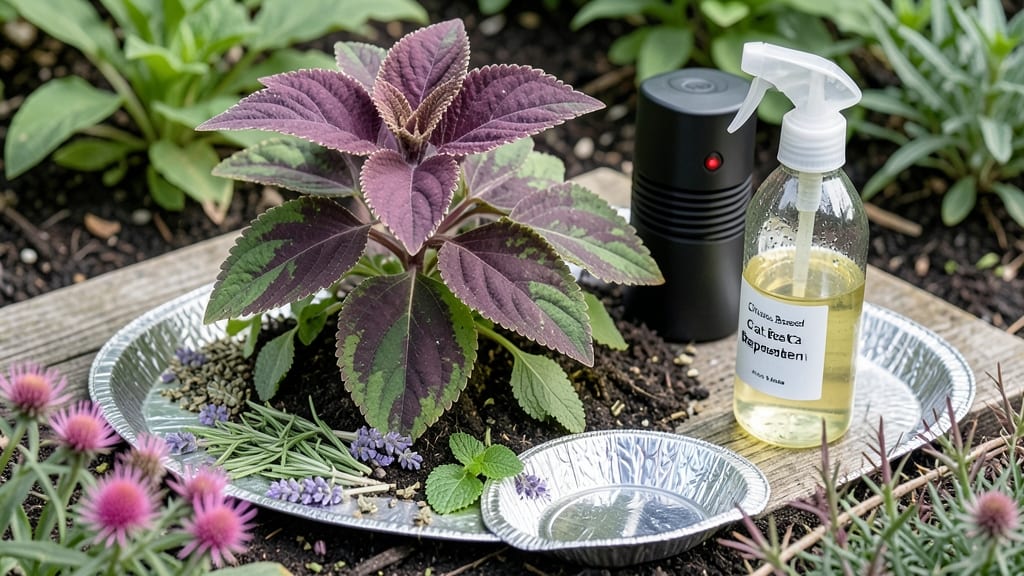
To repel cats from your garden, use natural deterrents like citrus peels, coffee grounds, or aromatic herbs such as rosemary and lavender. Spraying diluted vinegar or planting prickly options like cacti can also keep them away without harming your plants or the environment.
Cats have sensitive noses and dislike strong scents, which is why citrus oils, vinegar, and coffee grounds work so well. 🌿 These natural solutions create an unpleasant experience for cats without using harsh chemicals.
I’ve found that placing deterrents near garden edges or entry points maximizes their effectiveness, while strategic plant placement—like mixing cat-repelling herbs with your flowers—keeps your yard both functional and beautiful.
For extra protection, combine multiple methods. For example, sprinkle coffee grounds around the base of plants and spray vinegar along pathways. This layered approach confuses cats and makes your garden less appealing. Plus, these methods are safe for pets, children, and the environment.
💡 In This Article
- Why Cats Avoid Certain Plants and Scents
- Best Natural Cat Repellent Plants for Gardens
Why cats avoid certain plants and scents
Cats possess an extraordinary sense of smell—up to 14 times more sensitive than humans—making them highly attuned to strong, unfamiliar odors. 🌿 When exposed to citrus oils (like lemon or orange), their natural aversion kicks in because these compounds contain limonene, a chemical that disrupts their feline pheromone receptors.
Cats also dislike the texture of prickly plants like cacti or thorny bushes because their sensitive paw pads instinctively recoil from anything that could cause discomfort or injury.
The science behind this avoidance lies in their evolutionary instincts. In the wild, cats associate strong scents with predators or threats, triggering a "flight" response. For example, vinegar's acetic acid mimics the smell of spoiled food, which cats avoid due to their preference for fresh prey.
Similarly, herbs like rosemary and lavender contain linalool and camphor, compounds that cats find overwhelming and unpleasant. Even coffee grounds work because their bitter aroma and granular texture create an uncomfortable sensory experience.
Pheromone-based deterrents take this a step further by mimicking the scent of other cats' urine or marking behaviors. Products like Feliway (a synthetic feline facial pheromone) create a calming effect, but when used strategically in high concentrations, they can also signal "occupied territory" to intruding cats.
The key is placement—spraying these deterrents along garden borders or near entry points ensures cats associate your yard with danger or discomfort, not a hunting ground. 🚫
Texture plays a surprisingly large role too. Cats avoid areas with rough or uneven surfaces because their paw pads are highly sensitive to vibrations and sharp objects. For instance, gravel or pine cones create an uncomfortable crunch underfoot, while prickly plants like barberry deter them with physical barriers.
This dual approach—combining scent and texture—makes your garden a less appealing destination for cats.
What most people don’t realize is that cats also avoid plants with bitter or toxic compounds, like coleus canina (a cat-safe plant that smells like citrus to humans but repels cats with its unique chemical profile).
These plants trigger a gag reflex or nausea when ingested, reinforcing their avoidance. The result? A garden that’s both cat-proof and visually appealing, without relying on harsh chemicals. 🌱