
Fertilization
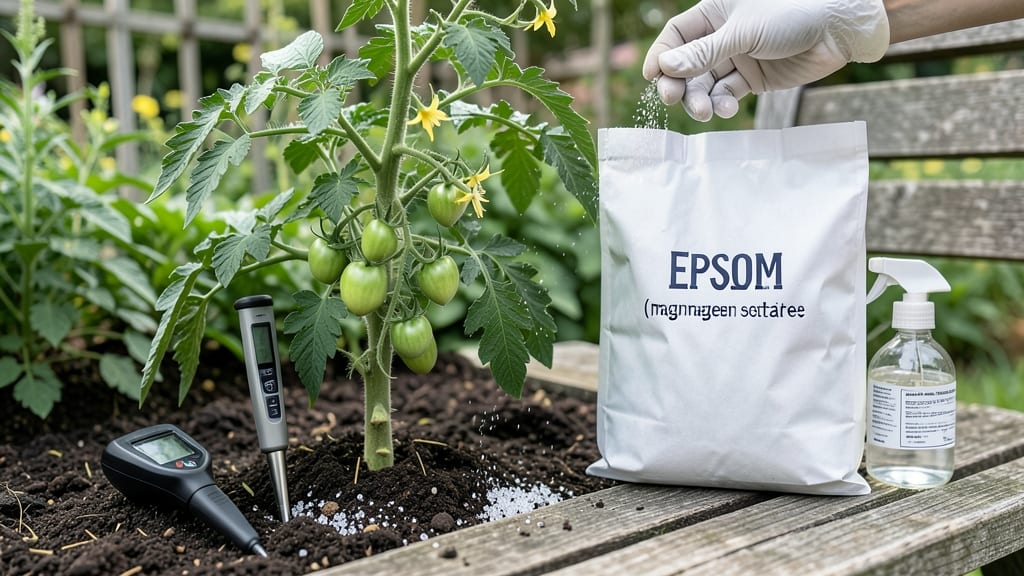
Epsom salt for veggie gardens provides essential magnesium and sulfur that boost plant vitality by strengthening cell walls, increasing chlorophyll production, and preventing yellowing leaves in crops like tomatoes and peppers. Use it as a diluted foliar spray or soil amendment every 4-6 weeks during the growing season.
Epsom salt works because magnesium is a key player in photosynthesis, helping plants convert sunlight into energy more efficiently. 🌱 When your leafy greens start showing yellow between the veins—a classic sign of magnesium deficiency—this simple solution can often reverse the damage.
I’ve seen dramatic improvements in pepper plants after just one application, especially when combined with regular watering. The sulfur component also supports root development and disease resistance, making it a two-for-one nutrient boost for your vegetable patch.
For best results, mix 1 tablespoon of Epsom salt per gallon of water for foliar sprays or sprinkle 1 pound per 100 square feet into the soil during planting. Just remember: a little goes a long way—overuse can actually harm your plants by disrupting soil chemistry.
Test your soil first if you notice persistent yellowing, as other deficiencies might be at play.
💡 In This Article
- How Epsom Salt Improves Plant Health and Growth
- Best Ways to Apply Epsom Salt in Vegetable Gardens
How Epsom salt improves plant health and growth
Magnesium is the central atom in chlorophyll molecules, acting like a bridge that helps plants capture sunlight for energy production. When magnesium levels drop, chlorophyll breaks down unevenly, causing the classic yellowing between leaf veins (interveinal chlorosis) while veins stay green.
Epsom salt delivers magnesium sulfate in a form plants absorb quickly through leaves or roots. 🌿 The sulfur component also plays a crucial role by supporting amino acid production and enzyme function, which strengthens plant defenses against pests and diseases.
In tomatoes, magnesium deficiency often appears first on older leaves, but Epsom salt applications can reverse this within 2-3 weeks by restoring chlorophyll. Peppers and squash show similar improvements, with plants developing thicker stems and more vibrant foliage.
The magnesium helps regulate phosphorus uptake too, which is essential for energy transfer during flowering and fruiting stages. Unlike synthetic fertilizers that can burn roots, Epsom salt dissolves gently in water, making it safer for young seedlings and sensitive crops.
Organic gardeners often prefer Epsom salt over synthetic magnesium sources because it breaks down completely without leaving harmful residues. However, it's not a complete fertilizer—it lacks nitrogen or potassium, so pair it with compost or balanced fertilizers for optimal results.
The key difference from other magnesium sources like dolomitic lime is speed: Epsom salt provides immediate magnesium while lime takes months to alter soil chemistry. 🌱 For container gardens, foliar sprays work best since soil volumes are limited.
Sulfur's role extends beyond chlorophyll—it helps form cysteine and methionine, amino acids that boost plant resilience. When applied as a foliar spray, magnesium enters leaves through stomata (tiny pores) within minutes, making it ideal for correcting deficiencies fast.
For soil applications, magnesium moves slowly through the root zone, so combine both methods for comprehensive coverage. The 1:1 magnesium-to-sulfur ratio in Epsom salt makes it uniquely balanced for vegetable gardens compared to other supplements.
One common misconception is that all plants benefit equally from Epsom salt. While tomatoes and peppers respond dramatically, leafy greens like spinach and kale show subtle improvements in texture and nutrient density. Fruiting plants like cucumbers and eggplants may not need additional magnesium if soil tests reveal adequate levels.
Always monitor plant responses—excess magnesium can interfere with calcium absorption, leading to blossom-end rot in tomatoes. 💡
For organic gardeners, Epsom salt offers a chemical-free way to address deficiencies without synthetic additives. The granular form dissolves completely in water, unlike some organic amendments that leave insoluble particles.
When used as directed, it won't alter soil pH significantly, making it safe for acid-loving plants like blueberries or alkaline-tolerant vegetables. The best results come from consistent, moderate applications rather than occasional heavy doses. 🌱