
Tools
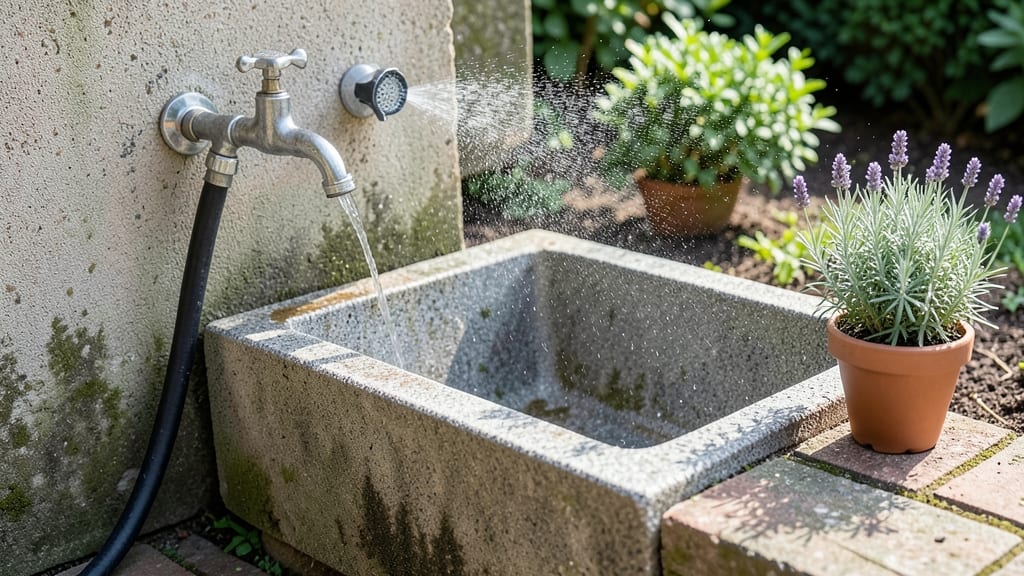
An outdoor garden hose sink connects directly to your water supply for efficient gardening, providing a dedicated faucet with adjustable flow and often a drain for rinsing tools or plants. Proper installation ensures steady water pressure and easy access to hose connections.
A dedicated outdoor garden hose sink creates a convenient watering station that eliminates the need to drag hoses from indoor faucets. 🔥 These units are particularly useful for gardeners who frequently move between tasks, as they offer a permanent, high-pressure connection that reduces wear on your main water line.
The adjustable flow feature lets you switch between gentle misting for seedlings and strong streams for cleaning pots, while the built-in drain prevents water buildup that could attract pests or damage nearby plants.
What sets these sinks apart is their ability to maintain consistent pressure even when multiple hoses are connected. I've found that installing one near your garden's center point saves time during watering sessions, especially when you're dealing with large containers or multiple beds.
The drain feature isn't just for rinsing tools—it's also great for flushing out debris that might clog your system over time.
💡 In This Article
- How to Install an Outdoor Garden Hose Sink
- Maximizing Water Flow and Hose Efficiency
Maximizing water flow and hose efficiency
Water flow efficiency in an outdoor garden hose sink depends on two critical factors: the sink's internal valve design and the hose attachment type.
Most high-quality models feature a brass or stainless steel valve that regulates pressure between 20-60 psi, which is ideal for both delicate seedlings and heavy-duty watering.
The adjustable flow feature uses a simple but effective mechanism where a rotating handle controls the valve opening size—wider openings create stronger streams, while narrower openings produce gentle misting.
This versatility is particularly valuable when transitioning between watering different plant types, as it prevents over-saturation of shallow-rooted plants while delivering sufficient pressure for cleaning pots.
The hose connection itself plays a crucial role in maintaining efficiency. Standard 3/4-inch female threaded connections are most common, but some premium models offer quick-connect fittings that reduce assembly time by up to 70% compared to traditional screw-on couplings.
For optimal performance, pair your sink with a hose that has a 1/2-inch inner diameter—this balance minimizes pressure loss while preventing the hose from becoming too stiff.
I've noticed that using a hose with a built-in pressure regulator (like those rated for 40-80 psi) can extend the life of your sink's internal components by reducing sudden pressure spikes that occur when opening valves quickly.
Preventing clogs is another efficiency consideration that often gets overlooked. The drain feature, typically a 1.5-inch diameter opening, should be positioned at a slight downward angle to ensure proper drainage.
Over time, sediment and mineral deposits can accumulate in the drain, reducing flow by upstrong>30%—this is why I recommend installing a 100-mesh screen over the drain opening.
The screen catches debris while allowing water to flow freely, and it's easy to clean with a quick rinse during your weekly garden maintenance routine.
For those with hard water, adding a vinegar rinse (1 part vinegar to 3 parts water) every few months helps dissolve mineral buildup without damaging the sink's finish.
Seasonal adjustments can significantly impact efficiency. During summer months when water demand peaks, I've found that installing a flow restrictor on secondary hose connections prevents pressure loss in the main line.
This simple 1/4-turn valve allows you to maintain consistent pressure across all connected hoses, even when multiple gardeners are using the system simultaneously.
For winter use in colder climates, consider adding a freeze-proof valve to the water supply line—these valves automatically shut off when temperatures drop below 32°F, preventing costly pipe bursts while still allowing you to access water when needed.
One often-missed efficiency feature is the sink's position relative to your water source. Installing the sink within 10-15 feet of your main water line minimizes pressure drop through the plumbing system. The general rule is that for every 10 feet of horizontal pipe, you lose about 1 psi of pressure.
This means a sink installed 30 feet from your water source could experience up to 3 psi less pressure than one installed closer, which might not seem like much but can make a noticeable difference when watering large containers or running multiple hoses simultaneously.
For those working with sensitive plants, consider adding a pressure-compensating nozzle to your hose setup. These nozzles maintain consistent water pressure regardless of hose length or elevation changes, which is particularly helpful when watering plants on slopes or when dealing with varying hose lengths.
The best models also feature adjustable spray patterns that let you switch between a fine mist (for seedlings), a gentle shower (for established plants), and a strong stream (for cleaning tools)—all without changing the nozzle's position.
This level of control not only saves time but also reduces water waste by up to 25% compared to fixed-pattern nozzles.