
Watering
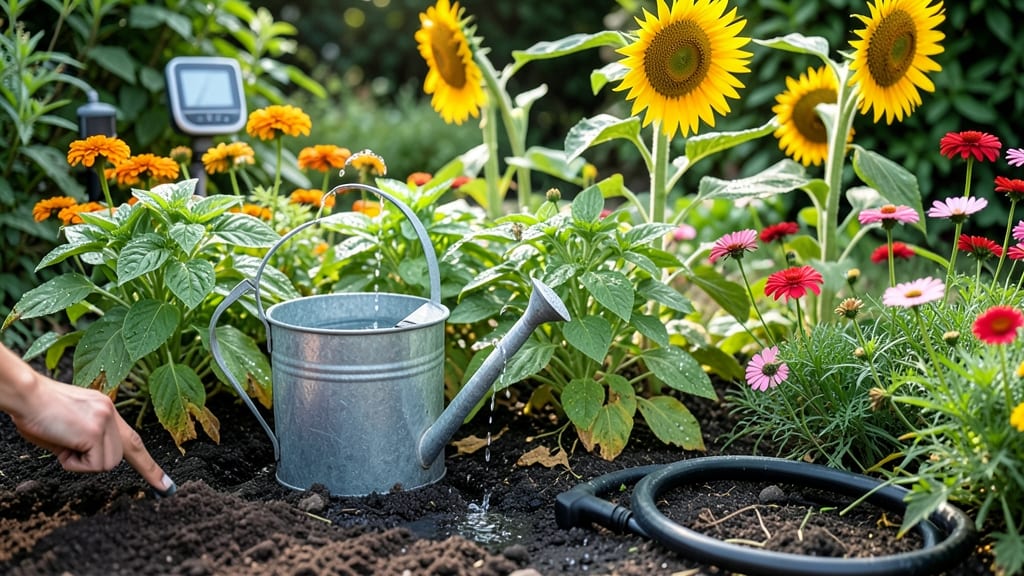
Watering your garden how often in summer depends on more than just the calendar—it’s a science of soil, sun, and plant type that most gardeners guess wrong.
Summer heat can turn your thriving 🌱 garden plants into a crispy disaster if you don’t water correctly—but most gardeners overlook the when just as much as the how much.
Too little water and roots scramble for moisture; too much and you drown them. The right balance means checking soil depth, adjusting for clay or sandy ground, and even timing your hose to beat the midday sun.
Below, I break down the exact schedule for morning vs. evening watering, how to spot over- or under-watering, and the tools (like mulch and drip systems) that cut your effort in half.
How often to water garden plants in summer: the science-backed frequency guide
Summer heat can turn your thriving garden into a crispy disaster if you don’t water correctly—but most gardeners overlook the when just as much as the how much. The key lies in understanding your plant types, soil composition, and local heat intensity.
For example, my tomatoes wilt by noon in 90°F weather, while my lavender thrives with minimal watering. Let’s break down the science so you can water with confidence, not guesswork.
Watering frequency isn’t one-size-fits-all. Evaporation rates can double in summer, and root zone saturation varies wildly between sandy loam and clay soil. A general rule?
Most garden plants need 1–2 inches of water per week, but this shifts based on plant type, soil drainage, and humidity levels. For instance, vegetables like basil demand daily watering in heatwaves, while shrubs like boxwood can survive on weekly deep soaks.
Soil type dictates how often you should water. Sandy soil drains quickly, requiring daily checks in summer, while clay holds moisture longer—watering every 3–4 days may suffice. To test, dig 2 inches deep: if the soil feels dry, it’s time to water. Pro tip: Use a moisture meter for precision, especially with high-value crops like peppers or herbs.
Heat intensity is the wildcard. In Zone 9+, where temps hit 100°F+, I water my container plants twice daily—morning and late afternoon—to prevent root stress. In cooler Zone 5, the same plants might need watering every 2–3 days. Always adjust based on your local weather forecasts and plant stress signs like wilting or leaf curl.
Plant type is the final piece. Vegetables (e.g., lettuce, cucumbers) need consistent moisture, while drought-tolerant flowers (e.g., succulents, yarrow) thrive with weekly deep watering. Below is a science-backed summary to simplify your summer watering plan.
| Plant Type | Summer Watering Frequency | Root Zone Depth | Evaporation Rate |
|---|---|---|---|
| Vegetables (Tomatoes, Peppers, Lettuce) | Every 1–2 days (deep watering) | 6–12 inches | High (2x faster in heat) |
| Flowers (Roses, Petunias, Marigolds) | Every 2–3 days (morning watering) | 4–8 inches | Moderate (1.5x faster) |
| Shrubs (Boxwood, Hydrangeas, Lavender) | Every 3–5 days (deep soak) | 12–24 inches | Low (soil retains moisture) |
| Herbs (Basil, Cilantro, Mint) | Daily (light to moderate) | 3–6 inches | Very High (wilts fast) |
| Drought-Tolerant (Succulents, Yarrow, Sedum) | Weekly (deep watering) | 6–12 inches | Low (adapted to dry conditions) |
Now that you’ve got the basics, let’s dive into soil-specific adjustments. Sandy soil loses moisture 3x faster than clay, so I water my raised beds daily in summer to keep carrots and radishes crisp.
For clay-heavy gardens, watering every 3–4 days with a soaker hose prevents surface runoff while keeping roots hydrated. Always aim to water deeply—shallow puddles encourage shallow root growth and fungal diseases.
Don’t forget about mulching, a game-changer for summer watering. A 3-inch layer of straw or wood chips reduces evaporation by up to 50% and keeps soil cool. I mulch my strawberry plants and tomato beds in June to cut watering needs by half.
Pair mulch with drip irrigation for precision—this combo saves water and reduces weeds, which compete for moisture.
Watch for overwatering signs like yellowing leaves or moldy stems, especially in humid climates. Underwatering shows as crispy leaf edges or wilting by midday. Adjust your schedule based on these cues, and always water early in the morning (before 10 AM) to minimize evaporation and fungal risks.
For container gardens, check soil moisture daily—small pots dry out in hours** on hot days.
Summer watering isn’t just about frequency; it’s about stress reduction. Plants under water stress produce fewer flowers, smaller fruits, and weaker stems. By matching your watering to plant needs, soil type, and heat levels, you’ll keep your garden lush and productive—no guesswork required.
Start with the table above, then tweak as you observe your plants’ responses.
Pro tip: Keep a gardening journal to track watering schedules and plant reactions. Note which days you water, how much, and any changes in plant health. Over time, you’ll fine-tune your routine to perfection—just like my roses that now bloom all summer with
Morning vs evening watering: which schedule prevents disease and waste?
The timing of your watering can make or break your summer garden. While most gardeners focus on how much to water, the when is equally critical. Watering at the wrong time wastes water, stresses plants, and invites fungal diseases.
Let’s break down the science behind morning vs. evening watering to help you choose the best schedule for your garden’s health.
Summer heat increases evaporation rates by up to 50% compared to spring, meaning water disappears faster. But timing also affects plant stress and disease risk. Morning watering allows foliage to dry quickly, reducing fungal spores like powdery mildew.
Evening watering, however, keeps leaves damp overnight—perfect conditions for pathogens. Let’s weigh the pros and cons so you can optimize your routine.
Morning Watering
- Minimizes evaporation loss (cooler temps)
- Reduces fungal diseases (foliage dries fast)
- Encourages deep root growth (water penetrates soil)
- Requires early wake-ups (before 8 AM)
- May burn leaves if watered midday (sun concentration)
Evening Watering
- Cooler temps reduce evaporation
- Easier to schedule (after work)
- Increases disease risk (damp foliage overnight)
- Wastes water via runoff (soil can’t absorb fast enough)
For humid climates (like Florida or the Southeast), stick to morning watering to prevent fungal outbreaks. In arid regions (like Arizona or California), evening watering might be better—but only if you water deeply and infrequently to avoid runoff.
Always aim to water before 10 AM or after 6 PM, but morning is the gold standard for most gardens.
Pro tip: Use a soaker hose or drip irrigation to deliver water directly to roots. This method reduces waste and ensures plants get moisture where it matters most—1-2 inches per week, depending on your soil type.
For container plants, water in the morning to prevent stagnant water in pots overnight.
Watch for wilting leaves or yellowing foliage—these are signs your watering schedule isn’t working. Adjust based on your local climate and plant types. With the right timing, you’ll conserve water, prevent disease, and keep your garden thriving all summer long.