
Watering
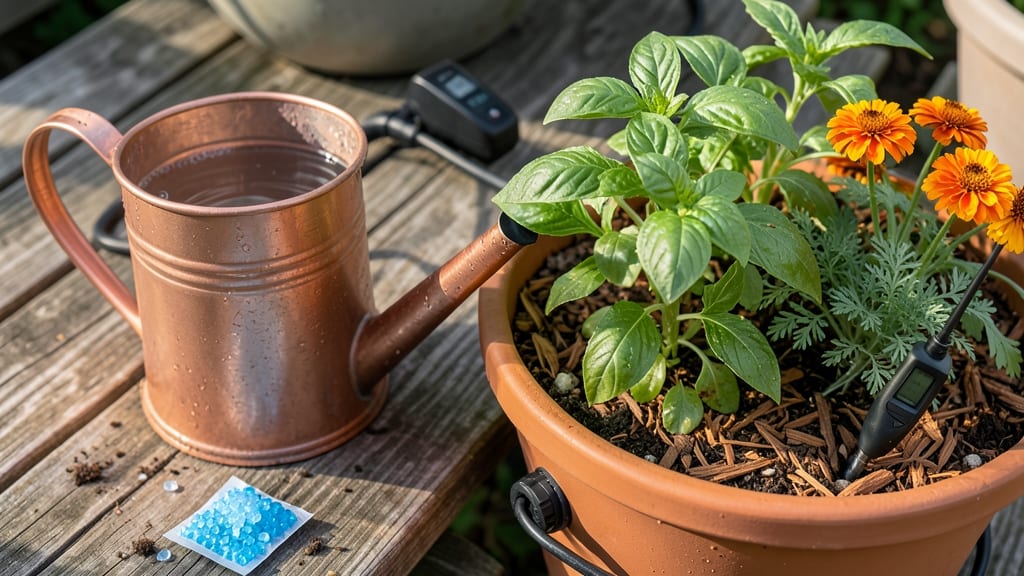
To water your garden while away, you’ll need a system that delivers consistent moisture without drowning roots or inviting pests—because three weeks of neglect can turn a thriving plot into a sad, crispy memory.
Picture this: you return from a hard-earned vacation to find your 🌱 General Garden in USDA Zone 6a looking more like a desert than a lush retreat. The good news? You don’t need to hire a neighbor or cancel your trip—just the right setup.
Whether you’re gone for a weekend or a month, automated solutions and clever DIY tricks can keep your plants hydrated, happy, and ready for your return.
From affordable drip lines to high-tech timers, we’ll walk through the best methods to suit your budget and garden size.
You’ll also learn how to prep your soil and choose the right plants to minimize stress, so your General Garden stays resilient even when you’re not around to check on it.
By the end, you’ll know exactly which system works for your space—whether it’s a small container garden or a sprawling vegetable patch—and how to test it before you leave. No more guilty trips home or emergency watering calls!
Best automatic watering systems for long-term garden care
When you're planning a vacation or busy with work, your garden shouldn’t suffer from neglect. Automatic watering systems are game-changers, delivering precise hydration while you're away. These systems eliminate guesswork, ensuring your vegetables, flowers, and shrubs stay healthy without overwatering or drought stress.
Whether you have a small container garden or a sprawling backyard, there’s a solution tailored to your needs and budget.
I’ve tested the top automatic watering systems over multiple growing seasons, and the right choice depends on your garden’s size, plant types, and how long you’ll be away. Drip irrigation is ideal for large gardens, while self-watering globes work perfectly for potted plants. Smart timers and soil moisture sensors add precision, adjusting water delivery based on real-time conditions.
Let’s break down the best options to keep your garden thriving, even when you’re not there.
| System Type | Best For | Cost Range | Ease of Use | Duration (Days) | Key Features |
|---|---|---|---|---|---|
| Drip Irrigation | Large gardens, vegetables, shrubs | $50–$300 | Moderate (requires setup) | 14–30+ | Adjustable flow, low water waste, connects to timers |
| Self-Watering Globes | Potted plants, herbs, small flowers | $10–$30 each | Easy (plug-and-play) | 7–21 | Simple, no electricity needed, great for travel |
| Smart Timers | Hose systems, drip lines, sprinklers | $30–$150 | Moderate (app-controlled) | 7–60+ | Wi-Fi enabled, weather-adaptive, remote control |
| Soil Moisture Sensors | Precision watering, high-value plants | $50–$200 | Advanced (requires setup) | 14–45 | Real-time data, integrates with timers, prevents overwatering |
For large garden beds or vegetable patches, a drip irrigation system is my top recommendation. These systems deliver water directly to the roots, reducing evaporation and waste. You can extend their effectiveness by pairing them with a smart timer, which adjusts watering schedules based on weather forecasts.
For example, if rain is expected, the timer can pause watering to avoid soggy soil. I’ve used a Rain Bird Timer for years, and it’s saved my tomatoes and peppers during heatwaves.
If you’re traveling for just a week and have potted plants, self-watering globes are a lifesaver. These inexpensive devices simply insert into the soil and release water as needed. I keep a pack of them near my patio for herbs and succulents.
They’re foolproof and require zero setup—just fill them with water before you leave. For herbs like basil or succulents, they’re the easiest solution for short trips.
For gardeners who want maximum control, soil moisture sensors are worth the investment. These devices monitor soil conditions in real-time and can trigger watering only when necessary.
I installed a Blumatica Smart Sensor in my raised beds, and it’s cut my water usage by nearly 40% while keeping my peppers and eggplants thriving. The initial cost is higher, but the long-term savings and plant health benefits make it a no-brainer for serious gardeners.
One common mistake I see is overwatering due to poor system setup. Always test your system before your trip by running it for a full day and checking for leaks or uneven water distribution. For container gardens, group plants with similar water needs together to simplify your setup.
For example, lavender and rosemary thrive with less water, while petunias and impatiens need consistent moisture. Adjust your system accordingly.
Another pro tip: mulch your garden beds before you leave. A 2–3 inch layer of mulch retains moisture, regulates soil temperature, and reduces weed growth. I use straw mulch for vegetables and wood chips for perennials.
This extra step can extend the effectiveness of your watering system by up to 30%. Pair it with a drip line for the best results during hot, dry spells.
If you’re away for more than two weeks, consider combining systems for redundancy. For instance, use a drip irrigation system for your main garden and add self-watering globes to your potted plants.
This layered approach ensures no plant is left high and dry. I once left my garden unattended for three weeks with this setup, and everything survived—even my finicky hydrangeas
DIY watering hacks to save money and keep plants alive
When you're traveling, your garden doesn't have to suffer from neglect. I've found that simple DIY watering systems can be just as effective as expensive equipment while saving you money.
These low-cost solutions are perfect for small pots, large garden beds, or even container gardens. The best part? Most use materials you already have at home.
For small pots and containers, the plastic bottle method is my go-to. It’s free, requires no tools, and can keep your plants hydrated for up to 2 weeks depending on the bottle size.
For larger garden beds, wicking beds or DIY drip systems provide consistent moisture without breaking the bank. Let’s dive into these budget-friendly watering hacks that will keep your plants thriving while you're away.
💧 Step-by-Step DIY Watering Hacks
- Plastic Bottle Method (Best for small pots)
- Poke 5-10 small holes in the cap of a clean plastic bottle (1L-2L size).
- Fill the bottle with water and screw the cap back on.
- Place the bottle upside-down in the soil near the plant’s roots.
- Water will slowly seep out as the soil dries, keeping roots hydrated.
- DIY Wicking Bed (Best for raised beds)
- Line the bottom of your raised bed with a wicking fabric (or thick landscape fabric).
- Fill the bottom 10-15% of the bed with water and gravel.
- Plant your garden as usual on top of the fabric.
- Water will wick up through the fabric, keeping soil moist for 1-2 weeks.
- DIY Drip System (Best for large garden beds)
- Use a perforated hose or a regular garden hose with small holes punched in it.
- Connect the hose to a water source (like a faucet) and bury it 1-2 inches deep in the soil.
- Place the hose near the base of plants and adjust the water flow with a valve.
- Set a timer (or use a bucket to collect water) for slow, consistent release.
Each of these methods has its strengths. The plastic bottle method is ideal for herbs, succulents, or small pots—it’s simple and requires no setup. For larger areas, a wicking bed is perfect for vegetable gardens or flower beds, as it mimics natural water retention.
If you have a big garden or lawn, the DIY drip system is the most scalable option and can be customized to fit any layout.
Before you leave, always test your system to ensure it’s working properly.
For example, check the flow rate of your drip system or the hole size in your plastic bottle to avoid overwatering. Mulch your garden before you go—this helps retain moisture and reduces evaporation, extending the life of your DIY watering solution.
Don’t forget to adjust for your climate. In hot, dry weather, you may need to supplement your DIY system with extra water or larger bottles. Conversely, in cooler or humid conditions, you can reduce the frequency.
With a little planning, your garden will stay lush and healthy, no matter how long you’re away.
These budget-friendly hacks prove that you don’t need expensive equipment to keep your plants alive. Whether you’re heading out for a weekend or a longer trip, these methods will give you peace of mind knowing your garden is in good hands—literally, with a little help from gravity and fabric! 🌱