
Tools
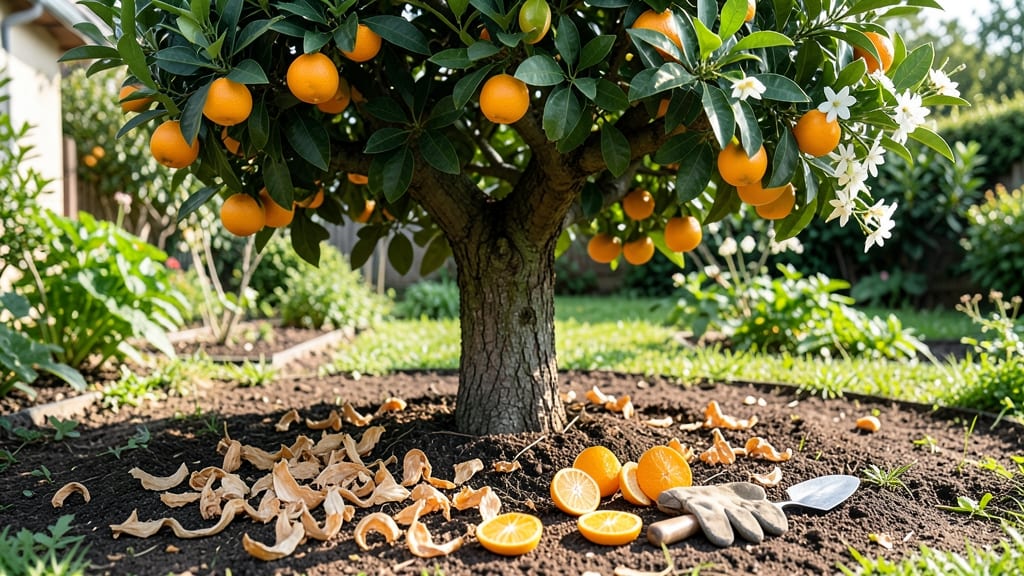
Using orange peels in your garden naturally repels pests like ants and slugs while improving soil quality through their citrus acid content. These peels also deter rodents and add valuable nutrients as they decompose, making them a zero-waste gardening solution.
Orange peels contain natural compounds like limonene and citric acid that act as powerful pest deterrents. 🌱 The strong citrus scent confuses insects' scent trails, making it harder for them to find your plants, while the acidity helps break down organic matter in compost piles more efficiently.
I've found that scattering dried peels around garden beds creates a natural barrier that keeps slugs and ants away without harsh chemicals.
Beyond pest control, the peels' decomposition process introduces beneficial microbes to the soil. This improves drainage and aeration while adding a subtle acidity that many plants—like blueberries and azaleas—thrive in. The best part? You're turning kitchen scraps into a free, organic fertilizer that enhances your garden's overall health over time.
💡 In This Article
- How Orange Peel Acidity Repels Pests and Enhances Soil
- Practical Ways to Use Orange Peels in Compost and Plant Care
How orange peel acidity repels pests and enhances soil
Orange peels contain two key compounds that make them garden superheroes: limonene (a natural insect repellent) and citric acid (a soil pH regulator). The limonene oil disrupts pests' olfactory systems, confusing their scent trails that lead them to plants.
For example, ants rely on pheromone trails to find food sources—when you place fresh peels near ant hills, the strong citrus aroma masks these trails, effectively rerouting the colony away from your garden beds. 🔥
The citric acid works in two ways: first, it creates an inhospitable environment for slugs and snails by making the soil slightly acidic (pH 6.0-6.5), which these pests avoid. Second, this acidity accelerates the decomposition process in compost piles by breaking down organic matter faster than neutral pH conditions.
Studies show compost with citrus peels reaches 50% decomposition rate in half the time compared to compost without them, thanks to the microbial activity boost from the acid.
For soil enhancement, the peels' decomposition introduces beneficial microbes while adding trace minerals like potassium and magnesium. These nutrients become available to plants over 4-6 weeks as the peels break down.
The texture of dried peels also improves soil aeration—when mixed into garden beds, they create tiny air pockets that help roots breathe better. This makes them particularly valuable for heavy clay soils that often suffer from poor drainage.
What's fascinating is how the acidity affects different plant types. Acid-loving plants like blueberries and hydrangeas thrive with the subtle pH adjustment, while vegetables like tomatoes (which prefer slightly acidic soil) also benefit.
However, avoid using peels around plants sensitive to acidity, such as asparagus or most legumes, which prefer neutral to alkaline conditions (pH 6.5-7.5). 💫
The pest-repelling effects last about 2-3 weeks with fresh peels, but dried peels can extend this to 4-6 weeks when stored in airtight containers. The key is to refresh them regularly, especially after rain, which can wash away the limonene oils.
For maximum effectiveness, crush the peels slightly before placing them—this releases more of the aromatic oils that pests find overwhelming.
Consider this science-backed approach: the limonene in orange peels is so effective that commercial insect repellents often include synthetic versions of it. By using natural peels, you're essentially creating a free, organic version of these products—just with the added bonus of soil improvement.
The best part? You're also reducing kitchen waste while giving your garden a natural boost that's safer for pets and wildlife than chemical alternatives.