
Watering
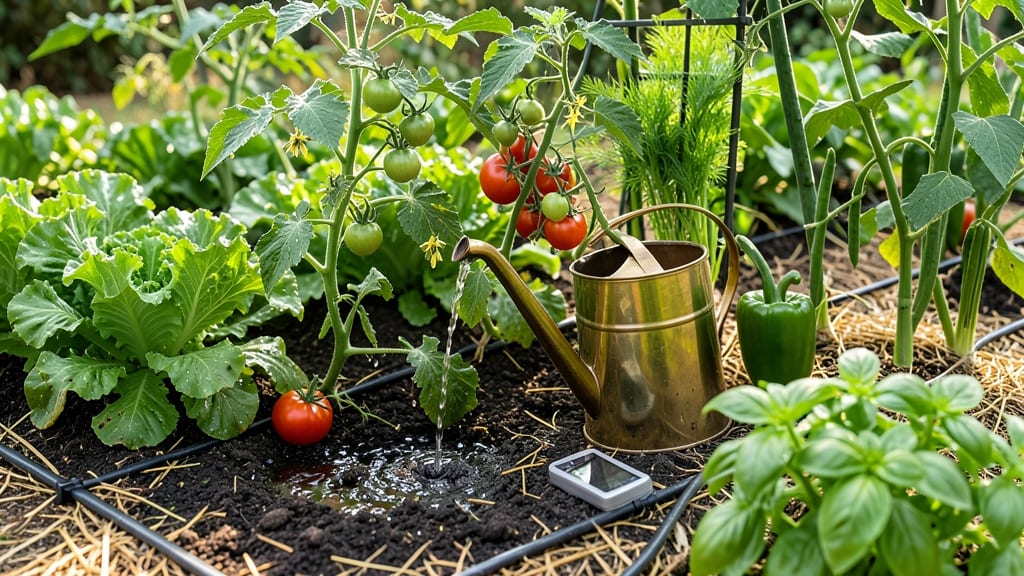
Watering your vegetable garden the right way determines whether your 🥬 thrives or struggles — and the answer isn’t just "every day" or "when it looks dry."
Overwatering or underwatering can mean the difference between a bountiful harvest and wasted effort, yet most gardeners guess instead of measuring. The soil-moisture test method eliminates that guesswork, giving you a precise way to keep roots happy without drowning them.
Why does this matter? Because inconsistent watering stresses plants, stunts growth, and even attracts pests. A simple finger-check or moisture meter tells you exactly when to water, saving time and resources while keeping your garden perfectly moist.
In this guide, you’ll learn the science-backed schedule for different veggies, how to adjust for clay vs. sandy soil, and the 5 common mistakes that ruin even the best-intentioned watering routine.
The perfect soil-moisture test method for vegetable gardens
Mastering the soil-moisture test is the secret to growing thriving vegetables without wasting water or risking root rot. Unlike the "stick your finger in the dirt" advice you've heard, this method gives you precision tailored to your garden's unique conditions.
Whether you're growing leafy greens or root vegetables, knowing exactly when to water transforms guesswork into science-backed care.
Most gardeners overwater by default, thinking plants need constant moisture—but root crops like carrots and tomatoes actually prefer slightly drier soil between waterings. The key is understanding your soil type (clay holds moisture longer than sandy soil) and adjusting your approach.
A simple finger-check test takes just seconds and prevents both drought stress and waterlogged roots that invite pests.
Let’s start with the basics: ideal soil moisture feels like a wrung-out sponge—firm but not soggy. For leafy vegetables like lettuce and spinach, aim for consistently damp soil, while root vegetables thrive with slightly drier conditions.
Climate plays a role too—hot, dry zones may need daily checks, while cooler regions can stretch watering to every 3-4 days.
Step-by-Step Soil-Moisture Test
- Step 1: Choose a representative spot—avoid areas near irrigation lines or plant stems. Use a clean trowel to loosen the top 1-2 inches of soil.
- Step 2: Insert your index finger (or a soil moisture meter) 1-2 inches deep. Gently press the soil—it should resist slightly but not feel compacted.
- Step 3: Check for moisture clues:
- Dry: Soil crumbles easily (water immediately).
- Ideal: Soil sticks slightly but breaks apart (water in 1-2 days).
- Too Wet: Soil feels mushy or water drips out (skip watering).
- Step 4: Adjust for soil type:
- Sandy soil: Drains fast—water more frequently (every 1-2 days).
- Clay soil: Holds moisture—water every 3-4 days.
- Loamy soil: Balanced—water every 2-3 days.
- Step 5: Time your watering: Always water in the early morning (before 10 AM) to reduce evaporation and fungal risks.
For precision gardeners, invest in a soil moisture meter (like the Blumeter or Xiaomi Mi Flower Care), which gives instant readings. These tools are game-changers for container gardens or high-value crops like peppers and eggplants, where moisture consistency directly impacts yield.
Even a simple $10 meter eliminates the need to dig daily.
Different vegetables have distinct moisture needs. Leafy greens like kale and Swiss chard prefer consistently damp soil, while root vegetables such as radishes and beets thrive with moist but not soggy conditions. Fruiting plants like tomatoes and cucumbers need deeper watering—1-2 inches per week—to encourage strong root systems and prevent blossom-end rot.
Always water at the base of the plant, not the leaves, to avoid fungal diseases.
Climate zone matters too. In arid regions (like USDA Zone 9-10), mulch with straw or wood chips to retain moisture and reduce evaporation. In humid climates (like Zone 7), focus on deep, infrequent watering to prevent surface-level moisture that promotes mold.
If you’re in a transition zone, like Zone 6, monitor soil moisture daily in summer and reduce to every 3-4 days in spring/fall.
Signs of overwatering include yellowing leaves, mushy stems, or white mold on soil. Underwatering shows as wilting, crispy leaf edges, or soil pulling away from container walls.
If you spot these, adjust your watering schedule immediately. For container gardens, check moisture every 1-2 days—potted soil dries out 3x faster than in-ground soil.
Pro tip: Keep a garden journal to track soil moisture, weather patterns, and plant responses. Note which vegetables thrive with your local conditions and adjust future plantings accordingly. Over time, you’ll develop an intuitive sense of when to water—without relying on guesswork.
This method isn’t just about saving water; it’s about maximizing your harvest with minimal effort.
Remember, the goal is healthy roots, not soggy soil. With this soil-moisture test method, you’ll grow vegetables that are vigorous, productive, and resilient—no matter your climate or soil type. Happy gardening! 🌱
Watering frequency by vegetable type: a science-backed schedule
Every vegetable has unique hydration needs that change as it grows. For example, tomatoes need deep watering every 2-3 days during fruiting, while lettuce thrives with shallow watering daily in cooler months.
Understanding these differences prevents stress and maximizes yield. The key is matching watering schedules to each plant's growth stage—seedlings, flowering, and fruiting all demand different approaches.
Drought-tolerant plants like peppers and beans can handle infrequent but deep watering, while moisture-loving crops such as cucumbers and spinach need consistent dampness. Below, I’ve broken down the ideal watering frequency for 12 common vegetables, including visual indicators to help you adjust for your climate and soil type.
| Vegetable | Seedling Stage | Flowering Stage | Fruiting Stage | Drought Tolerance |
|---|---|---|---|---|
| Tomatoes | Every 1-2 days (light) | Every 2 days (deep) | Every 2-3 days (deep) | Moderate 🌡️ |
| Peppers | Every 2 days (light) | Every 3 days (deep) | Every 4-5 days (deep) | High ☀️ |
| Cucumbers | Daily (light) | Every 2 days (deep) | Daily (deep) | Low 💧 |
| Lettuce | Daily (shallow) | Every 2 days (shallow) | Daily (shallow) | None 🌱 |
| Carrots | Every 2 days (light) | Every 3 days (deep) | Every 4-5 days (deep) | Moderate 🌡️ |
| Spinach | Daily (shallow) | Every 2 days (shallow) | Daily (shallow) | None 🌱 |
| Beans | Every 2 days (light) | Every 3 days (deep) | Every 4-5 days (deep) | High ☀️ |
| Zucchini | Every 2 days (light) | Every 2 days (deep) | Every 3 days (deep) | Moderate 🌡️ |