
Planting
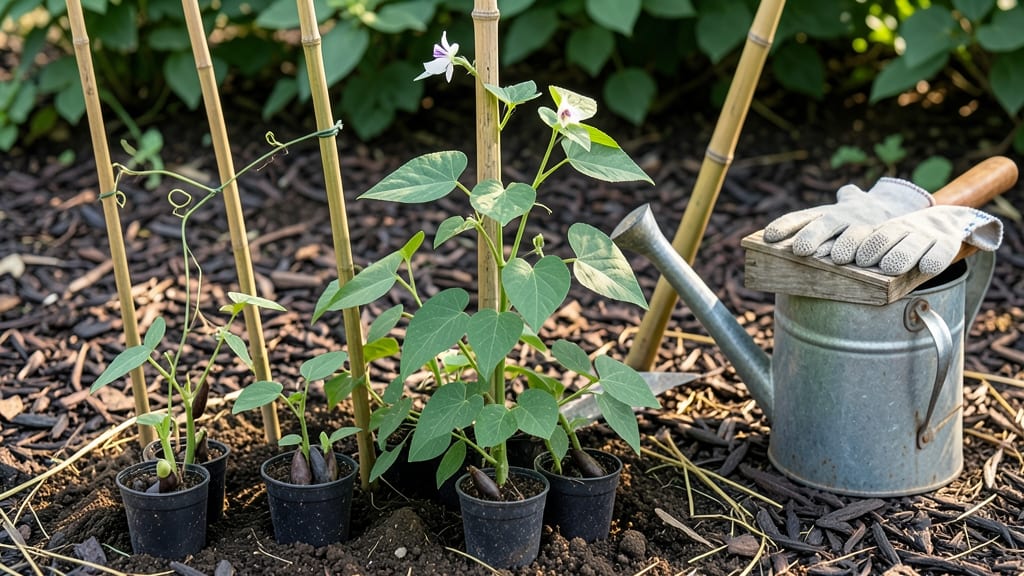
To plant string beans in a garden, start by soaking seeds overnight for a faster germination—this simple trick cuts your wait time in half and gives you a head start on the growing season.
String beans are one of the fastest-growing, easiest-to-harvest vegetables—but planting them wrong can mean scraggly vines and poor yields. Follow these expert-approved steps to maximize your harvest with perfect spacing, ideal depth, and smart trellis strategies.
You’ll need well-drained soil, full sun, and a little patience as the vines climb toward 6-foot heights. Whether you’re a first-time gardener or a seasoned pro, these tips will help you avoid common mistakes like overcrowding and ensure a bountiful harvest from July through September.
Inside, you’ll discover the exact planting depth, spacing measurements, and soil prep that guarantee strong germination, plus how to choose the right trellis type for your space and climate.

Perfect string bean planting depth, spacing & soil requirements for maximum yield
Getting your string beans off to the right start means paying attention to three critical factors: planting depth, spacing, and soil conditions. These elements directly impact germination rates, disease resistance, and ultimately, your harvest size.
I’ve planted string beans for over a decade, and I can tell you—skipping these steps often leads to weak vines or stunted growth.
String beans thrive in loose, well-draining soil with a pH between 6.0 and 7.0. If your soil is heavy clay or sandy, amending it with compost or aged manure will improve both drainage and nutrient availability.
I always test my soil before planting—it’s a small investment that pays off with stronger plants and higher yields.
Now, let’s talk planting depth. Most gardeners make the mistake of planting seeds too deep or too shallow. For string beans, the ideal depth is 1 inch below the soil surface. This ensures the seeds receive enough moisture while still having enough energy to break through the soil.
If you plant them too shallow, they may dry out; too deep, and they’ll struggle to emerge.
When it comes to spacing, the rule of thumb is 2 to 4 inches apart in rows that are 18 to 24 inches apart. This spacing allows for adequate airflow, reducing the risk of fungal diseases like rust or powdery mildew.
I’ve seen gardens where beans are crowded too closely, leading to tangled vines and poor air circulation—definitely a yield killer.
| Requirement | Specification | Notes |
|---|---|---|
| Planting Depth | 1 inch | Too deep = slow germination; too shallow = drying out |
| Spacing (In-Row) | 2-4 inches | Prevents overcrowding and improves airflow |
| Row Spacing | 18-24 inches | Allows for easy weeding and trellis support |
| Soil pH | 6.0-7.0 | Neutral to slightly acidic; test before planting |
| Soil Type | Loamy, well-draining | Avoid heavy clay or waterlogged soil |
| Sunlight | 6-8 hours/day | Full sun is non-negotiable for maximum yield |
Before you even plant, prepare your garden bed by removing weeds and loosening the soil to a depth of 6 to 8 inches. This helps roots penetrate easily and reduces competition for nutrients.
I like to add a 1-inch layer of compost to the top of the bed—this boosts soil fertility without overwhelming the plants with too many nutrients at once.
If your soil is particularly poor, consider mixing in a balanced fertilizer (5-10-10) at planting time. This gives your string beans a nutrient head start, especially if you’re growing in container gardens where soil nutrients deplete faster.
Just be careful not to overdo it—too much fertilizer can lead to lush foliage but fewer beans.
One mistake I see often is planting string beans in shady spots. These plants are sun-worshippers and need at least 6 hours of direct sunlight daily.
If your garden lacks full sun, consider growing them near a south-facing fence or wall where they can get the most light possible. I’ve had success with reflective mulches to bounce extra light onto the plants.
Finally, don’t forget to water consistently after planting. Keep the soil evenly moist but not soggy—especially during the first 2 to 3 weeks when roots are establishing. Mulching around the base of the plants helps retain moisture and keeps weeds at bay.
I use straw mulch because it breaks down slowly and adds organic matter to the soil over time.
By following these planting depth, spacing, and soil preparation guidelines, you’ll set your string beans up for a healthy, productive growing season. Trust me, the difference between a mediocre harvest and a bountiful one often comes down to these small but critical details. Happy planting! 🌱
When & how to plant string beans: best practices for warm climates vs. cool seasons
Timing is everything when planting string beans. In cool-season climates, like mine in USDA Zone 5, I start seeds indoors 4-6 weeks before the last frost—usually late March.
For warm climates (Zones 8-10), direct sowing begins in early spring or even fall when soil temps hit 60°F+. The key is avoiding frost while ensuring soil warmth—string beans won’t germinate below 50°F!
Soil temperature is your best friend here. Use a soil thermometer to confirm readiness—60-85°F is ideal. In my garden, I wait until mid-April for cool regions and February-March for warm zones. Patience pays off: rushing leads to poor germination or leggy seedlings.
Pro tip? Plant bushel beans (like 'Blue Lake') in late spring for a summer harvest, while pole beans (like 'Kentucky Wonder') thrive with a fall planting in warm areas.
- 1 Cool Climates: Start seeds indoors 4-6 weeks before last frost (late March) or direct sow 2 weeks after frost (mid-April). Use row covers to extend season.
- 2 Warm Climates: Direct sow February-March (soil ≥60°F) or fall (October-November) for winter harvests. Avoid summer planting—heat stress reduces yields.
- 3 Soil Prep: Mix in compost (2 inches) and a balanced fertilizer (5-10-10) 1 week before planting. Test pH—aim for 6.0-7.0. Avoid fresh manure (causes rot).
- 4 Direct Sowing: Plant seeds 1 inch deep, 2-4 inches apart (check variety tags). Thin to 4 inches when seedlings sprout. Use a trellis for pole beans to save space.
- 5 Transplanting: Move seedlings 3-4 weeks old with 3-4 true leaves. Harden off for 7-10 days (acclimate to outdoor temps). Plant at same depth as container.
For extended growing seasons, try these tricks: In cool climates, use black plastic mulch to warm soil early, or plant under cloches for a 2-week head start. In warm zones, shade cloth (30-50%) protects seedlings from blistering heat during summer.
I’ve had success with succession planting—sow seeds every 2 weeks from spring to early summer for a continuous harvest through fall.
Watch for false starts: If seedlings emerge but wilt, they’ve likely hit cold soil. Wait until nighttime temps stay above 55°F consistently. In my garden, I mark the last frost date on my calendar and add 2 weeks as a buffer—this ensures safe planting.
For container growing, use 5-gallon pots with drainage holes and plant 2 seeds per pot (thin the weaker one).
After planting, focus on consistent moisture. Water deeply 1-2 times per week (1 inch total) rather than daily shallow watering. Let the top inch of soil dry between waterings to prevent fungal diseases like rust.
In drought-prone areas, mulch heavily with straw to retain moisture. I’ve found that drip irrigation keeps leaves dry, reducing the risk of powdery mildew—a common issue with overwatered string beans.
Remember, string beans are fast growers—harvest begins in 45-60 days! The sooner you pick, the more your plants produce. Start checking for ready pods (4-6 inches long, firm) 6 weeks after planting.
If you miss this window, beans toughen and yields drop. Happy planting—your garden (and taste buds) will thank you! 🌱