
Watering
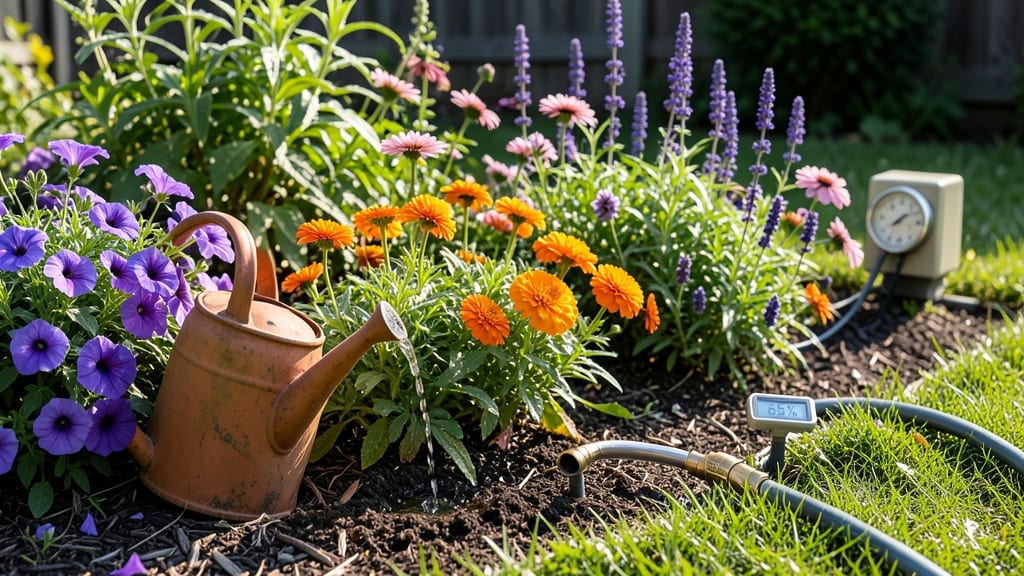
Watering your flower garden the right way means checking soil moisture, knowing your plants, and adjusting for the season — not just following a rigid schedule.
Struggling to keep your 🌸 flower garden vibrant without overwatering or letting plants wilt? The right watering schedule isn’t just about timing—it’s about understanding your plants’ needs, seasonal shifts, and soil conditions.
Most flowers need 1-2 inches of water per week, but that changes when it’s scorching hot or when rain keeps the soil damp. Drought-tolerant varieties like lavender can survive on less, while thirsty annuals like petunias may need daily watering in summer.
Below, I break down how often to water by plant type, seasonal adjustments, and the 5 signs your garden is thirsty — or getting too much love. Let’s make sure your flowers stay happy without the guesswork.
Watering frequency by flower type: drought-tolerant vs. thirsty plants
Watering your flower garden can feel like walking a tightrope—too little and your blooms wilt, too much and you risk root rot. The key lies in understanding your plants' natural thirst levels. Drought-tolerant flowers like lavender and thirsty varieties like hydrangeas have completely different schedules.
Even the same plant may need adjustments based on your soil type and climate zone. Let's break down the watering needs by flower category so you can keep your garden thriving without guesswork.
First, recognize that annuals and perennials behave differently. Annuals like petunias grow quickly and need frequent hydration, while perennials like coneflowers establish deep roots that store moisture. Succulents and cacti in your garden? They're in their own league, often needing water just once every 2-3 weeks.
The secret is checking soil moisture before watering—stick your finger 1-2 inches deep. If it feels dry, it's time to water.
| Flower Type | Watering Frequency | Deep Watering Depth | Best Time to Water | Signs of Overwatering |
|---|---|---|---|---|
| Drought-Tolerant (Lavender, Succulents, Yarrow) | Every 7-14 days | 6-8 inches | Early morning | Yellowing leaves, mold |
| Moderate (Roses, Daylilies, Coneflowers) | Every 5-7 days | 4-6 inches | Morning or evening | Wilting, brown edges |
| Thirsty (Petunias, Hydrangeas, Impatiens) | Every 3-5 days | 2-4 inches | Early morning | Drooping leaves, root rot |
| Succulents/Cacti (Aloe, Sedum, Echeveria) | Every 14-21 days | 3-4 inches | Late morning | Soft, mushy stems |
Let's start with drought-tolerant flowers—the low-maintenance stars of your garden. Plants like lavender and yarrow thrive on neglect but despise soggy soil.
Water them deeply once every 7-14 days, allowing the top 2 inches of soil to dry out completely between waterings. Succulents and cacti follow similar rules but can go even longer without water—some varieties survive on just monthly waterings in summer.
The key is to water at the base of the plant rather than overhead to prevent fungal diseases.
For moderate-thirst flowers like roses and coneflowers, consistency is crucial. These plants need 1-1.5 inches of water per week, either from rainfall or your hose. During summer heatwaves, increase to 2-3 times per week.
A good trick is to use a soaker hose or drip irrigation system to deliver water slowly at the roots. This mimics natural rainfall and reduces evaporation. Always water in the early morning to let foliage dry before evening—this prevents powdery mildew and other fungal issues.
Now, let's talk about the thirsty crowd—plants like petunias, hydrangeas, and impatiens that demand regular attention. These annuals and tender perennials need watering every 3-5 days during hot weather, sometimes even daily in extreme heat.
The soil should never dry out completely, or you'll see wilting leaves and drooping stems by afternoon. For container-grown thirsty plants, check soil moisture daily—pots dry out much faster than garden beds.
One of the biggest mistakes gardeners make is overwatering. Even drought-tolerant plants can suffer if their roots sit in wet soil too long. Always check for these warning signs: yellowing leaves, mold growth at the soil line, or plants that feel soft or mushy when touched.
If you're unsure whether to water, perform the finger test: push your finger 1-2 inches into the soil. If it feels damp, wait another day. If it's bone dry, it's time to water.
Don't forget about mulching—this simple technique can cut your watering needs by up
Seasonal watering adjustments: spring, summer, fall, and winter schedules
Adjusting your flower garden watering schedule by season is the key to thriving plants. Spring brings gentle rains and warming soil, while summer demands deep, frequent watering to combat evaporation. Fall slows growth, and winter often requires minimal watering unless you're in a mild climate.
Let’s break down how to adapt your routine for each season while conserving water and keeping roots healthy.
Start by checking your local rainfall averages—this sets your baseline. In most regions, 1 inch of water per week (from rain or irrigation) is ideal for most flowers, but this changes with temperature and soil type.
Sandy soil drains quickly, while clay holds moisture longer. Use a rain gauge or tuna can to measure rainfall accurately—this helps you avoid overwatering when it rains.
| Season | Frequency | Watering Time | Key Adjustments |
|---|---|---|---|
| Spring | Weekly (deep soak) | Morning (6-9 AM) | Increase as temps rise; mulch to retain moisture. |
| Summer | 2-3x/week (daily in heatwaves) | Early morning or late evening | Water deeply at soil level; avoid wetting foliage. |
| Fall | Every 10-14 days | Morning | Reduce as temps drop; focus on perennials. |
| Winter | Bi-weekly (if no snow) | Midday (if needed) | Water only if soil is dry; protect from frost. |
During summer’s peak heat, switch to drip irrigation or soaker hoses to deliver water directly to roots. This method reduces evaporation and prevents fungal diseases that thrive in damp foliage. If you’re using sprinklers, water early in the morning to allow leaves to dry before evening humidity sets in.
For container gardens, check soil moisture daily—pots dry out much faster than in-ground beds.
Fall is the perfect time to improve soil moisture retention. Apply a 3-inch layer of mulch (straw, wood chips, or shredded leaves) around plants to insulate roots and conserve water. This also suppresses weeds, which compete for moisture.
As temperatures drop below 50°F, reduce watering to every 10-14 days, unless you’re growing winter-blooming flowers like pansies or hellebores, which may still need occasional water.
Winter watering depends on your climate. In mild winter zones (USDA 8-10), water bi-weekly if the ground isn’t frozen. In colder regions, hold off until spring—dormant plants need less water.
If you’re in a drought-prone area, consider installing a rain barrel system to collect spring rains for summer use. This simple setup can cut your water bill while keeping your garden lush.
Pro tip: Group plants with similar water needs together in your garden layout. For example, place lavender and succulents near the edge where they won’t compete with thirsty hydrangeas or roses. This hydrozoning makes watering more efficient and reduces waste.