
Fertilization
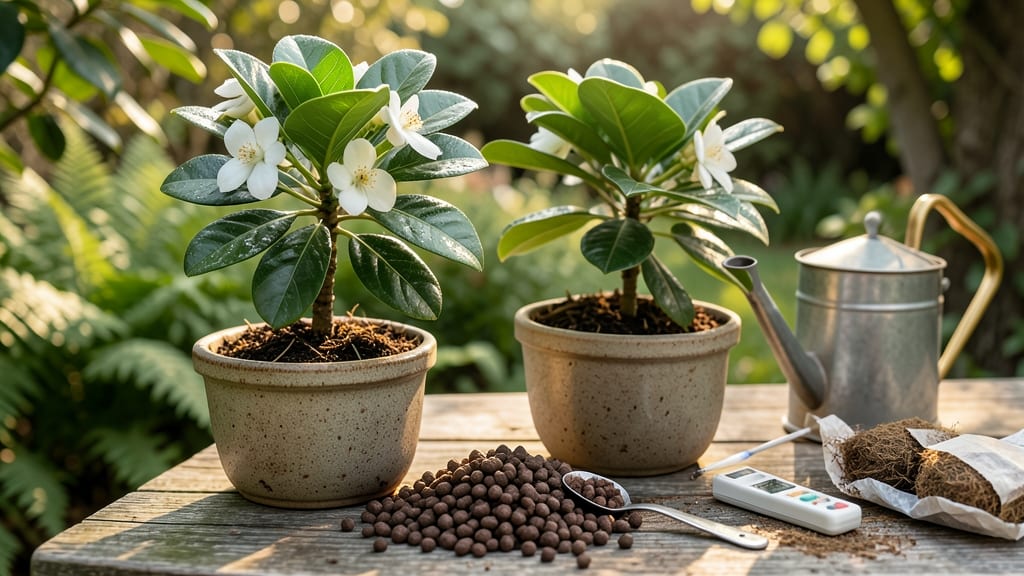
To fertilize gardenias properly, you’ll need to feed them every 4 to 6 weeks during the growing season—spring through summer—while skipping it entirely in winter.
Picture this: your gardenia 🌸 is lush and fragrant one year, then suddenly, the blooms dwindle, the leaves yellow, and you’re left scratching your head. The issue? Too much—or too little—fertilizer. Gardenias thrive on consistency, but they hate being overfed, which can burn roots and stunt growth.
This isn’t just about throwing fertilizer at your plant—it’s about timing, type, and reading your gardenia’s signals. Organic options like compost or slow-release granules work best, but synthetic blends can deliver faster results if you’re short on time.
The key is balancing nutrients without overwhelming the roots, especially in the heat of summer.
In this guide, I’ll break down the exact schedule by season, how to spot over- or under-fertilization, and the best products to keep your gardenia blooming like a pro. No guesswork—just lush, fragrant results.

Optimal gardenia fertilization frequency by season: a month-by-month guide
Fertilizing your gardenias at the right time ensures vibrant blooms and healthy foliage. Unlike many plants, gardenias thrive on a seasonal feeding schedule that aligns with their natural growth cycles. Skipping this step often leads to sparse flowers or yellowing leaves, signaling nutrient imbalances.
The key is balancing nitrogen for growth with phosphorus for blooms—especially during their active spring and summer months.
Gardenias are acid-loving plants, so their fertilizer must include acidifying agents like iron sulfate or peat-based mixes. Synthetic options like 10-10-10 or 8-3-9 NPK work well, but organic choices such as composted pine needles or fish emulsion can also deliver excellent results.
The goal is to feed just enough to support growth without overwhelming the roots, particularly in hot, humid climates where over-fertilization burns delicate roots.
| Season | Fertilizer Type | Frequency | Key Focus | Signs of Over-Feeding |
|---|---|---|---|---|
| Spring (March-May) | Balanced (10-10-10) or organic compost | Every 4 weeks | New growth & bud formation | Brown leaf edges, stunted growth |
| Summer (June-August) | Low-nitrogen (8-3-9) or liquid feed | Every 6 weeks | Bloom production & root health | Wilting, yellow leaves, bud drop |
| Fall (September-November) | None (or light compost) | Skip or minimal | Root strengthening | None (avoid stress) |
| Winter (December-February) | None | Dormant period | Rest & recovery | N/A (no feeding) |
In spring (March-May), gardenias wake from dormancy and demand regular feeding to fuel new growth. Start with a balanced fertilizer (like 10-10-10) every 4 weeks once you see fresh leaves emerge. This is also the time to amend soil pH if needed—gardenias thrive in acidic soil (pH 5.0–6.5).
If your plant looks leggy or sparse, it’s a sign to increase nitrogen slightly, but avoid heavy doses, which can delay blooming.
As summer arrives (June-August), shift to a lower-nitrogen fertilizer (like 8-3-9) to prioritize bloom production. Feed every 6 weeks to prevent root burn from heat stress. Water deeply after fertilizing to flush excess salts from the soil.
If your gardenia drops buds or leaves yellow between veins, it’s often a sign of over-fertilization—cut back immediately and focus on hydration and shade.
By fall (September-November), gardenias begin their dormancy cycle, and feeding should stop entirely. Any remaining nutrients in the soil will support root strengthening, but new growth is unnecessary.
This is also the time to prune spent blooms and mulch lightly to protect roots from winter temperature swings. Avoid organic matter like fresh compost, which can raise soil temperature and disrupt dormancy.
Winter (December-February) is a hands-off period for gardenias. No fertilizer, minimal watering, and no pruning are key. If your gardenia is potted, move it to a cool, shaded spot to mimic natural winter conditions.
Overwatering or fertilizing during dormancy can weaken the plant and reduce next year’s blooms. Instead, focus on monitoring soil moisture—water only when the top inch feels dry.
One common mistake is over-fertilizing in summer, which causes leaf scorch or bud blast. If you notice crispy brown edges on leaves, flush the soil with water for 10 minutes to leach excess salts.
For under-fertilized gardenias, look for pale green leaves or fewer blooms—these are clear signals to increase feeding frequency in spring. Always apply fertilizer in the early morning to avoid leaf burn from afternoon sun.
For potted gardenias, reduce fertilizer by half compared to in-ground plants, as containers dry out faster and roots are more sensitive. Use a slow-release granular fertilizer to maintain steady nutrients without risking overapplication.
If your gardenia is newly planted, wait 6–8 weeks before fertilizing to allow roots to establish. This prevents root shock and encourages stronger growth.
Remember, gardenias reward consistent care with fragrant blooms and lush foliage. By following this seasonal schedule, you’ll avoid the guesswork and create
5 Signs your gardenia needs fertilizer (and when to adjust your schedule)
Your gardenias might be silently screaming for nutrients—even if they look healthy at first glance. Yellowing leaves, sparse blooms, or stunted growth are classic red flags that your plant’s diet needs a tune-up.
The good news? Adjusting your fertilization schedule can turn things around quickly, but timing matters. Too much too soon can burn roots, while too little leaves your plant struggling to feed itself.
I’ve seen gardeners overcorrect by doubling fertilizer doses after noticing problems, only to end up with crispy leaf edges. The key is reading your gardenia’s signals and responding with precision.
Start by checking the soil pH—gardenias thrive in acidic soil (5.0–6.5)—before adjusting your feeding plan. If the pH is off, even the best fertilizer won’t help.
- 🌱 Yellow leaves? Test for iron deficiency—use an iron chelate supplement every 2 weeks until leaves green up.
- 🌸 No buds? Switch to a high-phosphorus fertilizer (5-10-5) for 6 weeks to boost flowering.
- 🪴 Slow growth? Feed with a balanced fertilizer (10-10-10) every 4 weeks during spring/summer.
- 💧 Crispy edges? Flush soil with water to remove excess salts, then reduce fertilizer by half.
- ✂️ Dropping buds? Prune affected branches and avoid fertilizing for 4 weeks to let the plant recover.
If your gardenia’s leaves are turning yellow between veins, it’s likely suffering from chlorosis, a classic sign of iron or magnesium deficiency. This often happens when soil pH is too high.
A quick fix is to apply Epsom salt (1 tbsp per gallon of water) monthly until new growth appears. Pair this with a peat-based fertilizer to keep the soil acidic—gardenias hate alkaline conditions!
Another telltale sign is bud drop before flowers even open. This usually means your gardenia is stressed from over-fertilizing or underwatering. Cut back on fertilizer immediately and focus on consistent moisture.
Water deeply in the morning to mimic natural rainfall, and avoid wetting the foliage to prevent fungal issues. Within 2–3 weeks, you should see buds holding on longer.
For slow-growing gardenias, the problem might be nitrogen deficiency. These plants need a steady supply of nitrogen to fuel leafy growth, especially in spring. Switch to a slow-release fertilizer like osmocote or compost tea every 6 weeks.
If you notice new growth is pale or stunted, increase the frequency to every 4 weeks—but only during the active growing season (April–September).
Remember, gardenias are heavy feeders but light sleepers—they need nutrients when they’re growing but can handle a rest in winter. If you’ve been fertilizing year-round, your plant might be overloaded with salts, which can stunt roots.
Flush the soil with water and hold off until spring. Start fresh with a light feeding in April as new growth appears.