
Fertilization
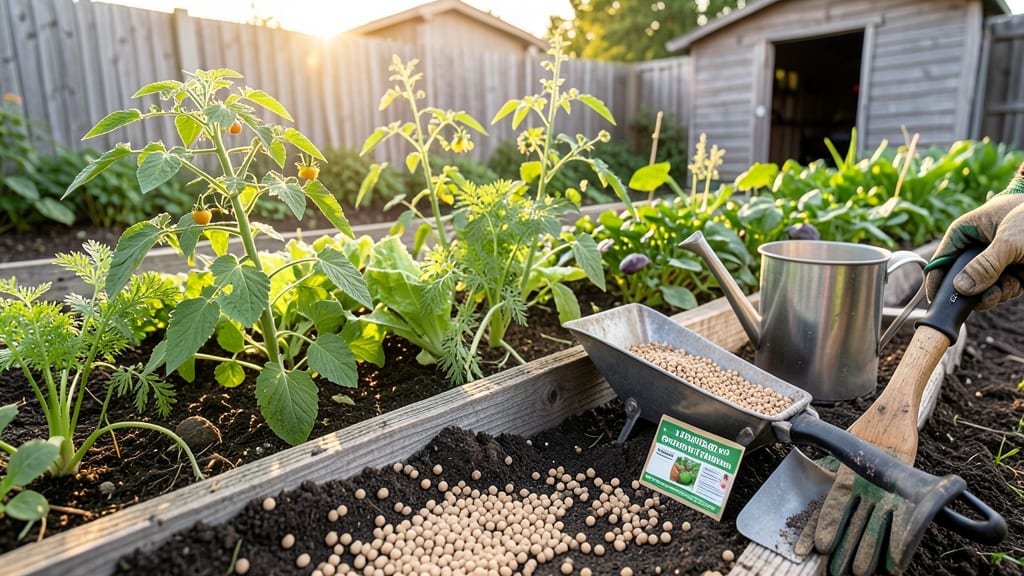
To apply fertilizer to your vegetable garden at the right times means the difference between lush, productive plants and ones that struggle to thrive—especially in Zone 6a where seasons shift quickly.
Picture this: you’ve just planted your 🥬 garden after months of planning, only to watch your greens wilt or your tomatoes fail to set fruit. The culprit? Fertilizer applied at the wrong moment—either too early, too late, or in the wrong amounts.
But here’s the good news: timing it right isn’t rocket science once you know the key stages.
Most gardeners focus on what to fertilize, not when—yet the growth phase of your plants dictates everything. Whether you’re nurturing leafy greens, flowering peppers, or fruiting tomatoes, each stage (pre-planting, early growth, flowering, and fruiting) has its own ideal feeding window.
And let’s not forget soil tests: skipping this step can lead to over- or under-feeding, wasting money and harming your harvest.
In this guide, I’ll walk you through the exact seasonal schedule for fertilizing your vegetable garden, from spring’s first feed to fall’s final boost—plus how to adjust based on organic vs. synthetic fertilizers. Ready to grow like a pro? Let’s get started.

Ideal fertilizer application timing by plant growth stage
Fertilizing your vegetable garden at the right time isn't just about throwing nutrients into the soil—it's about understanding your plants' life cycles. Nitrogen fuels leafy growth, phosphorus supports root development, and potassium boosts flowering and fruiting.
But applying these nutrients at the wrong stage can waste resources or even harm your plants. For example, too much nitrogen when your tomatoes are flowering can delay fruit production.
Most gardeners make the mistake of fertilizing once and forgetting—or worse, overdoing it early in the season.
The truth is that vegetables need different nutrients at different stages. Leafy greens like lettuce and spinach thrive with nitrogen-heavy feeds early on, while fruit-bearing plants like tomatoes and peppers need phosphorus and potassium as they mature.
Adjusting your approach based on growth stages ensures your garden gets the most out of every application.
Here's the breakdown of when to fertilize based on your plants' needs, from seed to harvest:
For cool-season crops like broccoli, cabbage, and peas, focus on early-season nitrogen applications. These plants thrive in cooler temperatures and benefit from a strong start. In contrast, warm-season crops like tomatoes, peppers, and cucumbers need a shift to phosphorus and potassium as they enter their flowering phase.
I’ve seen firsthand how a single late-season nitrogen boost can leave my tomato plants lush but fruitless!
One common mistake is fertilizing right before a hard frost. Fall crops like kale and carrots can handle a light feeding in early fall, but avoid heavy applications as winter approaches. Instead, focus on building soil health with compost.
This gives your plants a nutrient reserve to draw from when spring arrives. Think of it like saving money in a bank—you want those nutrients available when your plants need them most.
If you're growing container vegetables, timing becomes even more critical because nutrients leach out faster. Feed container plants every 2-3 weeks with a water-soluble fertilizer, but always check the soil moisture first.
Dry soil can burn roots, and wet soil can dilute nutrients. A simple finger test—pushing your finger an inch into the soil—tells me everything I need to know about when to feed.
For organic gardeners, timing is just as crucial but often more flexible. Organic fertilizers like compost tea or fish emulsion break down slowly, so you can apply them more frequently without risking over-fertilization.
I’ve had great success with a monthly compost top-dressing combined with a mid-season fish emulsion boost for flowering plants. The key is consistency—organic matter builds soil health over time, not overnight.
Pro tip: Always water your plants before applying fertilizer. This helps distribute nutrients evenly and prevents root burn. I like to water in the morning, let the soil settle for a few hours, and then apply my fertilizer in the late afternoon.
This gives the roots time to absorb nutrients before nightfall, when evaporation slows down.
Remember, every garden is different. Pay attention to your plants' color and growth patterns. Yellowing leaves might signal nitrogen deficiency, while weak stems could mean a lack of potassium. Adjust your fertilizer schedule based on what you observe, and don’t be afraid to test your soil every 1-2 years.
A simple home test kit can reveal whether your soil is hungry for more nutrients or already well-balanced.
By matching your fertilizer applications to your plants' growth stages, you'll see stronger stems, healthier foliage, and a bountiful harvest. It’s all about giving your vegetables what they need, when they need it. Happy gardening! 🌱
How soil tests change fertilizer timing and dosage
Soil tests reveal your garden's hidden language—whether your plants are starving for nutrients or drowning in excess. Without testing, you might fertilize at the wrong time, like feeding your tomatoes too much nitrogen when they need phosphorus for fruiting.
My first test showed my soil was sandy and acidic, which completely changed my fertilizing schedule.
Most gardeners assume a one-size-fits-all approach works, but soil tests prove otherwise. For example, leafy greens like spinach thrive in slightly acidic soil (pH 6.0-7.0), while root crops such as carrots prefer neutral to slightly alkaline soil (pH 6.5-7.5).
Ignoring these differences can lead to stunted growth or nutrient deficiencies.
⚠️ Warning: Over-Fertilizing Risks
Soil tests often reveal hidden nutrient imbalances. If your test shows high phosphorus levels (>100 ppm), skip phosphorus-heavy fertilizers—overdoing it can cause leaf burn or root damage. Always re-test every 2-3 years or after major amendments like compost.
Reading soil test results starts with the pH level. A pH below 6.0 signals acidity, while above 7.5 means alkalinity. For example, my blueberry bushes needed acid-loving fertilizer (like sulfur or peat moss) because their ideal pH is 4.5-5.5.
Adjusting pH before fertilizing ensures nutrients are available—otherwise, your plants can't absorb them, no matter how much you feed them.
Nutrient levels like nitrogen (N), phosphorus (P), and potassium (K) dictate your fertilizer timing. If your soil is low in nitrogen (N < 20 ppm), apply a nitrogen-rich fertilizer like fish emulsion at planting and again when plants are 6 inches tall.
But if phosphorus is deficient (P < 30 ppm), use a bone meal or rock phosphate during flowering to boost fruit development.
Timing matters just as much as dosage. For cool-season crops like broccoli, fertilize lightly at planting and again when bolting begins. Warm-season crops like peppers, however, need a heavier feed at transplanting and a potassium boost when flowers appear.
My peppers doubled in yield after I switched to a 5-10-10 fertilizer based on my soil test.
Don’t forget to re-test after making changes. I retested my soil after adding compost and lime, and the results showed a pH shift from 5.8 to 6.5—perfect for my tomatoes and peppers. Re-testing every 2-3 years or after major soil amendments ensures your fertilizing stays on target.