
Watering
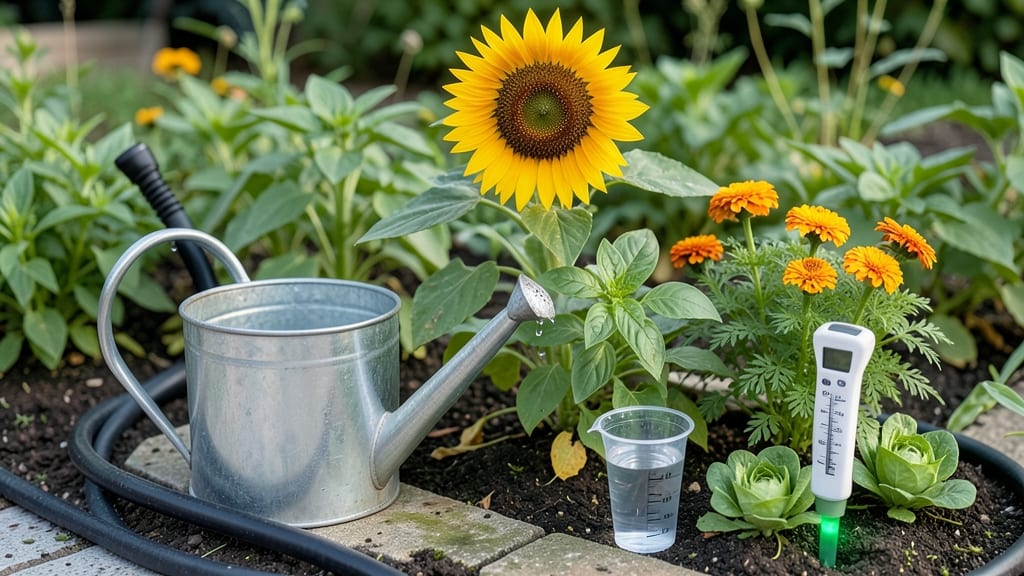
A garden needs about 1 to 2 inches of water per day—but that number changes faster than the weather forecast, depending on what you’re growing and where you live.
Picture this: your tomatoes are thriving one July, then suddenly droop the next year despite the same watering routine. The difference? Last year’s humidity was higher, or your soil held moisture better, or you missed the morning watering window.
Small shifts make a big impact, and guessing gets expensive in seed packets.
This guide breaks down the science behind daily water needs—why some plants drink like fish while others sip like tea—and how to adjust for your USDA Zone 6a climate, soil type, and even mulch choices.
No more overwatering your basil or letting your zucchini wilt because you thought "a little" meant "a lot."
You’ll learn how to read your garden’s thirst cues, the best tools to measure moisture (spoiler: it’s not your finger), and seasonal tweaks that save water without sacrificing growth. Let’s turn your guesswork into a system that keeps your 🌱 happy year-round.
Science-backed daily water requirements for common garden plants
Watering your garden isn't just about keeping soil damp—it's a science of root health, soil moisture balance, and plant-specific needs. Too little water stresses plants, while too much suffocates roots.
The key lies in understanding how much water each plant type truly needs daily, which varies wildly from drought-resistant succulents to thirsty tomatoes. Let's break down the science so you can water with confidence.
Most garden plants thrive when they receive 1 to 2 inches of water per week, but this is just a starting point. The real magic happens when you consider root depth, climate zone, and seasonal adjustments.
For example, a shallow-rooted lettuce needs frequent, light watering, while a deep-rooted oak tree can survive on deep, infrequent soakings. Even within the same plant family, water needs shift with temperature and humidity.
Here’s the golden rule: Water deeply enough to moisten the soil to the depth of the plant’s roots. A quick sprinkle barely scratches the surface—it’s the deep watering that encourages strong root systems. For most garden beds, this means 6 to 12 inches deep, depending on the plant.
Use a soil moisture meter or simply stick your finger into the soil; if it’s dry past 2 inches, it’s time to water.
Climate zones play a massive role in daily water needs. In arid Zone 9, plants may need daily watering in summer, while in humid Zone 5, morning dew might cover their needs. Always adjust for rainfall, wind, and temperature extremes. A simple trick: mulch your garden to lock in moisture and reduce evaporation by up to 30%. Organic mulch like straw or wood chips also improves soil health over time.
| Plant Type | Daily Water Needs (Inches) | Root Depth | Seasonal Adjustments | Drought Tolerance |
|---|---|---|---|---|
| Vegetables (Tomatoes, Peppers, Cucumbers) | 1.0 - 1.5 | 12 - 18 inches | Increase by 50% in summer | Low |
| Leafy Greens (Lettuce, Spinach, Kale) | 0.5 - 1.0 | 4 - 8 inches | Reduce in cool months | Medium |
| Herbs (Basil, Mint, Parsley) | 0.75 - 1.25 | 6 - 12 inches | Keep soil evenly moist | Medium-High |
| Flowers (Roses, Petunias, Marigolds) | 0.75 - 1.25 | 8 - 16 inches | Blooming = more water | Medium |
| Shrubs (Boxwood, Hydrangeas, Lavender) | 0.5 - 1.0 | 12 - 24 inches | Deep water once weekly | High |
| Trees (Fruit Trees, Maple, Oak) | 1.5 - 2.5 | 36+ inches | Critical in first 2 years | Very High |
| Succulents/Cacti (Aloe, Jade, Prickly Pear) | 0.1 - 0.25 | Shallow roots | Water only when soil is bone dry | Extreme |
Let’s talk about vegetables, which are often the thirstiest residents in your garden. Tomatoes, for instance, need 1 to 1.5 inches of water daily during fruiting season, especially in hot climates.
Their deep roots demand consistent moisture, but overwatering leads to blossom end rot. Peppers and cucumbers follow similar rules—water at the base to avoid fungal diseases like powdery mildew.
For leafy greens, shallow roots mean frequent but light watering; aim for 0.5 to 1 inch daily, and always water in the morning to prevent fungal growth.
Herbs like basil and mint strike a balance—they need 0.75 to 1.25 inches daily but hate soggy soil. Overwatering causes root rot, while underwatering makes them bitter. Dill
How to calculate your garden's exact water needs per day
Calculating your garden's daily water needs isn't guesswork—it's a science-backed process that ensures your plants thrive without waste.
Start by understanding that most gardens require 1 to 2 inches of water per week, but this varies wildly based on your plant mix, soil type, and local climate.
For example, a vegetable garden in sandy soil may need watering every other day in summer, while a shade-loving herb garden in clay soil might only need a deep soak twice a week. Let's break it down step by step.
First, assess your garden's total square footage and the water-holding capacity of your soil. Sandy soil drains quickly and needs frequent, shallow watering, while clay soil retains moisture longer but risks waterlogging. Use a simple trowel test: dig 6 inches deep and check moisture levels.
If the soil feels dry at this depth, it's time to water. For container gardens, this rule changes—potted plants often need watering every 2 to 3 days because their soil dries out faster.
- Step 1: Measure Your Garden's Size Multiply length × width to find square footage. Example: A 10ft × 10ft garden = 100 sqft.
- Step 2: Identify Plant Water Groups Group plants by needs: high (tomatoes, peppers), medium (basil, marigolds), low (lavender, succulents).
- Step 3: Check Soil Type Sandy soil: 1 inch/day in summer; clay soil: ½ inch every 2 days.
- Step 4: Adjust for Weather Add 20% more water in 90°F+ heat; reduce by 30% in rain.
- Step 5: Calculate Daily Needs Example: 100 sqft garden with medium-need plants in clay soil = 0.75 gallons/day.
- Step 6: Test with a Rain Gauge Place a container in your garden to measure actual rainfall and adjust watering accordingly.
Next, factor in your irrigation system's efficiency. Drip irrigation delivers water directly to roots with 90% efficiency, while sprinklers can waste up to 30% due to evaporation or runoff. If you're using a hose, aim for a gentle, steady stream to avoid compacting soil or creating puddles.
For lawns, early morning watering (before 10 AM) minimizes evaporation and fungal diseases like brown patch. Pro tip: Use a soaker hose for flower beds—it delivers water slowly and evenly, reducing waste.
Seasonal adjustments are critical. In spring and fall, your garden might only need watering 2 to 3 times per week, while summer months could require daily watering, especially for heat-loving plants like okra or eggplant.
Pay attention to leaf curl or wilting—these are signs your plants are thirsty. Conversely, yellowing leaves or mushy stems indicate overwatering.
Mulching with 2 to 3 inches of organic matter (like straw or wood chips) helps retain moisture and reduces the need for frequent watering by up to 40%.
For a real-world example, let’s calculate water needs for a 50 sqft vegetable garden with tomatoes, peppers, and herbs in USDA Zone 7 during July. Tomatoes need 1.5 inches of water per week, peppers 1 inch, and herbs 0.75 inches.
Assuming equal distribution, the average weekly need is 1.08 inches. Convert this to daily: 1.08 inches ÷ 7 days = 0.15 inches/day. For 50 sqft, that’s roughly 1.5 gallons of water per day. Adjust upward if temperatures exceed 90°F or downward if rain is forecasted.
Finally, invest in a moisture meter or weather app to track real-time conditions. Apps like PlantNet or Gardenate provide localized watering schedules based on your zip code and plant types. Remember, consistency is key: better to water deeply once a week than lightly every day.
This encourages deep root growth and drought-resistant plants. With this method, you’ll never over- or under-water again—just science-backed precision for a thriving garden. 🌱