
Light Requirements
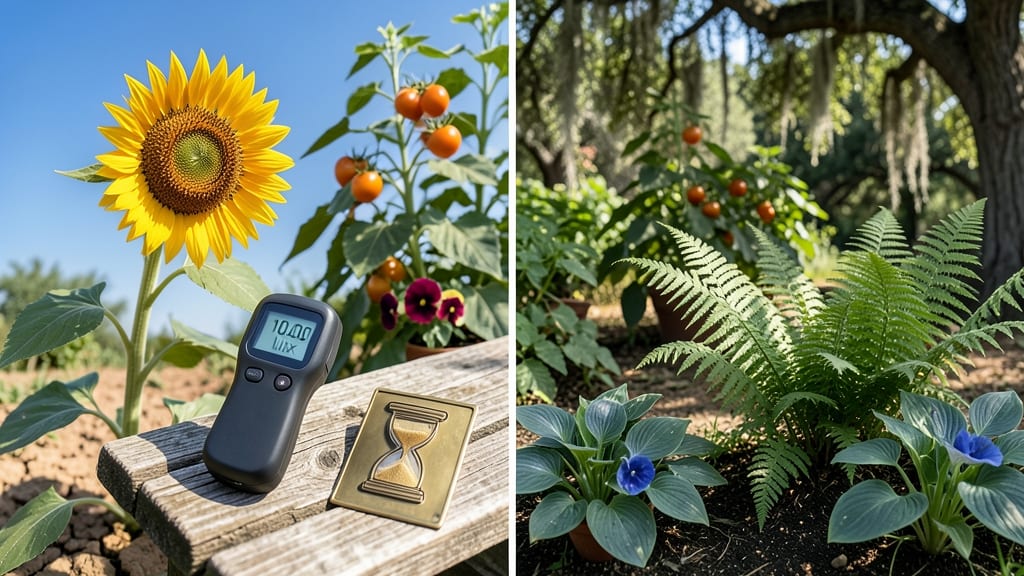
To determine how much sunlight a garden needs, consider plant type: most vegetables and flowers thrive with 6-8 hours daily, shade-loving plants do well in 2-4 hours, and sun-seekers like succulents and citrus require 8+ hours. Local climate also plays a key role—cooler areas may need more sun exposure, while hot regions often benefit from afternoon shade.
Sunlight acts as the primary energy source for photosynthesis, but not all plants have the same tolerance for light intensity. 🌿 For example, leafy greens like spinach or kale can handle partial shade, while tomatoes and peppers demand full sun to produce abundant fruit.
The key is matching plant needs to your garden's natural light patterns—morning sun is gentler than afternoon rays, which can scorch delicate foliage. I've found that using a simple light meter or observing how shadows move across your yard helps create the perfect growing conditions for each plant type.
Climate also shifts these requirements dramatically. In Zone 5 or colder regions, plants often need more sunlight to compensate for shorter growing seasons, while Zone 9 gardens may require afternoon shade to prevent heat stress. Microclimates—like south-facing walls or north-side patios—create additional variables.
For instance, a trellis can provide dappled shade for heat-sensitive plants while still allowing them to access morning sunlight. Understanding these nuances transforms your garden from a guessing game into a precision-growing system.
💡 In This Article
- Sunlight Requirements by Plant Type: Full Sun vs Partial Shade vs Low Light
- Adjusting Sunlight Needs for Climate Zones: Tips for Hot vs Cold Gardens
Sunlight requirements by plant type: full sun vs partial shade vs low light
Photosynthesis operates most efficiently when plants receive 4-6 hours of direct sunlight daily, but the exact needs vary dramatically by species.
Leafy greens like lettuce or Swiss chard can thrive with just 2-4 hours of morning sun—their broad leaves capture scattered light efficiently, while fruiting plants like tomatoes or peppers require 6-8 hours of full sun to develop the energy needed for fruit production.
The science lies in chlorophyll's response: low-light plants have more chlorophyll in their leaves to maximize light absorption, while sun-lovers have thicker cuticles to prevent water loss from intense exposure.
Light intensity matters just as much as duration. Full sun (6+ hours of direct rays) plants like rosemary or lavender need unfiltered sunlight, but their leaves are waxy to reflect excess heat.
In contrast, shade-tolerant plants such as hostas or ferns grow in dappled light, where leaves receive only 10-30% of direct sunlight at any given time.
What most gardeners overlook is how light quality changes with the season—spring and fall sunlight is cooler and less intense, allowing shade plants to handle more exposure during these periods. 🌞
Over-exposure causes visible damage: leaf burn appears as crispy, brown edges on sun-sensitive plants like impatiens, while underwatered plants in full sun wilt dramatically. The threshold for leaf burn typically occurs after 4+ hours of direct midday sun (10 AM-4 PM) without adequate water.
This is why afternoon shade (using lattice or tall plants) can extend the growing season for heat-sensitive varieties by 2-3 weeks in hot climates.
Herbs offer a fascinating case study: basil thrives in 6+ hours of sun but bolts (goes to seed) quickly in hot weather, while thyme and oregano are drought-resistant and can handle full sun year-round. The difference?
Basil's delicate leaves can't tolerate the same heat stress as thyme's thick, fuzzy foliage. This is why container gardening lets you rotate plants seasonally—moving basil to partial shade in summer while keeping thyme in full sun maximizes both harvests.
For trees, the rule shifts to canopy needs: fruit trees like apples need 6-8 hours of sun, but their roots require deep shade to prevent soil drying. This creates a balancing act where pruning the lower branches allows sunlight to reach the ground while preserving the tree's structural health.
The same principle applies to vegetables: bush beans tolerate partial shade better than pole beans, which need vertical support to climb toward light sources. 🌱
One pro tip: use a light meter (lux meter) to measure your garden's actual light levels—most home gardens receive 10,000-25,000 lux on sunny days, while shade areas drop to 1,000-5,000 lux. This data helps you place plants precisely, especially in microclimates where walls or fences cast permanent shadows.