
Light Requirements
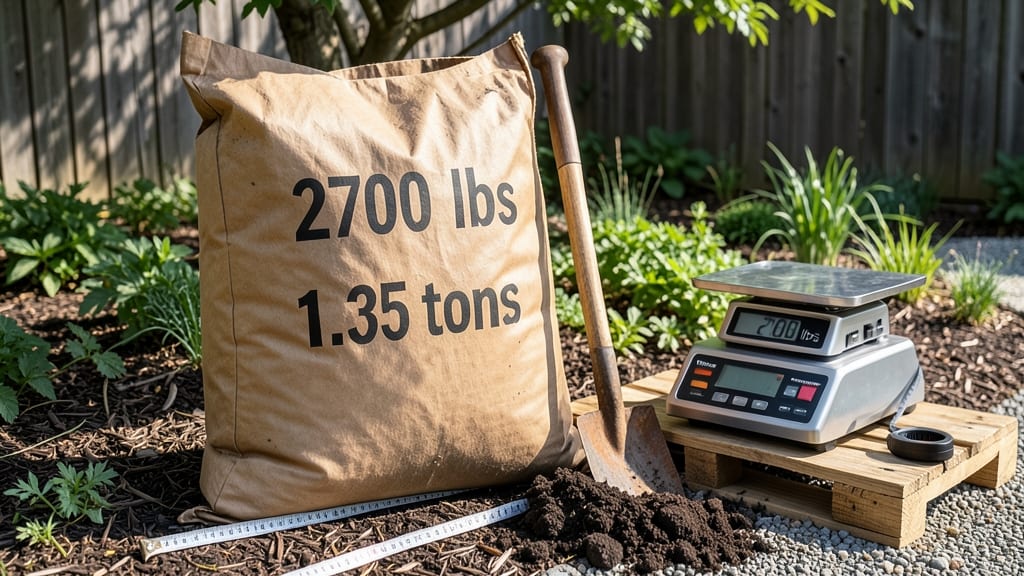
To determine how much a yard of garden soil weighs, expect 2,000 to 2,700 pounds—with sandy soil on the lighter end (~2,000 lbs) and dense, clay-heavy or wet soil weighing closer to or beyond 2,700 lbs. Always confirm supplier specifications before planning transport or storage.
A yard of garden soil's weight isn't just about volume—it's heavily influenced by what's inside. Moisture content can add hundreds of pounds, while organic matter and particle density shift the scale dramatically.
For example, peat-based soils often exceed 2,700 lbs when saturated, while well-drained sandy loam might barely crack 2,000 lbs. Compaction from machinery or foot traffic further increases weight by reducing air pockets. Understanding these factors helps you avoid overloading trucks or underestimating project requirements. 🔥
When planning a project, I always recommend checking with your supplier for exact measurements—they often provide weight charts based on their specific soil blends. For DIY projects, consider testing a small batch first: fill a 5-gallon bucket (0.015 cubic yards) and weigh it to estimate your full yard's total.
This simple step can save you from costly delivery surprises or project delays. Always account for moisture variations, especially if working with clay-heavy soils that absorb water like a sponge. ✨
💡 In This Article
- Factors Affecting Garden Soil Weight per Cubic Yard
- Practical Tips for Estimating and Handling Heavy Soil Loads
Factors affecting garden soil weight per cubic yard
Moisture content is the single biggest variable in soil weight—dry sandy soil might weigh 1,800 pounds per yard, but when saturated, it can balloon to 2,400 pounds or more. The reason? Water fills the tiny air pockets between particles, effectively doubling the mass.
Clay soils hold even more water due to their microscopic plate-like structure, which creates a sponge-like effect.
For example, a cubic yard of clay soil at 30% moisture (typical for spring planting) can easily exceed 2,700 pounds, while the same volume at 10% moisture might weigh just 2,200 pounds. 💧
Particle density plays a critical role too—sandy soils have larger particles with more air space (lower density), while silt and clay pack tightly (higher density). Peat-based soils add another layer: their fibrous organic matter absorbs water like a sponge, often weighing 2,500-3,000 pounds per yard when wet.
Even compost-amended soils can surprise you—adding 10% organic matter increases weight by 5-10% due to the higher density of decomposed plant material compared to mineral particles. The key is understanding your soil's composition before making weight estimates.
Compaction from machinery or foot traffic further increases weight by reducing air pockets. A freshly tilled yard of loamy soil might weigh 2,200 pounds, but after heavy equipment passes through, the same volume could weigh 2,500 pounds due to compressed air spaces.
This is why professional landscapers always account for a 10-15% weight increase when estimating delivery needs. The denser the soil, the heavier it becomes—clay soils can see 20% weight increases under compaction, while sandy soils remain more stable. 🌱
Organic content also matters—soils with high peat or compost content feel lighter when dry but gain significant weight when moist. For instance, a blend of 50% peat, 30% sand, and 20% compost might weigh 2,300 pounds when dry but approach 2,800 pounds when saturated.
The organic matter's porous structure creates more surface area for water absorption, amplifying weight variations. Even small additions of compost (like 5% by volume) can shift weight estimates by 50-100 pounds per yard.
Seasonal variations add another layer—spring soils often weigh 10-15% more than summer soils due to higher moisture retention. In arid climates, summer soils might drop to 1,900 pounds per yard, while winter soils can exceed 2,600 pounds from frozen moisture.
The takeaway? Always test soil weight in its current state rather than relying on dry-weight assumptions. A simple 5-gallon bucket test (weighing 0.015 cubic yards) can reveal your specific soil's density characteristics. 🔍