
How To
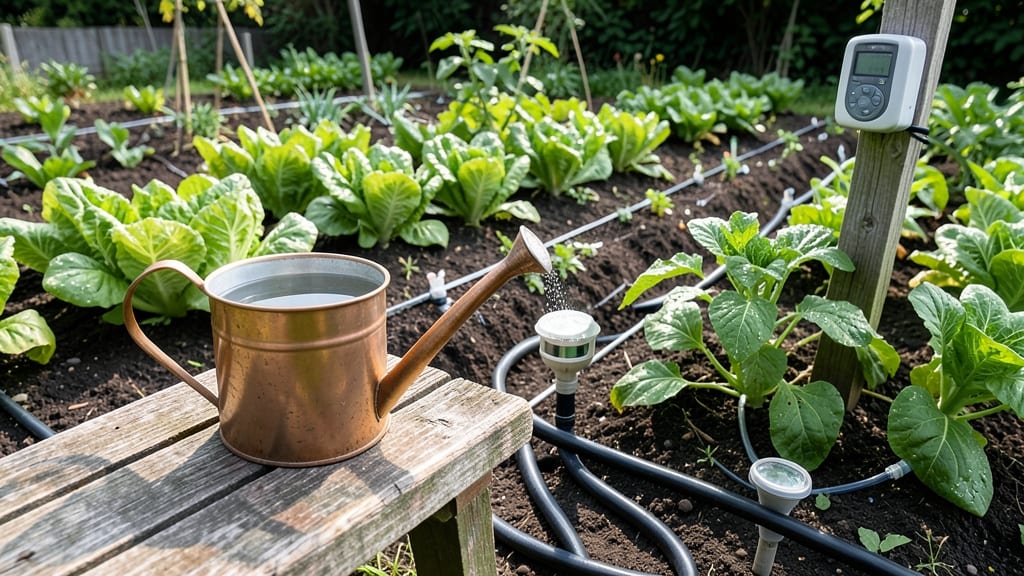
Watering your vegetable garden the right length of time is the secret to lush, productive plants—too little and roots struggle, too much and you drown them.
Struggling to balance overwatering and underwatering? The key isn’t just how often you water—it’s how long you water, and understanding your soil’s thirst signals can save your plants (and your time).
Most vegetables need 15-30 minutes per session, but clay soil soaks up water slower than sandy soil, and leafy greens like lettuce need less than thirsty tomatoes.
Below, I’ll show you how to test soil moisture, adjust for your garden’s unique conditions, and avoid the three biggest watering mistakes that stunt growth.
The perfect watering duration by plant type and soil conditions
Watering your vegetable garden isn’t a one-size-fits-all task—it’s all about matching watering duration to your plants’ needs and soil type. Leafy greens like lettuce and spinach need consistent moisture, while root crops like carrots and potatoes thrive with deeper, less frequent watering.
Even the same plant behaves differently in clay soil (which holds water) versus sandy soil (which drains quickly).
Most gardeners focus on watering frequency, but the duration of each session determines how deep the water penetrates. A 15-30 minute session with a gentle hose or drip system is ideal for most vegetables, but fruiting plants like tomatoes and peppers may need 45-60 minutes to encourage strong root growth.
The key is to water until the soil is moist 6 inches deep—not just the top layer.
Your soil type dramatically changes the equation. Clay soil absorbs water slowly, so shorter sessions (10-20 minutes) prevent runoff. Sandy soil, on the other hand, drains fast, requiring longer sessions (30-45 minutes) to reach roots. Loamy soil, the happy medium, balances well with 20-30 minute sessions.
Below is a quick reference to tailor your watering routine.
| Plant Type | Ideal Watering Duration | Soil Adjustments | Notes |
|---|---|---|---|
| Leafy Greens (lettuce, spinach, kale) | 15-25 minutes | Clay: 10-15 min; Sandy: 25-30 min | Keep soil evenly moist; shallow roots |
| Root Vegetables (carrots, beets, potatoes) | 20-30 minutes | Clay: 15-20 min; Sandy: 30-45 min | Deep watering prevents cracking; avoid soggy soil |
| Fruiting Plants (tomatoes, peppers, cucumbers) | 30-60 minutes | Clay: 25-35 min; Sandy: 45-60 min | Encourages deep roots; water at base |
| Herbs (basil, parsley, cilantro) | 10-20 minutes | Clay: 10 min; Sandy: 20 min | Drought-tolerant; avoid wet foliage |
| All Soil Types (General Rule) | Adjust based on moisture test | Use finger test; stop at 6" depth | Morning watering reduces evaporation |
For leafy greens, aim for 15-25 minutes of watering to keep the top 2 inches of soil consistently damp. These plants have shallow roots, so frequent, light watering mimics natural rainfall.
If your soil is clay-heavy, reduce to 10-15 minutes to avoid waterlogging, which can cause root rot. In sandy soil, extend to 25-30 minutes to ensure moisture reaches the roots.
Root vegetables like carrots and beets need 20-30 minutes of watering to develop properly. The goal is to maintain even moisture without creating puddles. Clay soil can handle slightly shorter sessions (15-20 minutes), while sandy soil may require 30-45 minutes to prevent rapid drying.
Overwatering here can lead to forked roots or rot, so always check soil moisture before watering again.
Fruiting plants such as tomatoes and peppers are the thirstiest of the bunch, often needing 30-60 minutes of watering. These plants benefit from deep, infrequent watering to encourage strong root systems.
In clay soil, split sessions into 25-35 minutes to avoid water stress, while sandy soil may need 45-60 minutes to saturate fully. Always water at the base of the plant to prevent fungal diseases like blight.
Herbs like basil and parsley are surprisingly low-maintenance when it comes to water. A 10-20 minute session is usually enough, as they’re adapted to drier conditions. <
Soil-moisture test tricks: when to stop watering for healthy roots
Knowing when to stop watering your vegetable garden is just as important as knowing when to start. Overwatering suffocates roots, while underwatering stresses plants—both lead to poor yields. The best way to avoid guesswork? Test your soil’s moisture levels before and after watering sessions.
I rely on three methods: the finger test (my go-to for quick checks), a moisture meter (for precision), and visual wilting cues (like drooping leaves or crispy edges). Each method gives you a different layer of insight into your garden’s hydration needs.
Step-by-Step Soil-Moisture Test
- Step 1: Choose Your Test Time Test soil 1-2 inches deep in the morning or evening when temps are cooler.
- Step 2: Perform the Finger Test Stick your index finger 1-2 inches into the soil. If it feels dry, water; if damp, stop.
- Step 3: Check for Visual Cues Look for wilting leaves (underwatering) or yellowing (overwatering). Healthy soil holds moisture but isn’t soggy.
- Step 4: Use a Moisture Meter (Optional) Insert probes 2-3 inches deep. Readings below 30% mean it’s time to water.
- Step 5: Adjust Watering Duration Start with 15-20 minutes for most veggies, then extend to 30 minutes if soil drains slowly (clay soil).
For sandy soil, which drains quickly, water in shorter bursts (10-15 minutes) every 1-2 days. Clay soil, on the other hand, holds moisture longer—so 20-30 minutes every 3-4 days works better. Always water deeply to encourage roots to grow downward, not just spread out near the surface.
Watch your plants’ wilting patterns too. Temporary wilting in the heat is normal, but if leaves stay droopy even after watering, your garden might need a deeper soak. Conversely, if leaves turn yellow or feel mushy, you’re overdoing it.
Pro tip: Mulch your garden to retain moisture and reduce evaporation. A 2-3 inch layer of straw or wood chips keeps soil consistently damp and cuts down on watering time by up to 30%. It’s a game-changer for busy gardeners!
Remember, consistency is key. Stick to a routine—test, adjust, and observe. Your vegetable garden will thank you with stronger roots, healthier foliage, and bigger harvests all season long. 🌱