
Tools
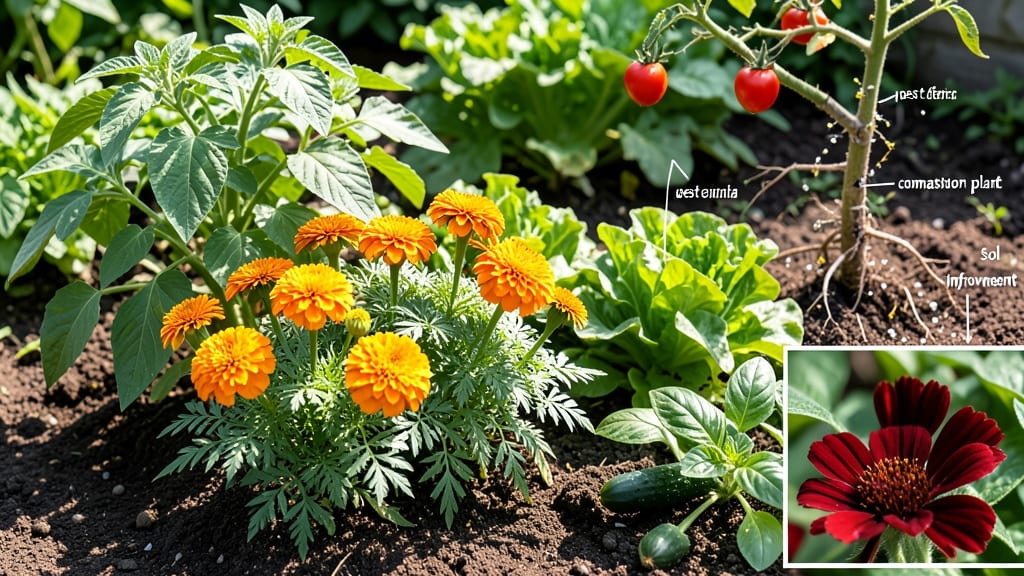
Marigolds help a garden by naturally repelling pests like nematodes, aphids, and mosquitoes through their potent scent, while also enhancing soil health by attracting beneficial insects and inhibiting harmful microbes via natural compounds. Their vibrant flowers even discourage deer and rabbits from browsing.
Marigolds act like nature's pest control system—thanks to their strong scent, which contains compounds like limonene that disrupt insects' nervous systems. 🌼 These plants also release allelopathic chemicals that suppress soil-borne pathogens while breaking up compacted dirt with their deep roots.
The bright blooms serve as a visual deterrent for larger animals, making them a triple-threat for gardeners seeking organic solutions.
For best results, plant French marigolds near vegetables to target nematodes, while African varieties excel at repelling mosquitoes. Their dual benefits—pest control and soil improvement—make them a must-have for any sustainable garden strategy.
💡 In This Article
- Marigolds’ Pest-Repelling Chemistry and Soil Health Mechanisms
- Best Marigold Varieties and Planting Strategies for Maximum Garden Benefits
Marigolds’ pest-repelling chemistry and soil health mechanisms
Marigolds deploy a two-pronged defense system against garden pests, starting with their signature scent. The volatile oils—particularly limonene and alpha-terthienyl—disrupt insects' nervous systems by interfering with their ability to process odors.
For example, nematodes (microscopic soil worms) are repelled when these compounds accumulate in the soil, reducing populations by up to 90% in just 4-6 weeks of planting. The strong aroma also confuses flying pests like aphids and whiteflies, making it harder for them to locate host plants.
The science gets even more fascinating underground. Marigolds release allelopathic compounds through their roots, which suppress harmful soil microbes and fungi. Studies show these chemicals can reduce fungal diseases like powdery mildew by 50% while promoting beneficial bacteria that improve nutrient cycling.
Their deep taproots (reaching 12-18 inches) also break up compacted soil, enhancing drainage and aeration—a boon for plant roots struggling in dense earth.
What makes marigolds uniquely effective is their multi-sensory approach. The bright orange and yellow blooms act as visual deterrents for larger animals like deer and rabbits, which avoid areas with these vivid colors.
Meanwhile, the scent profile—often described as a mix of citrus and spice—creates an invisible barrier that keeps mosquitoes at bay, making them ideal for gardens near patios or seating areas.
Consider this comparison: French marigolds (Tagetes patula) excel at nematode control due to their high alpha-terthienyl content, while African marigolds (Tagetes erecta) have stronger limonene levels, making them better for repelling flying insects.
The choice depends on your garden's specific pest challenges, but both varieties deliver soil benefits through their allelopathic properties.
For gardeners focused on organic methods, marigolds offer a chemical-free way to manage pests while improving soil structure.
Their ability to suppress harmful microbes without synthetic inputs aligns perfectly with regenerative gardening practices. 🌱 The key is planting them strategically—either as borders or interspersed among vulnerable crops—to maximize their protective effects throughout the growing season.
One often-overlooked benefit is their role in the garden ecosystem. Marigolds attract pollinators like ladybugs and hoverflies, which prey on garden pests, creating a natural feedback loop. This dual action—repelling unwanted insects while supporting beneficial ones—makes them one of the most versatile plants for sustainable gardening.